

Why Trim Painting Transforms Your Home’s Character
Trim painting service is the specialized process of applying paint to the architectural woodwork in your home—including baseboards, crown molding, window casings, and door frames. Here’s what you need to know:
What Trim Painting Includes:
- Interior trim: Crown molding, baseboards, window and door casings, chair rails
- Exterior trim: Fascia, soffits, window frames, door surrounds
- Key benefits: Improved aesthetics, architectural definition, surface protection, increased home value
Why It Matters:
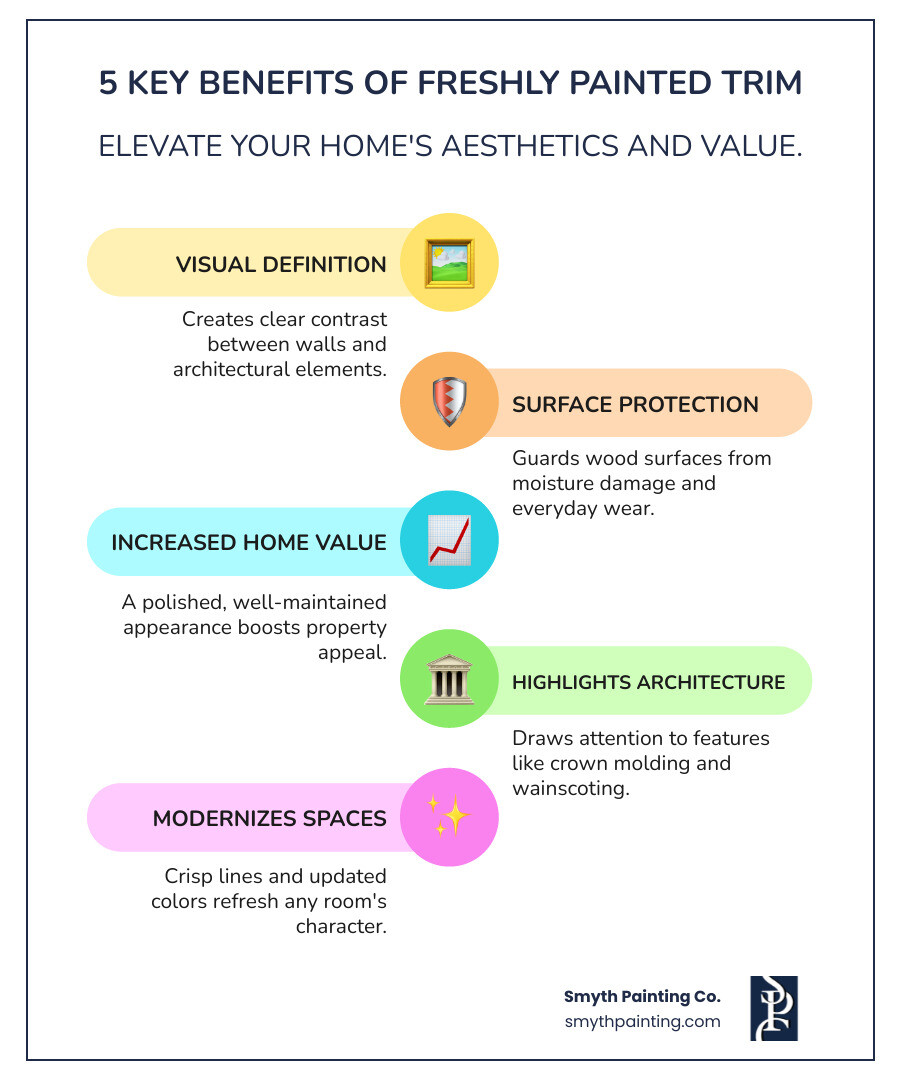
- Creates visual contrast that makes rooms feel complete
- Protects wood surfaces from moisture, wear, and age
- Highlights your home’s architectural features
- Provides a polished, finished look that lifts any space
As one painting professional noted, “Installing and painting your trim and other finishing touches are actually more of an art, then a skill.” This rings especially true for historic properties and homes with detailed architectural elements.
The truth is, your walls might look freshly painted, but if your trim is dingy, chipped, or outdated, the entire room will fall flat. Trim acts as the frame for your walls—it defines spaces, draws the eye to architectural details, and creates that crisp, professional finish that separates a good paint job from a great one. Whether you’re refreshing a single room or preparing your home for sale, trim painting delivers an outsized impact for a relatively modest investment.
I’m Douglas Smyth, founder of Smyth Painting Company, and since 2005 I’ve guided countless homeowners through the trim painting service process, from historic restorations requiring meticulous detail to modern updates that transform a home’s character. My team and I have seen how properly executed trim work lifts not just aesthetics, but also property values across Newport County and Rhode Island.
The Anatomy of Trim: More Than Just a Border
Trim is far more than just decorative banding; it’s an integral part of your home’s architecture, serving both aesthetic and functional purposes. From the neat lines of crown molding to the practical protection of baseboards, each piece plays a vital role in defining a space. Understanding the different types of trim and their functions is the first step in appreciating the value of a professional trim painting service.
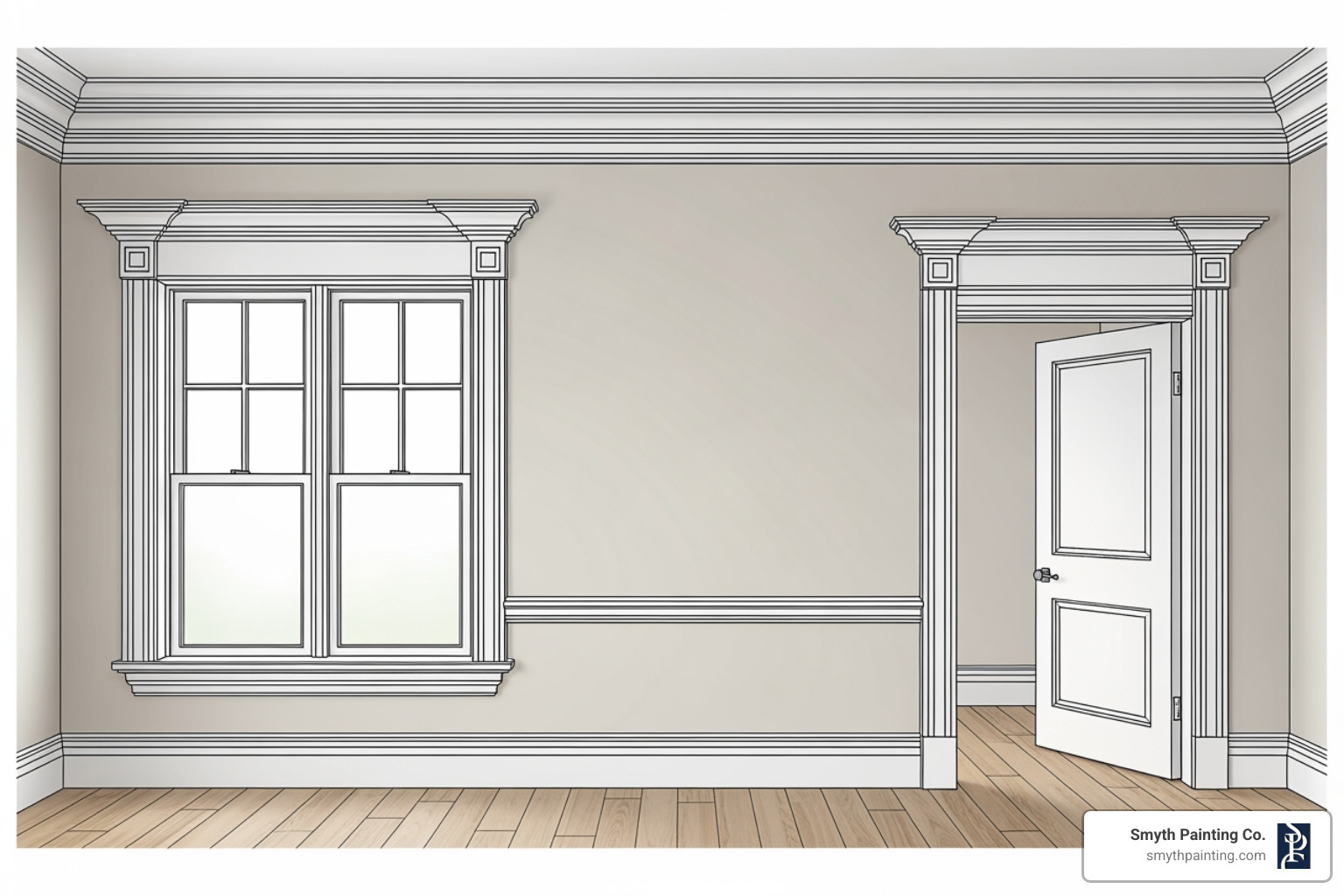
When we talk about trim, we’re referring to a variety of components, both interior and exterior:
- Interior Trim: This includes elements like crown molding, baseboards, window casings, door frames, chair rails, and wainscoting. These features frame your living spaces, add character, and provide a visual break between walls, floors, and ceilings.
- Exterior Trim: On the outside of your home, you’ll find fascia, soffits, window frames, door surrounds, and decorative elements like brackets or dentils. These pieces are crucial for curb appeal and, more importantly, for protecting your home from the elements.
Interior Trim Types and Their Impact
Interior trim works silently to lift the beauty and functionality of your home. Crown molding, for instance, is a popular design choice that draws the eye upward, creating the illusion of higher ceilings and adding visual interest. As an expert noted, it “sits atop the room, draws the eye up, and demands attention.” We often find that freshly painted crown molding instantly adds a touch of sophistication to a space, making a room feel complete.
Baseboards, on the other hand, define the transition between your walls and floors. They protect walls from everyday wear and tear, like scuffs from vacuum cleaners or furniture, and can hide imperfections where the wall meets the floor. They also experience a high volume of traffic and are prone to wear and tear. A fresh coat of paint here is essential for maintaining a clean, well-kept appearance.
Window and door casings frame these architectural openings, providing a polished finish and adding depth to your interior. Chair rails and wainscoting not only add visual texture and classic charm but also offer an extra layer of protection to walls in high-traffic areas. Our interior painting services can help you transform these elements to their full potential.
Exterior Trim: Your Home’s First Line of Defense
Exterior trim is arguably even more critical than its interior counterpart. It’s the face your home presents to the world, significantly impacting its curb appeal. Beyond aesthetics, exterior trim serves as your home’s first line of defense against the relentless Rhode Island weather.
Elements like fascia (the board running along the roofline), soffits (the underside of your roof’s eaves), and window and door frames protect vulnerable areas of your home from moisture, pests, and rot. Painting exterior trim should be part of every homeowner’s exterior maintenance routine, as trim and accent paint protect the wood and provide color contrast to help windows, doors, and other architectural features pop.
Whether your exterior trim is made of wood, composite, or vinyl, it needs proper preparation and high-quality, weather-resistant paint to withstand harsh sun, driving rain, and winter storms. A professional trim painting service for exterior elements safeguards your investment, preventing costly repairs down the line. We specialize in protecting and beautifying these crucial components, ensuring they stand strong against the elements. Our comprehensive Exterior Painting Services cover all these needs.
The Trim Painting Process: From Prep to Perfection
Achieving a flawless, long-lasting finish on trim is a meticulous process that hinges on thorough preparation. As an expert would attest, “Surface repair and preparation are crucial for painting projects.” We know that cutting corners here inevitably leads to a less-than-satisfactory result that won’t stand the test of time.
Our approach to a professional trim painting service always begins with careful inspection and detailed preparation:
- Surface Inspection: We carefully examine every inch of trim for any imperfections—nail holes, dents, cracks, or peeling paint. “Painting without smoothing out surface imperfections will make them show up even more,” as one source wisely noted.
- Cleaning and Degreasing: Dirt, grime, and grease can prevent paint from adhering properly. We thoroughly clean all trim surfaces with appropriate cleaners, especially baseboards, ensuring a pristine canvas.
- Sanding Glossy Surfaces: If the existing trim has a high-gloss finish, we lightly sand it to create a “tooth” for the new paint to grip. This is essential for proper adhesion and a smooth finish.
- Caulking Gaps and Cracks: Small gaps between trim and walls, or in the trim itself, are common. We fill these with high-quality caulk, creating seamless lines and a truly professional look. This step is critical for preventing paint from seeping into unwanted areas and for enhancing the overall crispness.
- Minor Repairs: Any holes, dents, or damaged areas are carefully repaired and patched, sanded smooth, and then primed. This ensures a uniform surface that accepts paint evenly.
We believe that “carefully prep[ping] all surfaces: cleaning, sanding, caulking, and patching” is the foundation of any exceptional painting project. This careful attention to detail is what sets a professional finish apart. For a deeper dive into the overall painting process, you can explore online guides on how to paint trim, such as this overview from Sherwin-Williams.
Choosing the Right Paint and Tools
The quality of your materials significantly impacts the final look and durability of your trim. For a superior trim painting service, we always recommend specific types of paint and tools:
- Best Paint for Trim: We advocate for waterborne alkyd paints. These paints offer the best of both worlds: the easy cleanup of water-based paints with the hard, furniture-quality finish and durability typically associated with oil-based products. They go on smooth and cure to a hard, resilient surface that resists chipping and blocking (sticking).
- Semi-Gloss vs. Satin Finish: While personal preference plays a role, semi-gloss is a popular choice for trim. It’s durable, easy to clean, and provides a subtle sheen that highlights the trim without being overly reflective. Satin finishes offer a slightly softer look with good durability. A high-gloss finish can give a room an extra high-quality feel, but requires very smooth surfaces. Our simple guide to paint finishes can help you decide.
- Primer Importance: Primer is not just for new or repaired surfaces. It creates a uniform base, promotes adhesion, and ensures that your topcoat colors appear true and vibrant. For extensive repairs, applying a coat of primer before the finishing paint is crucial.
- High-Quality Angle Sash Brushes: Due to the small surface area and intricate details of trim, a high-quality angle sash brush is indispensable. We use nylon/polyester brushes for water-based paints and natural bristles for oil-based paints. Inexpensive brushes tend to leave brush marks or lose bristles, compromising the smooth finish we strive for. A 1½- or 2½-inch angle sash brush is ideal for control and precision.
Here’s a list of essential tools for a professional trim painting service:
- Caulk
- Sanding block or fine-grit sandpaper
- High-quality painter’s tape
- Clean sponge or rags
- Premium angle sash brushes
- Primer (appropriate for the surface)
- High-quality trim paint (waterborne alkyd recommended)
Common Mistakes to Avoid
Even with the best intentions, DIY trim painting can go awry. We’ve seen many homeowners fall into common traps, leading to frustration and extra work. Here are some mistakes we help our clients avoid:
- Skipping Prep Work: This is the cardinal sin of painting. As mentioned, “painting without smoothing out surface imperfections will make them show up even more.” Neglecting cleaning, sanding, or caulking guarantees a poor, short-lived finish.
- Using Low-Quality Brushes: “Inexpensive brushes tend to leave brush marks or lose bristles as you paint.” This affects both the appearance and efficiency of the job. Investing in good brushes is paramount for smooth lines.
- Rushing the Job: Trim painting requires patience and precision. Rushing leads to uneven coats, drips, and messy lines. Allowing adequate drying time between coats is also crucial for proper adhesion and durability.
- Improper Taping Techniques: Painter’s tape is your best friend, but only if applied correctly. Gaps or loose tape can lead to paint bleeding onto walls or floors. Not removing tape at the right time (either before fully dry or when completely dry, depending on technique) can also cause problems.
- Ignoring Repairs: Small dents or holes might seem insignificant, but they become glaringly obvious once painted over. Addressing these during preparation is key to a truly smooth finish.
For more insights into avoiding DIY pitfalls, we’ve compiled advice on Common Mistakes Homeowners Make and How to Avoid Them. We ensure our professional trim painting service sidesteps these issues entirely, delivering a perfect result every time.
The Great Debate: Order of Operations and the Value of Expertise
One of the most frequently asked questions we encounter is whether walls or trim should be painted first. There are arguments for both, but our experience leads us to a clear professional consensus for a superior trim painting service. Regardless of the order, meticulous masking and protection are non-negotiable.
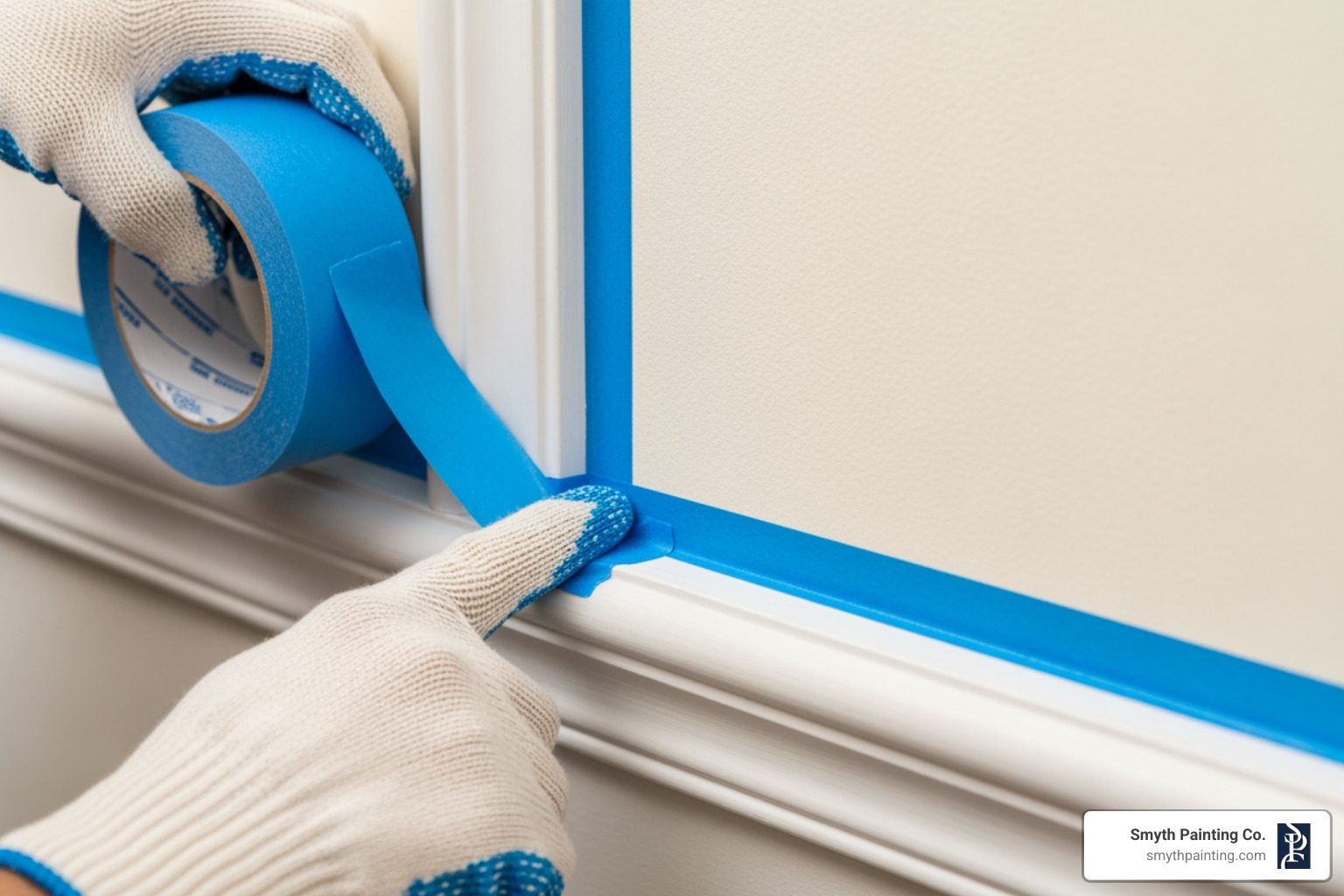
Before any paint touches a surface, we ensure that all surrounding areas are carefully covered and protected. This involves:
- Drop Cloths: Heavy-duty drop cloths protect floors and furniture from drips and splatters.
- Plastic Sheeting: Used to cover larger furniture pieces or built-ins that cannot be moved.
- Painter’s Tape: High-quality painter’s tape is strategically applied to create crisp lines and protect adjacent surfaces, whether it’s the wall next to the trim or the floor beneath the baseboards.
Should You Paint Walls or Trim First?
Some painting professionals advocate for painting trim first, sometimes even suggesting a two-stage approach where molding gets a coat, then walls, then another coat on molding. The reasoning is that it’s easier to clean up trim paint splatters from a wall that will be painted over anyway.
However, our professional consensus, aligning with many experts, is to paint the walls first, and then paint the trim as the final step of the project. Here’s why:
- Easier Masking: It’s generally simpler to tape off a freshly painted, smooth wall to protect it from trim paint than it is to tape off trim to protect a wall you’re about to paint.
- Crisper Lines: By painting walls first, you can be less concerned about stray wall paint getting on the trim. Then, when you apply painter’s tape to the wall to protect it while painting the trim, you’re creating a clean, sharp line against a finished surface.
- Touch-Ups: If any wall paint gets onto the trim during the wall painting process, it’s easily covered when the trim is painted. If trim is painted first, and wall paint gets on it, touching up trim paint on a finished wall can be more challenging to blend seamlessly.
Once the walls are completely dry, we apply high-quality painter’s tape along the edge of the wall where it meets the trim. The key for tape removal is to do it when the paint is completely dry to prevent tearing or smudging. This ensures the crisp, clean lines that define a professional finish.
DIY vs. Professional Trim Painting Service
While DIY painting projects are popular, many homeowners ultimately opt for professional painters for trim work, and for good reason. “Trim painting requires precision, specific tools, and a special kind of paint,” making it a task where expertise truly shines.
Here’s a comparison to help you decide:
| Factor | DIY Trim Painting | Professional Trim Painting Service |
|---|---|---|
| Cost | Lower upfront material cost, but potential for hidden costs (mistakes, re-dos, specialized tools) | Higher upfront cost, but includes labor, materials, and expertise |
| Time | Significant time investment for prep, painting, drying, and potential corrections; often underestimated | Efficient completion due to experience and proper staffing; project timelines are clear |
| Quality of Finish | Can be good with extreme care and practice, but prone to drips, uneven lines, and brush marks | Consistently high-quality, smooth, crisp lines, durable finish; “little details… separate ‘painters’ from ‘true masters'” |
| Required Tools/Skills | Requires patience, steady hand, knowledge of proper techniques, and investment in quality tools | Expertise in prep, application, troubleshooting, and access to professional-grade tools and paints |
As we often tell our clients in Rhode Island, “It’s always best if you can hire professional painters to take care of tricky trim painting jobs like windows and doors.” The precision required, the vast amount of preparation, and the need for a steady hand to achieve those coveted crisp lines often prove overwhelming for DIY enthusiasts. Our team brings years of dedicated experience to every trim painting service, ensuring a flawless result without the headaches.
The Impact of a Professional Trim Painting Service
A fresh coat of paint on your trim offers an impact far beyond simple aesthetics. It’s an investment that revitalizes your living spaces, protects your home’s integrity, and significantly improves its market value. As one source put it, “trim painting adds polish and character that improves the value and charm of a space.”
What to Expect from a Professional Trim Painting Service
When you choose us for your trim painting service in Rhode Island, you’re not just getting painters; you’re getting a dedicated team committed to changing your home with precision and care. Here’s what you can expect:
- Color Consultation: We understand that choosing the right color and finish is crucial. Our team offers color consultation to help you select classic whites, neutrals, or even bold accent colors that complement your home’s existing palette and architectural style.
- Detailed Proposals: Transparency is key. We provide personalized, detailed proposals outlining the scope of work, materials to be used, and a clear timeline and price. You’ll know exactly what to expect.
- Minor Carpentry Repairs: Often, trim needs a little TLC before painting. We handle minor carpentry repairs, such as filling nail holes, repairing small dents, or re-caulking gaps. This ensures a perfectly smooth surface for painting. Our in-house carpentry services can also address more extensive repairs, ensuring your trim is in perfect condition before any paint is applied.
- Lead-Safe Practices: For older homes in Rhode Island, lead paint can be a concern. We are trained and equipped to follow lead-safe work practices, protecting your family and our team during the painting process.
- Warranties and Satisfaction Guarantee: We stand by the quality of our work. We offer a satisfaction guarantee on our painting services, ensuring peace of mind long after the paint dries. Our goal is 100% satisfaction with your project.
Our commitment to quality, communication, and meticulous execution ensures that your residential painting project, especially trim work, is a smooth and stress-free experience.
How Fresh Trim Lifts Your Home’s Value
The real estate market in Rhode Island, like many others, values homes that show attention to detail and good maintenance. Freshly painted trim is a powerful, cost-effective upgrade that signals care and quality to potential buyers.
- First Impressions: Crisp, clean trim creates an immediate positive impression. It defines spaces and makes rooms feel well-maintained and inviting. “Uniform trim adds value and visual appeal to a home.”
- Perceived Maintenance and Care: When trim is chipped, scuffed, or yellowed, it suggests neglect. Fresh paint on trim conveys that the home has been well-cared for, which can translate into a higher perceived value.
- Attractiveness to Buyers: A home with newly painted trim looks polished and ready to move in. This can attract more buyers and potentially lead to quicker sales and better offers. “Freshly painted trim, especially in a crisp white or an accent color, can add a contemporary touch and lift the style of any room.”
- Cost-Effective Upgrade: Compared to major renovations, a professional trim painting service offers an excellent return on investment. The global paint and coatings market is projected to reach USD 118.5 billion by 2027, growing at a CAGR of 4.2%, indicating the significant value placed on quality paint finishes in the residential construction sector, driven by renovation activities. Investing in your home’s appearance through painting is consistently one of the smartest upgrades you can make.
Frequently Asked Questions about Trim Painting
We often get asked specific questions about trim painting, and we’re happy to share our expertise to help you understand this vital service better.
What is the best paint finish for trim?
For interior trim, we generally recommend a semi-gloss finish. Here’s why:
- Durability and Cleanability: Semi-gloss paint creates a harder, smoother surface that is highly durable and incredibly easy to clean. This is crucial for trim, which often sees more wear and tear and scuffs than walls. The semi-gloss finish is easy to clean without losing its shine.
- Aesthetic Considerations: It offers a subtle sheen that neatly highlights the architectural details of your trim, creating a beautiful contrast against the typically flatter finish of your walls (e.g., eggshell or satin). While a high gloss finish can provide an extra high-quality feel, it also accentuates any surface imperfections.
- Satin: A satin finish can also be a good choice if you prefer a slightly less reflective look. It still offers good durability and cleanability but with a softer sheen.
The “best” finish can depend on your personal aesthetic preference and the specific look you’re trying to achieve. Our guide on paint finishes provides more detailed information to help you make an informed decision.
How do you get smooth, professional-looking lines on trim?
Achieving those perfectly crisp, smooth lines on trim is a hallmark of a professional trim painting service. It comes down to a combination of technique and quality tools:
- High-Quality Brushes: As mentioned earlier, a premium angle sash brush is essential. It holds paint well and allows for precise control.
- Proper Paint Loading: Dip your brush approximately a third of the way into the paint, then gently tap off excess paint on the side of the can or container. Overloading the brush leads to drips and messy application.
- Long, Even Strokes: For the smoothest finish, apply paint using short, horizontal brush strokes over a few feet, then smooth over these strokes with one long, continuous stroke without adding more paint. This technique helps the paint level out, eliminating brush marks.
- “Cutting In” Technique: This involves using the tip of your angle brush to carefully paint a straight line along the edge where the trim meets the wall or ceiling, without using tape. It requires a steady hand and practice, but the result is a perfectly clean line.
- Using Quality painter’s tape: When used correctly, painter’s tape provides a clean barrier, ensuring crisp lines. We apply it firmly to prevent bleed-through and remove it carefully once the paint is fully dry to avoid peeling.
How should I care for my newly painted trim?
Once your trim has been professionally painted, a little care will go a long way in maintaining its pristine appearance for years to come:
- Curing Time: While paint may feel dry to the touch in a few hours, it takes several days, sometimes even weeks, for paint to fully “cure” and reach its maximum hardness and durability. During this time, be gentle with your trim and avoid harsh cleaning or heavy impacts.
- Gentle Cleaning Methods: For regular maintenance, simply dust your trim with a soft cloth. For minor scuffs or dirt, gently wipe the trim with a non-abrasive cloth dampened with mild soap and water. The semi-gloss finish we recommend is easy to clean without losing its shine.
- Avoid Abrasive Cleaners: Harsh chemical cleaners or abrasive scrubbing pads can damage the paint finish. Always opt for gentle solutions.
- Regular Dusting: Dust and cobwebs can accumulate on trim, especially crown molding and baseboards. Regular dusting keeps them looking fresh.
- Touch-Up Paint: We always leave our clients with a small amount of touch-up paint. For minor nicks or scuffs that might occur over time, a quick, careful touch-up can restore the trim’s flawless look.
Conclusion
As we’ve explored, a professional trim painting service is much more than just a cosmetic upgrade; it’s an art form that significantly impacts your home’s aesthetics, protection, and overall value. From the intricate details of crown molding to the protective role of exterior fascia, every piece of trim contributes to your home’s character and longevity.
The value of precision, meticulous preparation, and the right choice of materials cannot be overstated. While DIY projects can be rewarding, the expertise and efficiency of professional painters ensure a flawless, durable finish that stands the test of time, saving you headaches and costly re-dos.
We take pride in changing homes across Rhode Island and SE Mass, understanding that the details make all the difference. Our commitment to quality, combined with our deep knowledge of paint products and application techniques, means your trim will not only look stunning but also improve your home’s architectural beauty and increase its market appeal.
If you’re ready to lift your home’s character with a professional trim painting service that delivers crisp lines, vibrant finishes, and lasting quality, we’re here to help. For a flawless finish that improves your home’s beauty and value, consider our professional services. Let us bring our expertise to your next project and experience the Smyth Painting Co. difference. Start your residential painting project today!


