
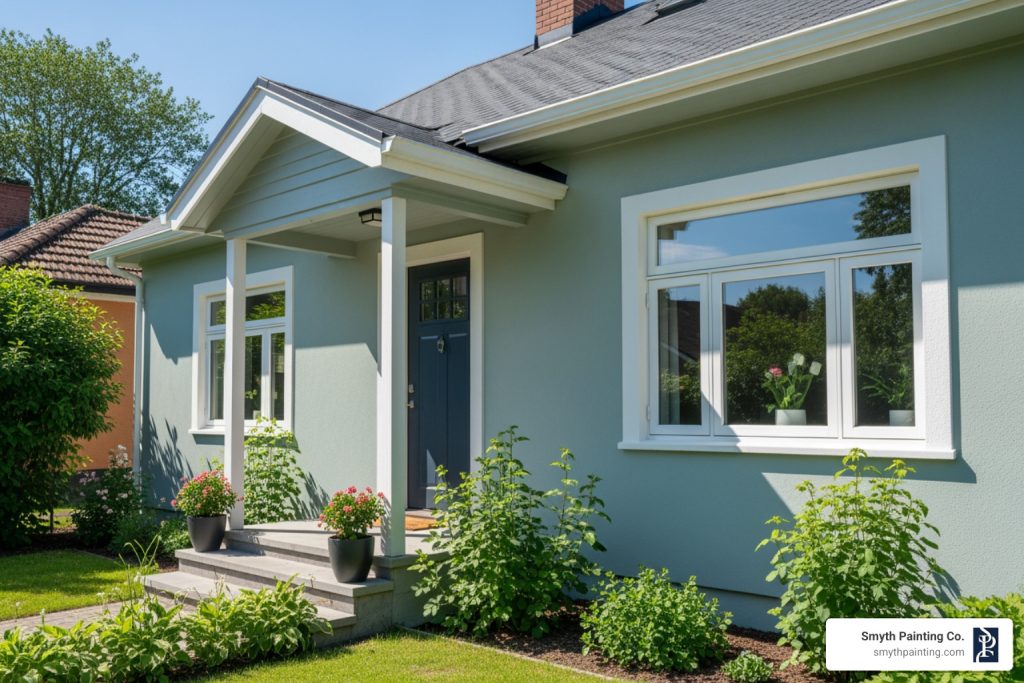
Why Your Home’s Exterior Deserves an Eco-Friendly Makeover
Environmentally friendly exterior paint offers homeowners a way to protect their homes while minimizing exposure to harmful chemicals and reducing environmental impact. Here’s what makes paint eco-friendly and how to choose the right option:
Quick Answer: Choosing Eco-Friendly Exterior Paint
- Look for Zero-VOC or Low-VOC paints (under 50 grams per liter)
- Seek certified products with Green Seal or GREENGUARD labels
- Choose water-based formulas over oil-based options
- Prioritize durability with high acrylic content for fewer repaints
- Check for natural pigments and zinc oxide fungicides
- Consider climate needs (UV resistance for sun, mildew resistance for humidity)
Paint choices affect more than just appearance. Traditional paints release volatile organic compounds (VOCs)—chemicals linked to headaches, dizziness, and respiratory issues. VOCs are a major source of air pollution; oil-based paints contain 40-60% VOCs, while even water-based paints often have 5-10%.
The good news is that modern eco-friendly paints have improved dramatically. They now resist cracking and fading for over a decade, a major upgrade from older formulas. These paints combine environmental responsibility with top performance, protecting your home from the elements without harming air quality or the planet.
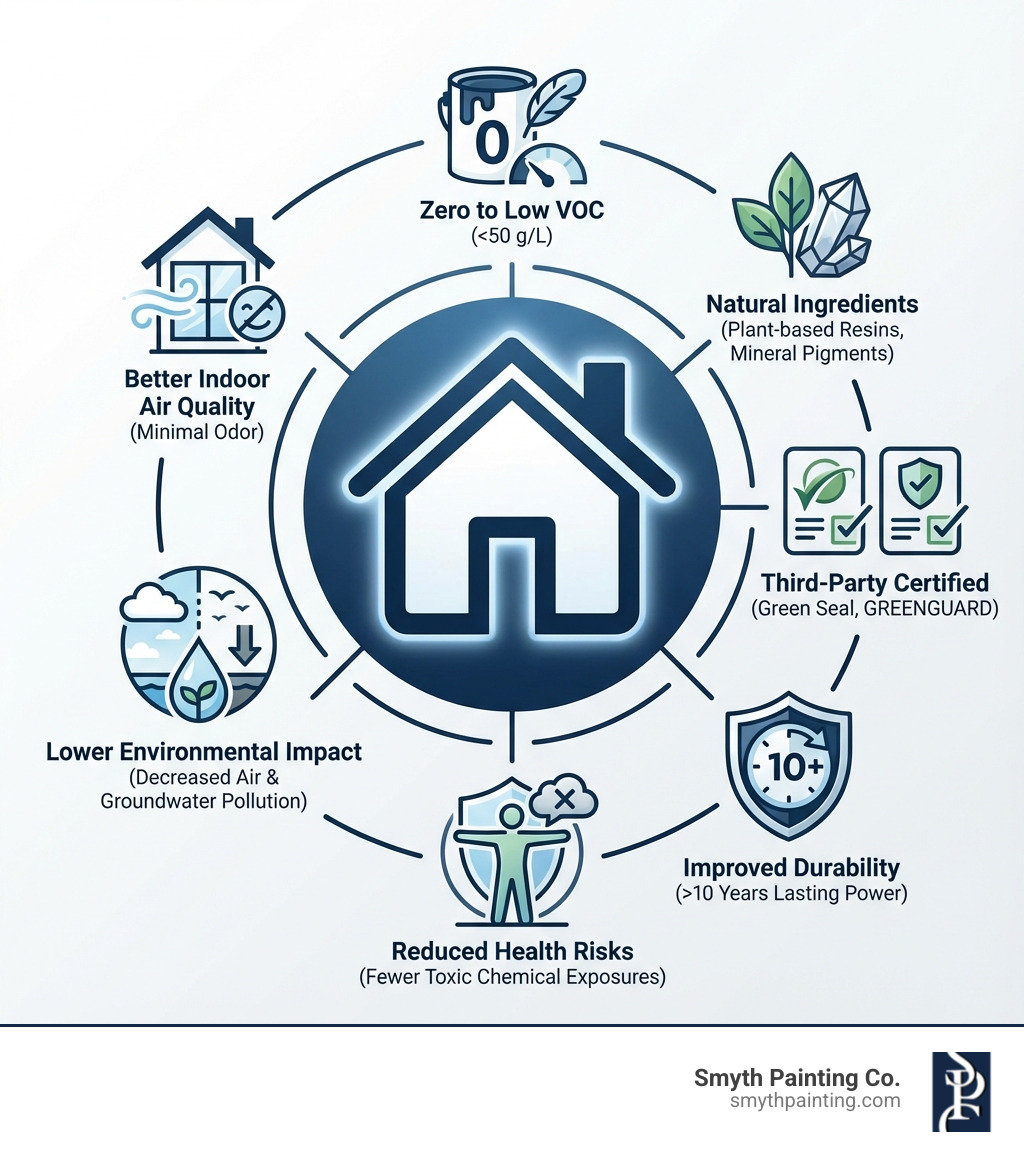
The real benefits extend beyond health. Eco-friendly paints use fewer hazardous chemicals, reduce groundwater contamination risks, and often use recycled materials. Their durability means you’ll repaint less often, saving money and resources. Plus, many zero-VOC formulas are virtually odorless, making the painting process more pleasant.
I’m Douglas Smyth, founder of Smyth Painting Company, serving Newport County and greater Rhode Island since 2005. Throughout my years guiding residential and commercial projects, I’ve seen how environmentally friendly exterior paint delivers both exceptional results and peace of mind for homeowners who care about quality and sustainability.
The Hidden Hazards of Traditional Exterior Paints
Traditional exterior paints contain a cocktail of chemicals with negative consequences for health and the environment. Understanding these hazards is key to making an eco-conscious choice for your home in Rhode Island or SE Mass.
The primary culprits are Volatile Organic Compounds (VOCs), chemicals that vaporize at room temperature, releasing gases. In traditional paints, VOCs act as stabilizers and preservatives. When they off-gas, they linger in the air for hours or even days after painting.
VOC exposure has significant health implications. The Environmental Protection Agency links them to health effects from headaches and nausea to severe conditions affecting the liver, kidneys, central nervous system, and even cancer. Minimizing these pollutants is crucial for our coastal air in Newport County. The EPA notes VOC effects are two to five times higher indoors and can be 1,000 times higher when stripping old paint.
Beyond VOCs, traditional paints also contain biocides and fungicides to prevent mildew. While useful, these toxic chemicals can contaminate air for years and seep into groundwater through improper disposal, threatening local ecosystems.
The environmental impact doesn’t stop there. VOCs contribute to smog formation and can damage the ozone layer, which protects us from harmful UV radiation.
When comparing paint types, oil-based paints generally contain more VOCs than water-based paints (40-60% vs. 5-10%). To address this, the EPA limits VOCs in “low-VOC” latex paints to 250 grams per liter (gm/l) and oil-based paints to 380 gm/l. “Zero-VOC” paints must have less than 5 gm/l, a significant improvement.
Responsible paint disposal is another critical consideration. Traditional paints, especially oil-based ones, are hazardous waste and can cause groundwater contamination if thrown in the trash. Eco-friendly options lessen this environmental burden, making disposal safer and easier. It’s part of our commitment at Smyth Painting Co. to protect the environment we all share in Southern New England.
Decoding the Labels: What Makes an Environmentally Friendly Exterior Paint?
Choosing an environmentally friendly exterior paint can feel confusing. We’re here to help you decode the labels and understand what makes a paint truly eco-conscious. It’s about transparent ingredients and credible certifications, not just a ‘green’ name.
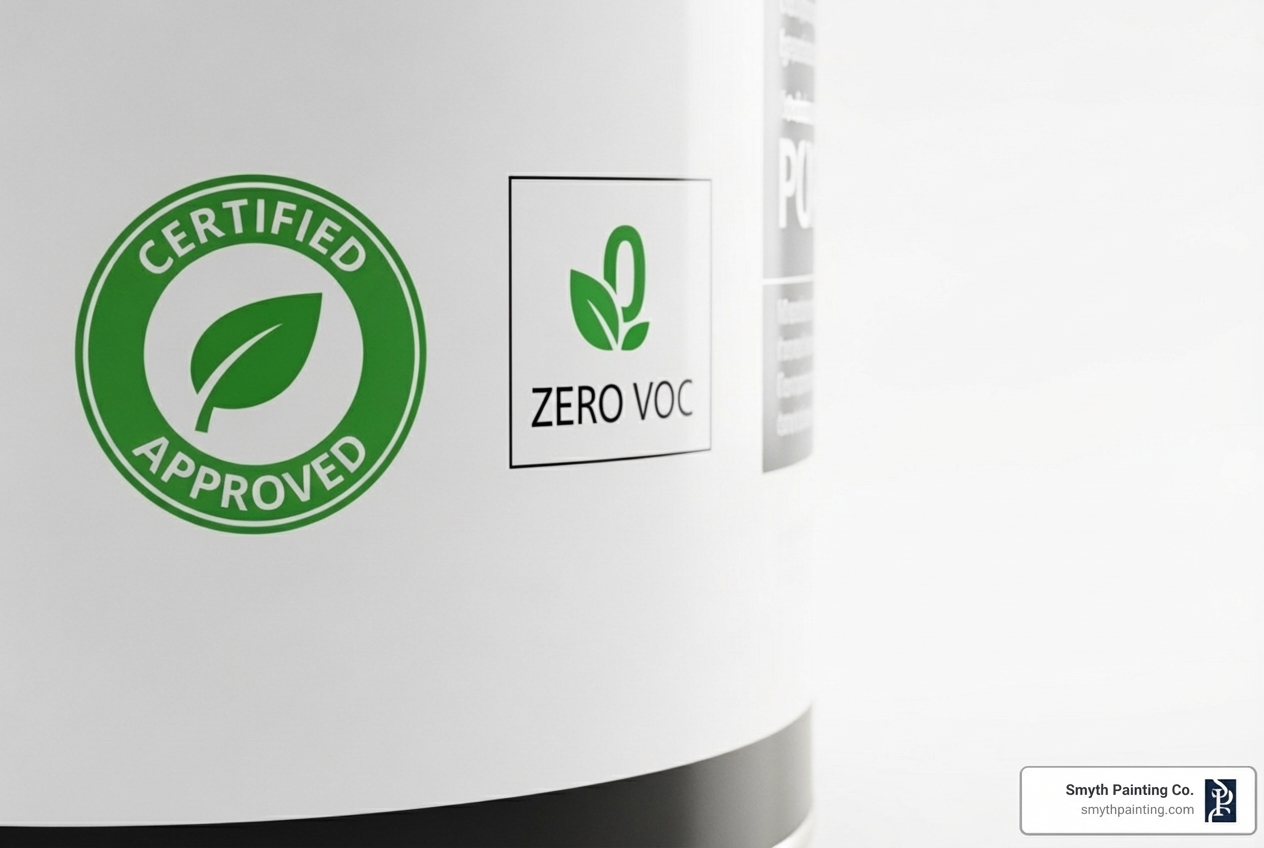
When selecting paint, look for third-party certifications. These independent seals of approval mean a product has met specific environmental and health standards, taking the guesswork out of your decision.
It’s also crucial to verify claims. Some brands use terms like “natural” loosely. Look for detailed ingredient lists and check them against environmental databases. A truly eco-friendly company will be transparent about its product’s composition.
Other aspects of eco-friendly paint include recycled content, which reduces waste and can improve durability, and natural ingredients like plant-based resins or pigments, which reduce reliance on petrochemicals.
Key Certifications and Ingredients to Look For
To make your search easier, here are the key certifications and ingredients we recommend looking for in environmentally friendly exterior paint:
- GREENGUARD label: This certification ensures a product meets strict chemical emission limits (typically <50g/L of VOCs), contributing to healthier air quality.
- Green Seal: This certification limits VOCs to 50 g/L for flat finishes and 100 g/L for non-flat finishes and considers the product’s entire lifecycle.
- Plant-based resins: Bio-based emulsions from plants are excellent alternatives to petroleum-based binders.
- Natural pigments: Derived from earth, minerals, or plants, these offer beautiful colors with less environmental impact.
- Mineral-based paints: Made from lime, clay, or silicate, these paints offer a breathable, durable, and naturally low-VOC finish.
- Recycled paint programs: Some manufacturers reprocess unused paint, significantly reducing landfill waste.
- Low-biocide formulas: Opting for formulas with minimal or no biocides is better for the environment.
- Zinc oxide: A preferred fungicide for exterior paints, it effectively prevents mold and mildew without the harsh impact of other biocides.
Understanding the Difference: ‘Natural’ vs. ‘Low-VOC’ Paints
The terms “natural” and “low-VOC” are often used interchangeably, but they have important distinctions when choosing environmentally friendly exterior paint.
| Attribute | Natural Paints | Low-VOC Paints |
|---|---|---|
| Ingredients | Primarily derived from natural sources like plant oils, resins, clays, minerals, milk protein (casein), and earth pigments. Can sometimes contain plant-derived VOCs (terpenes). | Typically water-based latex or acrylic paints formulated to minimize synthetic VOCs. May still contain synthetic binders and additives, but with reduced hazardous chemicals. |
| VOC Levels | Often entirely VOC-free or contain minimal VOCs from plant-based ingredients. Some simple formulas like chalk or milk paint can be entirely VOC-free. | EPA-regulated limits: <250 gm/l for latex, <380 gm/l for oil-based. “Zero-VOC” means <5 gm/l. The focus is on reducing specific hazardous VOCs. |
| Durability | Varies greatly. Some mineral paints are extremely durable and breathable; others like milk paints are more suited for specific applications and may require sealing for exterior use. | Excellent durability and weather resistance, especially modern acrylic formulas. Engineered to perform like traditional paints but with fewer toxins. |
| Cost | Can be higher due to specialized ingredients and smaller-scale production. | Generally comparable to conventional premium paints, though some zero-VOC options might be slightly higher. |
| Best Use Cases | Historic restorations, breathable surfaces, unique aesthetic preferences, specific health sensitivities. For exteriors, mineral paints can be very effective. | Most residential and commercial exterior projects where strong performance, wide color selection, and reduced VOCs are priorities. Ideal for modern homes. |
While “natural” paints like milk paint from The Real Milk Paint Co. are great for some interior projects, their exterior suitability varies. Milk paint, for instance, requires a sealant for outdoor weather protection. Mineral-based paints, however, can be very resilient for exterior use.
“Low-VOC” and “zero-VOC” acrylic paints reduce harmful compounds while maintaining high performance. This makes them a practical and effective choice for most exterior painting projects in Southern New England.
Performance, Application, and Cost of Eco-Friendly Exterior Paint
When considering environmentally friendly exterior paint, you might wonder about performance and cost. The good news is that modern advancements have largely eliminated these trade-offs.

Modern eco-friendly paints offer impressive durability, longevity, and weather resistance. Testing shows today’s best exterior paints resist cracking, fading, and mildew for a decade or more—a huge improvement over older formulas. Advanced formulations with 100 percent acrylic polymers create a robust, flexible film that protects your home against harsh New England weather for longer.
Choosing the Right Eco-Friendly Paint for Your Surface and Climate
Selecting the right environmentally friendly exterior paint depends on your home’s surfaces and the unique climate of Rhode Island and SE Mass.
- Wood: Zero-VOC or low-VOC acrylic latex paints are flexible and adhere well to wood siding, trim, and fences.
- Stucco: Breathable and flexible acrylic latex eco-friendly paints are an excellent choice to prevent cracking.
- Metal: For primed metals, look for eco-friendly paints specifically designed for metal surfaces to ensure good adhesion and rust inhibition.
- Concrete: Durable, breathable, high-quality acrylic latex options are ideal for concrete walls and foundations.
Climate considerations are paramount in Southern New England. For homes with high sun exposure, choose a paint with high UV resistance to prevent fading. Given our humidity, mildew resistance is also a must; look for paints that inhibit mold growth, ideally with alternatives to harsh biocides like zinc oxide.
The finish you choose also plays a role in aesthetics and performance. For a deeper dive, check out our guide on Paint Finishes: A Simple Guide.
Best Practices for Applying Your Environmentally Friendly Exterior Paint
Proper application is key to maximizing the paint’s performance and longevity in our New England climate.
- Surface preparation: This is the most critical step. The surface must be clean, dry, and sound. We recommend professional Softwashing to gently and effectively clean your home’s exterior without damage. Repair any cracks or damage before painting.
- Priming: A dedicated eco-friendly primer can improve adhesion and provide a uniform surface, even for paint-and-primer-in-one products. Always check the manufacturer’s recommendations.
- Application techniques: Ensure even coverage whether brushing, rolling, or spraying. The low odor of many zero-VOC formulas makes the process more pleasant.
- Number of coats: Two coats are recommended for most exterior projects for optimal color, durability, and protection.
- Curing time: Allow paint to fully cure for maximum hardness and durability. Follow the manufacturer’s guidelines, especially for exterior paints that need to withstand weather.
As for potential drawbacks, some natural paints may have limitations in extreme weather if not sealed or offer a narrower color palette. Also, water-based products can freeze during shipping in cold weather, so check with your supplier about winter shipping policies in Rhode Island.
Frequently Asked Questions about Eco-Friendly Exterior Paints
Here are answers to common questions from homeowners in Newport County and SE Mass about environmentally friendly exterior paint.
How does the durability of eco-friendly exterior paint compare to conventional paint?
Modern environmentally friendly exterior paint is incredibly durable, often outperforming older conventional paints. While early eco-paints sometimes struggled, today’s formulations are robust. They use high-quality acrylic polymers and binder solids to create a flexible, tough film that resists cracking and peeling. Testing shows these paints can last a decade or more. At Smyth Painting Co., we’ve seen these longevity improvements firsthand. Many options are engineered for superior UV, fade, and mildew resistance, which is vital for our coastal climate. Choosing eco-friendly no longer means compromising on durability.
Is eco-friendly exterior paint significantly more expensive?
It’s important to consider the initial cost vs. long-term value. While some eco-friendly paints have a higher price per gallon, they often provide better value over time. Here’s why:
- Coverage rates: High-quality eco-paints often cover more square footage per gallon, meaning you buy less paint.
- Durability impact on repaint frequency: Because they last longer (10-15 years vs. 5-7), you repaint less frequently, saving significantly on materials and labor over time.
The extended lifespan and efficient coverage make environmentally friendly exterior paint a smart financial decision for homeowners in areas like Barrington, North Kingstown, or Narragansett.
Are there any limitations to using eco-friendly exterior paints?
While the benefits are numerous, there are a few potential limitations, though they are becoming less common:
- Color availability: Niche natural brands may have limited palettes, but major manufacturers offer extensive color ranges in their eco-friendly lines.
- Sheen options: Most sheens are available, but extremely high-gloss options might be less common in some zero-VOC formulas.
- Application in extreme temperatures: Most water-based paints have temperature requirements (e.g., above 50°F). However, some premium options are now formulated for low-temperature application (down to 35°F), extending the New England painting season.
- Surface compatibility: Always check product specifications, as some paints aren’t recommended for oily woods or horizontal surfaces where water pools.
- Curing times: Full curing times can sometimes vary, so it’s crucial to follow manufacturer guidelines for optimal durability.
These limitations are minor and can be managed by choosing the right product. We at Smyth Painting Co. can help you select the best environmentally friendly exterior paint for your project.
Achieve a Beautiful and Sustainable Finish for Your Home
Choosing environmentally friendly exterior paint for your home in Rhode Island or SE Mass is a smart, responsible decision with multiple benefits. You improve your home’s curb appeal while choosing a healthier living environment and a more sustainable planet.
The long-term value is clear. Improved durability means less frequent repainting, saving you time and money. More importantly, you’re protecting your family’s health by reducing exposure to harmful VOCs from traditional paints, leading to better air quality around your home.
Your choice also contributes to environmental stewardship. By opting for paints with fewer hazardous chemicals and recycled content, you help reduce pollution and conserve resources. It’s a small change that makes a big difference.
For the best results, we always recommend professional application. Experienced painters understand the nuances of surface preparation and application that ensure your eco-friendly paint performs at its peak. At Smyth Painting Co., we pride ourselves on delivering high-quality, professional work with excellent communication. We are committed to offering eco-friendly options to homeowners in Newport, Middletown, Jamestown, and across Southern New England.
Ready to transform your home with a beautiful, durable, and sustainable finish? Let us help you choose the best environmentally friendly exterior paint options for your property.
Contact us for your exterior painting project today, and let’s bring your vision to life, responsibly.


