

Why Winter is an Ideal Time for Interior Home Painting Projects
Interior painting in the winter is not only safe—it’s often the best time to refresh your home’s interior. Here’s what you need to know:
Quick Answer: Yes, winter is excellent for interior painting because:
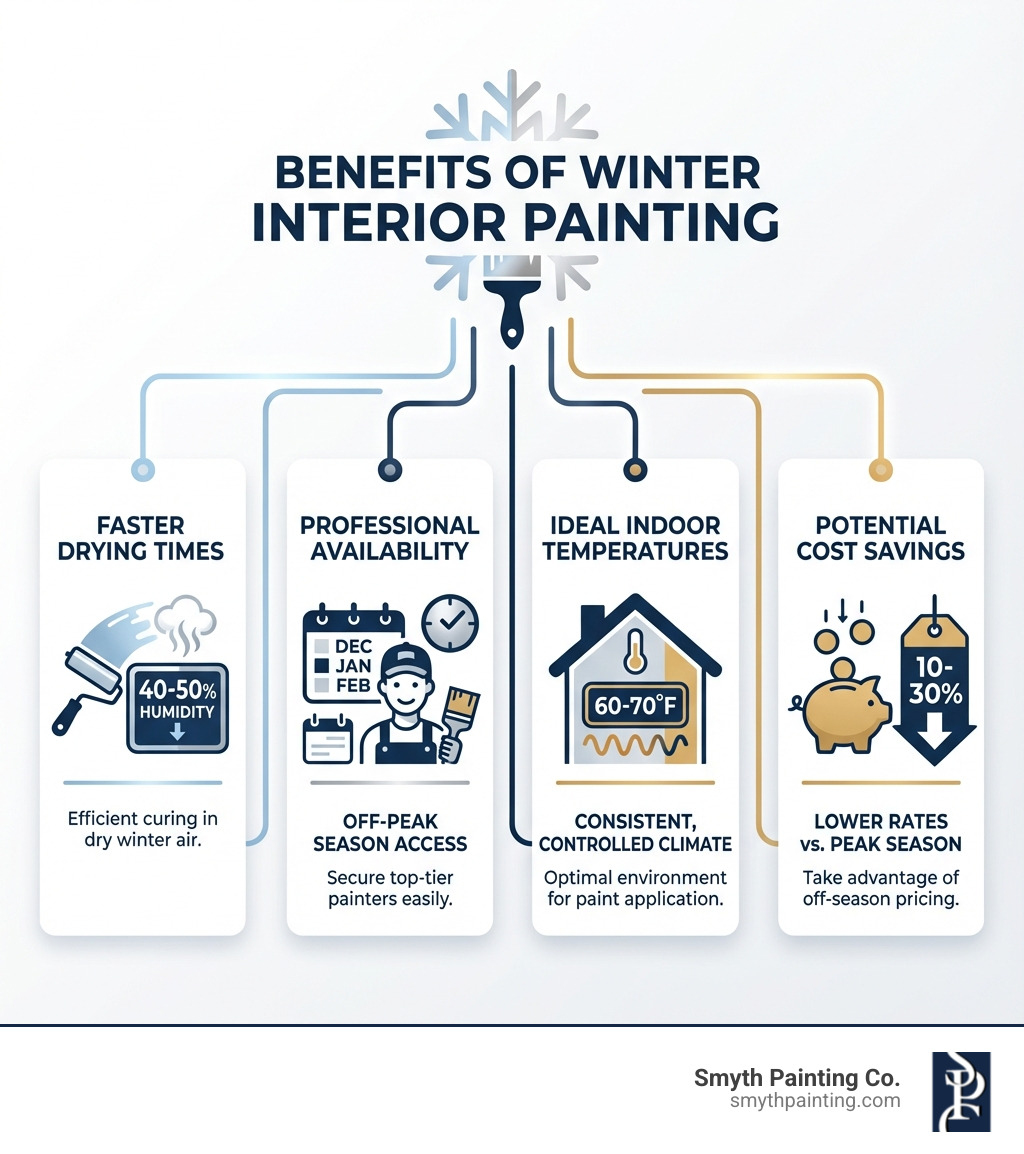
- Lower humidity means paint dries faster and adheres better to walls
- Professional painters have more availability and may offer off-season discounts
- Consistent indoor temperatures (60°F-85°F) create ideal painting conditions
- Modern low-VOC paints make ventilation concerns minimal, even with closed windows
When considering interior painting during the winter months, many homeowners worry about cold temperatures, ventilation, and whether paint will dry properly. The reality is that your heated home provides a controlled environment that’s often better than painting in humid summer conditions. Winter’s dry air helps paint cure quickly and bond strongly to surfaces, while you spend more time indoors to enjoy your freshly painted spaces.
As Douglas Smyth, founder of Smyth Painting Company serving Rhode Island and SE Massachusetts since 2005, I’ve completed countless successful interior painting projects during winter months, helping homeowners transform their spaces when indoor conditions are at their best. My experience has shown that interior painting in the winter often produces superior results compared to other seasons when managed correctly.
The Surprising Advantages of Painting Your Home’s Interior in Winter
When the temperatures drop across Rhode Island and SE Massachusetts, many of us hunker down, spending more time indoors. This makes winter an unexpectedly ideal season for giving your home’s interior a fresh new look. Far from being a hindrance, winter actually offers several unique benefits for interior painting in the winter.

One of the most significant advantages is the lower humidity that typically accompanies colder weather. Unlike the sticky, humid days of summer, winter air is naturally drier. This is a game-changer for paint. Lower humidity allows paint to dry and cure more efficiently and effectively. This means less waiting time between coats, reducing the overall project duration and allowing us to achieve a smoother, more durable finish. It helps the paint bond better to your walls, reducing the risk of issues like smudges, streaks, or uneven drying.
Finally, consider the joy of enjoying your new space when you need it most. With the holidays often just around the corner, or simply as a way to combat the inevitable winter blues, a freshly painted room can bring warmth, light, and renewed energy to your home. Imagine hosting family gatherings in a beautifully updated living room or simply relaxing in a bedroom that feels brand new. Completing your interior painting in winter also frees up your precious summer months for outdoor activities, vacations, and enjoying the beautiful Rhode Island and SE Mass coastline. It’s a smart way to get your home ready for spring without sacrificing your warm-weather fun.
Creating the Ideal Environment for Interior Painting in the Winter
While winter offers natural advantages, successfully undertaking interior painting in the winter still requires creating and maintaining the right indoor conditions. Think of your home as a controlled environment where we can optimize temperature, humidity, and ventilation to ensure a flawless and long-lasting finish.
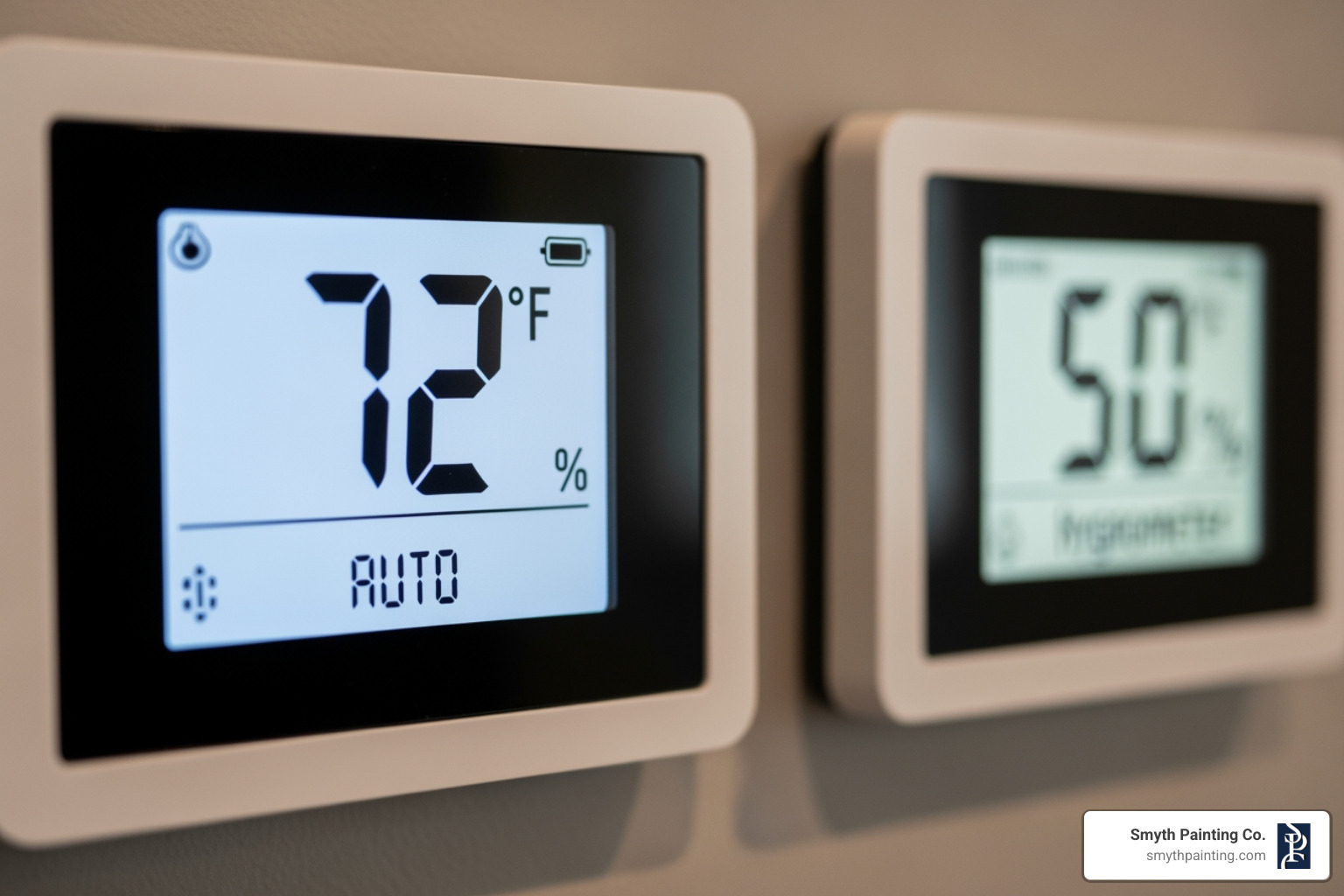
The primary goal is to mitigate any potential risks associated with painting indoors, such as lingering paint fumes and volatile organic compounds (VOCs). By carefully managing these factors, we can ensure a safe and efficient painting process, even when it’s chilly outside.
Managing Temperature for a Flawless Finish
Temperature is paramount for proper paint application and curing. Paint is a chemical product, and its drying and bonding process is highly sensitive to thermal conditions. We always aim to maintain a consistent temperature range for optimal results.
Our research and extensive experience show that the ideal temperature for paint to cure is typically in the 70s F (20s C). More broadly, we ensure that interior rooms are kept between 50°F and 85°F during painting and for at least 48 hours afterward. The sweet spot for application and drying often lies between 60°F and 70°F. Painting below 50°F can prevent paint from bonding correctly, leading to poor adhesion, slow drying, and even premature paint failure like chipping or peeling. Cold temperatures can cause paint to thicken, making it harder to apply smoothly and achieve a level finish.
One crucial detail to remember, especially in our coastal New England homes, is that wall temperature can be colder than the ambient room temperature, particularly for exterior-facing walls. We always account for this, as a cold wall can hinder proper paint adhesion even if the air feels warm. We ensure consistent heating throughout the space, avoiding drafts, to keep both the air and the surfaces at an optimal temperature. If your home tends to have colder walls, we might even recommend turning up the heat slightly higher than usual in the painting area to ensure the walls themselves are adequately warm.
The Role of Humidity in Winter Painting
As we’ve touched upon, winter’s naturally lower humidity is a huge benefit for interior painting in the winter. The ideal humidity level for interior painting is between 40% and 50%.
Low humidity allows the water or solvents in the paint to evaporate more quickly and evenly, which is crucial for the paint to dry and cure properly. This faster evaporation helps us avoid common issues like streaks, drips, or an uneven finish. Conversely, high humidity (above 70%) can significantly slow down drying times, causing the paint to stay wet and tacky, making it susceptible to smudges, dust accumulation, and even surfactant leaching (sticky spots or streaks). While very low humidity can sometimes lead to paint drying too quickly, causing brush marks, the typical winter conditions in our region usually fall within the beneficial range. If we encounter an unusually dry spell, we might use a humidifier to bring the levels up slightly, but this is rare. Generally, winter’s dry air is our ally, helping us deliver a beautiful, durable finish.
Ensuring Proper Ventilation Without Freezing
A common concern about interior painting in the winter is how to ensure proper ventilation without letting in freezing air. Thankfully, with modern paints and techniques, this is less of an issue than it used to be.
The key is air circulation. Even with low-VOC paints, some ventilation is beneficial to help the paint dry faster and to dissipate any lingering odors or trace fumes. We primarily achieve this by using fans to circulate air within the room and throughout the house by opening interior doors. This creates a gentle airflow that aids drying without drastically lowering the indoor temperature.
For most modern interior paints, especially low-VOC (Volatile Organic Compound) and zero-VOC paints, the need for wide-open windows is minimal. These paints are specifically formulated to release fewer chemicals into the air, making them much safer and virtually odorless. This is particularly important for homes with sensitive individuals, newborns, or pets. We can often simply crack a window slightly in the painting area or in an adjacent room for short periods, or rely primarily on fans, to maintain adequate airflow without compromising comfort or efficiency. The goal is to move air, not necessarily to exchange it with the frigid outdoors at a high rate.
A Step-by-Step Guide to Your Winter Painting Project
Successful interior painting in the winter is all about meticulous planning and execution. From preparing your surfaces to selecting the right paint and tools, every step contributes to a beautiful, long-lasting result.
Crucial Preparation for a Successful Project
Proper preparation is, without a doubt, 80% of a great paint job. We believe it’s the most critical phase, ensuring the paint adheres well and the finish looks flawless.
- Clear and Clean Your Space: We start by clearing the room, moving furniture to the center or an adjacent room. Any remaining items are covered with sturdy drop cloths. Switch plates and outlet covers are removed. Then, we thoroughly clean the walls, removing dust, grime, and cobwebs. A simple wipe-down with a damp cloth is often sufficient, but for stubborn marks, a mild cleaner might be used.
- Repair and Sand: We inspect the walls for any imperfections. Small holes from nails or screws are filled with spackle, and cracks are repaired. Once dry, these areas are sanded smooth. If any areas have peeling paint, they are scraped and sanded to create an even surface. This creates a uniform canvas for the new paint.
- Protect Surfaces: We use high-quality painter’s tape to mask off trim, baseboards, window frames, and electrical sockets, ensuring crisp, clean lines. Drop cloths are laid down to protect floors and furniture from accidental drips or splatters. For delicate surfaces, we might use specialized surface protection boards.
- Prime Where Necessary: While some paints include primer, we often recommend a separate primer coat, especially when changing from a dark color to a light one, or vice-versa, or when dealing with patched areas. Primer helps with adhesion, provides a uniform base, and can prevent stains from bleeding through.
- Storing Paint Correctly: For any touch-ups down the line, we always ensure leftover paint is stored properly. If you’re using previously stored paint, especially if it’s been in a cold garage, check its usability. Allow it to thaw completely if frozen, then stir it well. If it’s lumpy, stringy, or has a cottage cheese-like consistency, it’s best to discard it.
For specific areas like cabinet refinishing, our preparation steps are even more detailed, involving thorough cleaning, degreasing, sanding, and often priming to ensure a durable and beautiful finish that lasts for years.
Choosing the Best Paint for Interior Painting in the Winter
The type of paint you choose plays a significant role in the success of your interior painting in the winter project. Modern paint technology has made winter painting more accessible and safer than ever.
We highly recommend using low-VOC (Volatile Organic Compound) or zero-VOC paints. These formulations are designed to release significantly fewer chemicals into the air, minimizing odors and improving indoor air quality. This is particularly important when windows might be closed more often during colder months. They make the painting process more pleasant and healthier for everyone in the home, a key part of our commitment to eco-friendly options and a smooth customer experience.
For interior walls, latex (water-based) paints are generally our go-to choice. They offer several benefits for winter painting:
- Fast-Drying Formulas: Many latex paints are designed to dry quickly, which, combined with winter’s lower humidity, means we can often apply subsequent coats in as little as 4-6 hours. This speeds up the overall project.
- Easier Cleanup: Latex paints clean up easily with soap and water.
- Less Odor: Compared to oil-based paints, latex paints have a much milder odor, which is a big plus when ventilation might be limited.
While oil-based paints can be more durable in certain applications, they take significantly longer to dry (often 24 hours or more between coats) and emit stronger fumes. For these reasons, we generally reserve them for specific applications like trim or doors, where their hardness is a benefit, and ensure robust ventilation.
Finally, consider the paint finish. Your choice of finish impacts both the aesthetics and durability of your walls.
- Matte/Flat: Absorbs light, hides imperfections well, but is less durable and washable.
- Eggshell/Satin: Offers a subtle sheen, more durable and washable than flat, popular for living areas.
- Semi-Gloss/Gloss: Highly durable, very washable, and reflective, ideal for high-traffic areas like kitchens, bathrooms, and trim.
We can help you steer the options and choose the perfect paint finishes for each room’s function and your aesthetic preferences.
Frequently Asked Questions about Winter Interior Painting
Homeowners in Rhode Island and SE Massachusetts often have similar questions about undertaking a painting project during the colder months. Let’s address some of the most common ones.
Is it safe to paint indoors during winter?
Absolutely, yes! It is safe to paint indoors during winter, provided proper precautions are taken. Modern paint formulations have come a long way. The development of low-VOC and zero-VOC paints means that the health risks associated with paint fumes are significantly reduced. These paints are virtually odorless and release minimal harmful chemicals, making them ideal for indoor use, especially when windows might be closed more often.
At Smyth Painting Co., we prioritize health-conscious painting. We ensure proper ventilation techniques are used, such as circulating air with fans and keeping interior doors open, to help dissipate any odors and aid drying. For more detailed information on painting safety, you can refer to resources like Is It Safe To Paint Indoors in the Winter? – James T Davis. With these considerations, you can confidently proceed with your interior painting in the winter project.
How does paint drying time differ in winter?
This is where winter truly shines! Paint drying time can actually be faster in winter compared to other seasons, thanks to the naturally lower humidity.
Paint drying is a two-stage process: first, the evaporation of water or solvents (drying), and second, the chemical hardening and bonding of the paint film (curing). In winter, the drier indoor air accelerates the water evaporation phase for latex paints. While cooler temperatures can slightly slow down the chemical curing process, maintaining a consistent indoor temperature (our recommended 60°F-70°F) ensures optimal curing conditions.
Compare this to a humid summer day, where the air is already saturated with moisture, making it much harder for the water in the paint to evaporate. This can lead to longer drying times, and even issues like paint remaining tacky.
Here’s a simplified comparison:
| Condition | Humidity Level | Average Drying Time (Latex Paint) |
|---|---|---|
| High-Humidity Summer Day | >60% | 6-8+ hours (between coats) |
| Low-Humidity Winter Day | 40-50% | 4-6 hours (between coats) |
We ensure that consistent indoor heat is maintained throughout the drying and curing period, which typically extends for at least 36-48 hours after the final coat. This combination of low humidity and controlled warmth makes interior painting in the winter incredibly efficient.
Conclusion: Transform Your Home This Winter
As we’ve explored, interior painting in the winter isn’t just possible—it’s an exceptionally smart choice for homeowners in Rhode Island and SE Massachusetts. The unique combination of naturally lower humidity, controlled indoor temperatures, and increased professional availability creates an ideal environment for changing your living spaces.
We’ve seen that with proper preparation, the right paint choices (especially low-VOC formulas), and careful management of temperature and ventilation, winter projects can yield superior, long-lasting results. You can enjoy faster drying times, potentially benefit from cost savings, and have your home looking its best just when you’re spending the most time in it.
Don’t let the cold weather deter you from updating your home’s interior. Accept the season as an opportunity for renewal. For a professional, stress-free experience that guarantees high-quality, detailed work and excellent communication, trust the experts at Smyth Painting Co. We’re ready to help you bring warmth and color to your home this winter.
Contact Us for your winter project today, and let’s discuss how we can make your vision a reality.


