

Why Exterior Fence Paint Matters for Rhode Island Homeowners
Exterior fence paint is more than cosmetic—it’s a critical shield against New England’s harsh weather. Here’s a quick guide:
Quick Guide to Choosing Exterior Fence Paint:
- Paint Type – Latex/acrylic is best for most wood fences (durable, low-VOC).
- Finish – Flat/matte hides flaws; semi-gloss offers better durability.
- Color – Choose shades that complement your home (grey and green are trending in RI).
- Preparation – Clean, repair, and prime for lasting results.
- Application – Two coats are typical; spray for speed, brush for control.
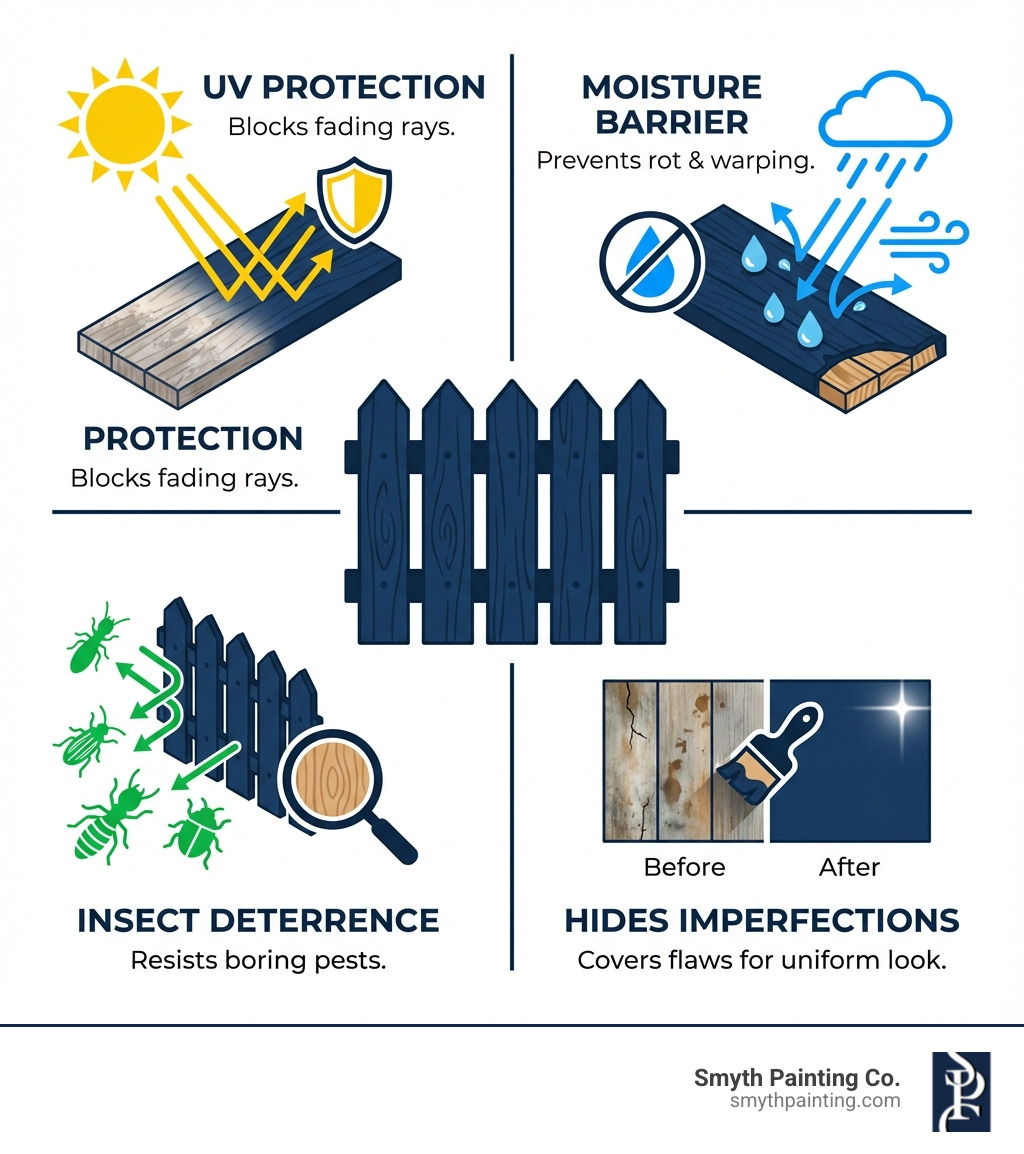
A wood fence impacts your home’s curb appeal. Painting protects it from UV rays, moisture rot, insects, and mildew. With the right paint and proper application, you’re investing in protection that can last up to 10 years.
Rhode Island’s coastal climate is tough on exterior wood. Winter freeze-thaw cycles, summer humidity, and salt air break down unprotected fences quickly. Without proper protection, a fence will show wear within a few years.
I’m Douglas Smyth, founder of Smyth Painting Company. Since 2005, I’ve helped Newport County and Rhode Island homeowners protect their properties. Through years of working with exterior fence paint on historic and modern homes, I’ve learned what works in our unique New England climate.
Painting vs. Staining: Making the Right Choice for Your Fence
One of the first decisions when refreshing a wooden fence is whether to paint or stain it. Both improve appearance and offer protection, but in different ways. Understanding these differences is key to making the right choice for your Rhode Island home.
Paint forms an opaque layer that covers the wood grain, offering a broad range of color options. It’s excellent for changing an older, weathered fence by hiding imperfections and signs of age. Paint creates a thick barrier against the elements, providing superior protection from UV rays, moisture, and pests. However, it can chip, crack, and peel over time, especially in New England’s climate. Repainting often requires extensive prep work like scraping and sanding.
Stain, on the other hand, penetrates the wood, allowing the natural grain and texture to show through for a more rustic aesthetic. It comes in various opacities, from transparent to solid. Stain is often lower maintenance because it fades gracefully rather than chipping or peeling. Re-staining usually requires less prep—often just a good cleaning. However, stains offer fewer color options and may provide less UV and moisture protection, potentially requiring more frequent reapplication.
Here’s a quick comparison to help you weigh your options:
| Feature | Paint | Stain |
|---|---|---|
| Appearance | Opaque, covers wood grain, wide color variety | Improves natural wood grain, transparent to solid opacities |
| Durability | Forms a thick protective barrier, excellent UV/moisture protection | Penetrates wood, good UV/moisture protection, preserves wood texture |
| Maintenance | Can chip/peel, requires more prep for reapplication | Fades gracefully, less prep for reapplication |
| Application | Often requires primer, two coats typically needed | Absorbs into wood, may require fewer coats |
| Longevity | Up to 10 years (with proper prep and quality paint) | 1-8 years (depending on type and climate) |
| Cost | Can be less expensive initially (some formulations) | Can be more expensive initially (some formulations) |
Your choice depends on your desired look, your fence’s condition, and your maintenance commitment. For a dramatic color change, maximum protection, and a uniform finish, paint is your best bet. To highlight the wood’s natural beauty with a finish that fades rather than peels, stain is the way to go. For a deeper dive, check out this comprehensive guide to painting and staining.
Your Step-by-Step Guide to a Flawless Fence Finish
Once you’ve decided on paint, a professional-looking finish starts long before the brush touches the wood. Here’s our step-by-step approach to ensure your painted fence stands up to the Rhode Island elements.
Step 1: Prepare Your Fence for a Lasting Finish
Preparation is the most crucial step for any exterior painting project. Skimping on prep will lead to premature peeling and a disappointing finish.
First, clear the area around your fence, moving furniture and lawn decorations. Protect nearby plants and landscaping with drop cloths or plastic sheeting. Use painter’s tape to cover any hardware, gates, or adjacent home sections you don’t want painted.
Next, clean the fence thoroughly to remove dirt, grime, and mildew that prevent paint adhesion. While pressure washing can damage wood, we recommend soft washing. This method uses low-pressure cleaning solutions to safely remove contaminants without harming the fence. Use a dedicated remover for any mold or mildew stains.
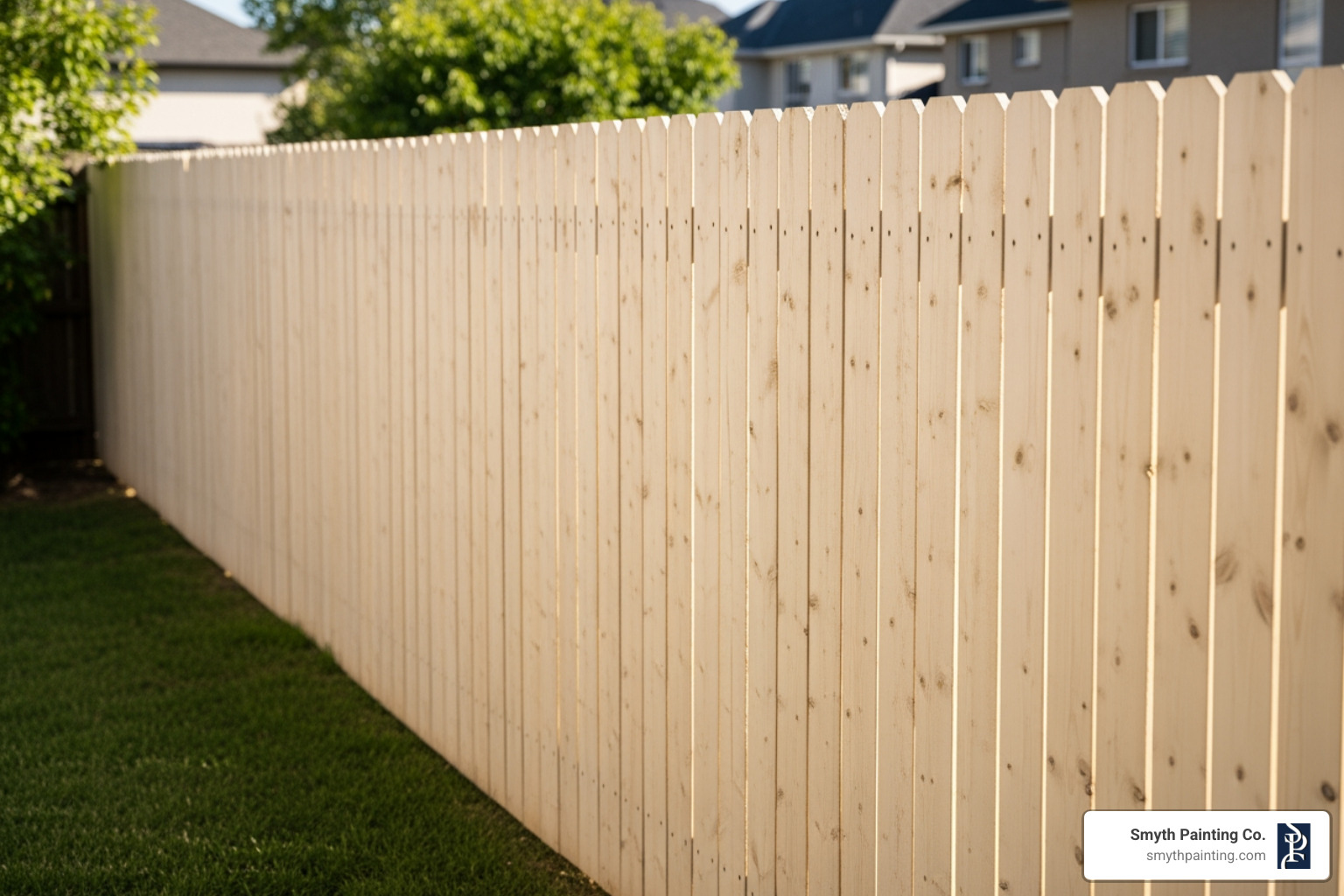
After cleaning, let the fence dry completely, which can take 24 hours or more in New England’s humidity. Painting damp wood traps moisture, causing blistering and peeling. Ensure the wood is fully dry before proceeding.
Inspect the fence for damage. Tighten loose hardware and replace any rotted boards. Use wood filler for minor cracks, letting it dry before sanding smooth. Sand any peeling paint or rough spots to create an even surface for the new paint.
Special considerations for different wood types:
- Pressure-treated wood: This wood is chemically treated and must cure for several months (6-12) before painting. Painting too soon traps moisture and causes paint failure.
- Cedar and Redwood: These woods contain natural tannins that can bleed through paint, causing stains. Use a high-quality, stain-blocking primer, especially on new or unpainted cedar and redwood.
The goal is a clean, dry, sound, and smooth surface. Proper preparation will significantly extend the life of your painted fence. For more on cleaning methods, see why soft washing is better than power washing for Rhode Island homes.
Step 2: Prime and Apply the Paint Like a Pro
With a prepped fence, it’s time to paint. First, apply a quality exterior primer, especially on new or weathered wood. Primer improves adhesion, creates a uniform base, seals the wood to prevent moisture and tannin bleed-through (crucial for cedar/redwood), and ensures a better-looking topcoat.
Now, let’s talk application methods:
- Brush: Offers the most control for detailed work, edges, and cracks. It ensures deep paint penetration into the wood grain.
- Roller: Faster for large, flat surfaces. Use a thick-nap roller (3/4-inch or more) for rough wood to ensure good coverage.
- Paint Sprayer: The fastest method for long fences or many pickets, providing a smooth finish. Requires careful masking to prevent overspray and practice to avoid drips.
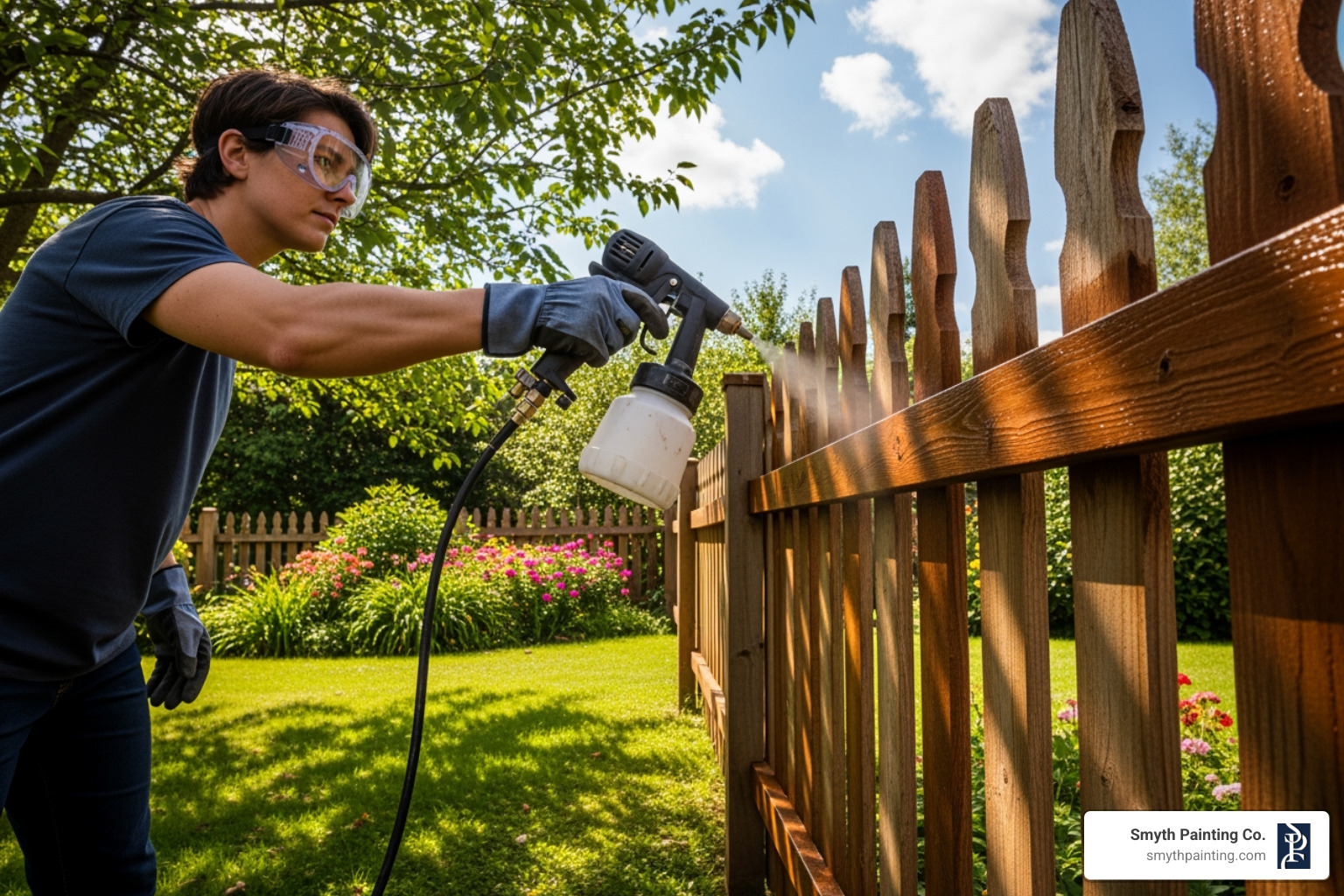
Whichever method you use, always back-brush or back-roll by immediately going over the sprayed or rolled area with a brush. This works the paint into the wood, eliminates drips, and ensures even coverage. Protect your landscape with drop cloths and check the weather. Ideal conditions are 50-90°F with low humidity and no rain expected. Avoid direct sunlight, which can cause paint to dry too quickly and leave brush marks.
To ensure your hard work pays off, review some common DIY painting pitfalls and how to avoid them.
Step 3: Curing and Applying Subsequent Coats
You’ve applied the first coat, but the job isn’t done. The drying and curing process is crucial for durability.
Drying time between coats is critical. Water-based (latex/acrylic) exterior fence paint is often ready for a recoat in 4-8 hours, while oil-based paints can take a day or longer. Always check the manufacturer’s instructions on the can for specific recoat times. Rhode Island’s temperature and humidity greatly impact drying times, so plan your project for a stretch of good weather.
How many coats are needed? We almost always recommend two coats for a fence. The first coat primes and seals the wood, while the second builds the protective film and provides a rich, uniform color. While one coat might work over a well-maintained surface, two coats always offer superior protection and longevity.
After the final coat, allow the paint to fully cure, which can take several days or weeks depending on the paint and weather. Be gentle with the fence during this time to avoid scuffs. Once cured, your fence will be ready to face the New England seasons.
Choosing the Best Exterior Fence Paint and Color
Now that you know the “how-to,” let’s select the perfect exterior fence paint and color for your project. The right choice makes all the difference in longevity and aesthetic appeal.
What Type of Exterior Fence Paint is Best?
The best choice for your wooden fence in Rhode Island will offer durability, weather resistance, and ease of application.
- Latex (Acrylic) Paint: This is our top recommendation. Durable and flexible, acrylic paints are breathable, so they resist cracking as wood expands and contracts. They offer excellent resistance to blistering, peeling, and mildew—crucial in our humid climate. They are also low-VOC, eco-friendly, and clean up with soap and water. Many are self-priming, simplifying the process.
- Oil-Based Paint: Oil-based paints are less common now but still useful for metal or very weathered wood. They offer great adhesion and stain-blocking. However, they dry slowly, have higher VOCs, require mineral spirits for cleanup, and can become brittle and crack over time.
Demand for durable, weather-resistant paint is high in New England. Look for paints with UV inhibitors and elastomeric polymers, which improve durability and flexibility against harsh sunlight and temperature changes.
Paint Finishes:
Your chosen finish affects both appearance and durability:
- Flat/Matte: Offers a non-reflective look that is excellent for hiding imperfections.
- Satin/Eggshell: A popular choice with a subtle sheen that is easier to clean and resists wear.
- Semi-Gloss: Provides a noticeable sheen and is even more durable and easier to clean, but highlights imperfections.
- Gloss: The most reflective and durable finish, but it will show every flaw. Generally not recommended for fences.
For most wooden fences, a flat or satin finish is ideal, balancing aesthetics and durability.
How to Choose the Right Exterior Fence Paint Color
Choosing the right fence color can dramatically impact your home’s curb appeal. Consider these factors:
- Complement Your Home’s Exterior: Your fence should work with your house. A classic Newport colonial might suit a crisp white or dark grey, while a rustic Little Compton home could use a deep green.
- Landscape Harmony: Consider your garden’s colors. A green fence can blend with foliage, while dark grey or black makes colorful plants pop.
- Neighborhood Aesthetic: Consider what’s common in your area. Decide if you want to blend in or stand out.
- Practicality and Maintenance: Lighter colors show dirt more easily and require more cleaning. Darker colors hide dirt better but can absorb more heat.
While white is a classic, greys and greens are increasingly popular in Rhode Island, complementing our coastal and wooded landscapes. A deep charcoal grey offers a modern look, while a muted sage green feels serene. For more ideas, see the top colors trending in Rhode Island homes and businesses.
The best color is one you love and that complements your home. Always test swatches on a small section of your fence before committing.
Maintaining Your Painted Fence for Lasting Beauty
Regular maintenance is key to maximizing the lifespan of your exterior fence paint and keeping your property looking its best in New England’s climate.
We recommend an annual inspection of your painted fence. Walk its length and look for:
- Cracks, Chips, and Peeling: These allow moisture to penetrate, leading to rot.
- Fading: Prolonged sun exposure can dull the color.
- Mildew and Algae: Humid, shaded areas are prone to growth.
- Water Absorption: If water soaks in instead of beading, the paint’s protective barrier is failing.
A regular cleaning works wonders. A gentle wash with a soft brush and mild detergent removes most grime. Use a dedicated cleaner for tough spots or mildew. Also, keep vegetation trimmed away from the fence to improve air circulation and prevent moisture retention.
Address minor issues with touch-ups to prevent bigger problems. Scrape loose paint, sand the area, prime if needed, and apply a fresh coat of paint. This proactive approach maintains the fence’s integrity.
How often should you repaint? A quality paint job can last up to 10 years, but this depends on the initial application quality and local conditions. Fences in highly exposed or moist areas may need repainting sooner. If water no longer beads on the surface or you see significant cracking and peeling, it’s time for a full repaint.
Many warning signs for fences are similar to those for decks. We’ve compiled insights on 7 warning signs your deck needs repairs and paint before the harsh New England winter that also apply to your fence. Staying vigilant will ensure your fence remains a beautiful asset for years to come.
Frequently Asked Questions about Fence Painting
Here are some common questions we hear from homeowners about painting their fences.
How many coats of paint does a fence need?
We recommend two coats of exterior fence paint for optimal durability and appearance. The first coat primes and seals the wood, while the second provides a uniform color and a stronger protective barrier against weather. While one coat might suffice in some cases, two coats ensure superior longevity, which is crucial in Rhode Island’s climate.
Is it better to spray, roll, or brush a fence?
The best method depends on your fence and preference for speed vs. control.
- Spraying: Fastest for large or intricate fences, providing a smooth finish. Requires careful masking to prevent overspray. Always back-brush to ensure adhesion.
- Rolling: Great for large, flat surfaces. Use a thick-nap roller for rough wood. Back-brushing is also recommended.
- Brushing: Offers the most control, ideal for details and ensuring deep paint penetration. It’s slower but ensures precision.
A combination often works best: spray or roll large areas and use a brush for details and edges.
How long does fence paint last?
A quality exterior fence paint job can last 5 to 10 years in New England. Longevity depends on:
- Paint Quality: Premium paints last longer.
- Surface Preparation: Proper prep is the most critical factor for a lasting finish.
- Application: Using two coats and proper techniques is key.
- Exposure: Harsh sun, moisture, and salt air (common in Rhode Island) will shorten the lifespan.
- Maintenance: Regular cleaning and touch-ups extend the paint’s life.
By comparison, stains typically last 1 to 8 years. Regular maintenance will help you know when it’s time for a refresh.
Conclusion
Painting your fence is more than a cosmetic upgrade; it’s a vital investment in protecting your property from Rhode Island’s climate. A quality exterior fence paint acts as a shield, preserving your fence’s integrity and extending its life. We’ve covered the differences between painting and staining, the steps for proper application, and how to choose the right paint and color.
The benefits are clear: improved curb appeal, protection from rot and UV damage, and the satisfaction of a job well done. The right paint can transform your outdoor space.
However, fence painting is a significant commitment. If you want professional results without the hassle, our team at Smyth Painting Co. is here to help. Our expertise in New England exterior painting ensures a high-quality finish that lasts, letting you enjoy your beautifully protected fence.
For more information on our exterior painting services and how we can help, please reach out.


