
Why Homeowners in Rhode Island Search for Cabinet Stripping Near Me
Cabinet stripping near me connects homeowners with local professionals who can restore tired, painted-over cabinets to their original wood beauty—or prepare them for a fresh new finish. If you’re searching for this service, here’s what you need to know right away:
Quick Guide to Finding Cabinet Stripping Services:
- Verify credentials – Look for licensed, insured contractors with verifiable local experience
- Ask about methods – Modern services offer eco-friendly, low-VOC chemical stripping or laser alternatives
- Check wood compatibility – Solid wood cabinets strip beautifully; veneer or laminate may need different approaches
- Confirm location – On-site stripping keeps cabinets in place; dip stripping requires removal and transport
- Review past work – Photos and testimonials reveal quality and attention to detail
- Understand timing – Professional stripping typically takes 1-3 days depending on cabinet size and condition
Cabinet stripping removes layers of old paint, varnish, or finish to reveal clean wood underneath. It’s far more cost-effective than replacement. For historic homes common throughout Rhode Island and southeastern Massachusetts, stripping preserves original craftsmanship that can’t be replicated.
The challenge? Finding reliable local services has become harder. As one homeowner noted in online discussions, “I can’t seem to find a place that does it!” Many traditional dip-stripping shops have closed due to environmental regulations and chemical disposal costs. This makes vetting your local options even more critical.
Professional stripping delivers results DIY methods simply can’t match. Trained technicians know how to remove stubborn finishes without damaging delicate wood grain, joints, or antique details. They understand which chemicals work on specific finishes, how to protect your home during the process, and how to prep surfaces for flawless refinishing.
I’m Douglas Smyth, founder of Smyth Painting Company, and I’ve been helping Rhode Island homeowners restore their cabinets since 2005, including offering cabinet stripping near me services that respect both historic integrity and modern quality standards. In this guide, I’ll walk you through exactly what to look for when hiring a cabinet stripping service in your area.
Understanding Cabinet Stripping Near Me and the Restoration Process
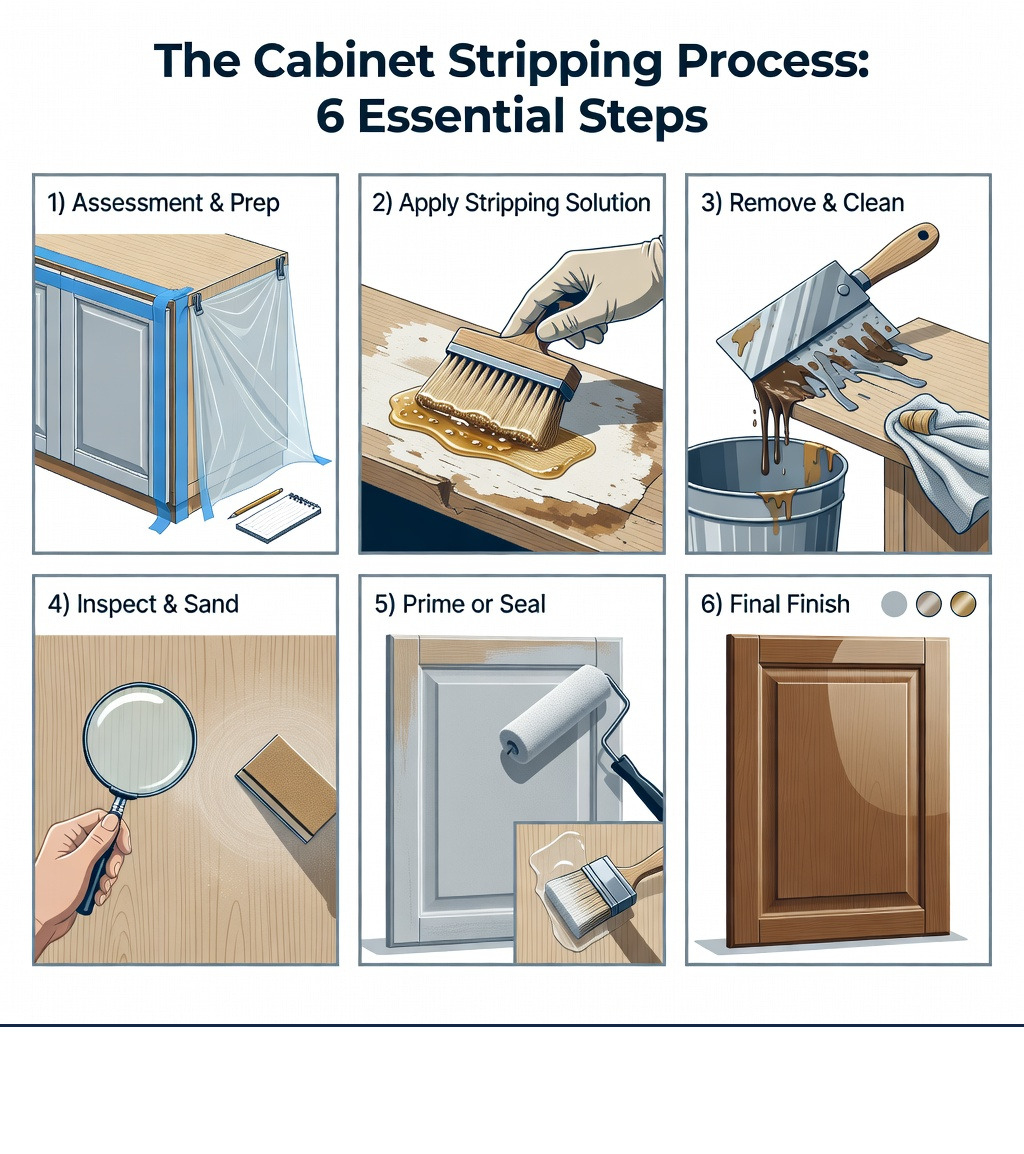
When you begin your search for cabinet stripping near me, it is helpful to understand exactly what the process entails. Cabinet stripping is the systematic removal of existing coatings—whether that be 80 years of lead-based paint, thick polyurethane, or a failing factory varnish.
The goal is to return the wood to its “raw” state. This isn’t just about looks; it’s about chemistry. For a new finish to adhere properly and last for decades, it needs a clean, stable surface. If you simply paint over old, peeling varnish, the new layer is only as strong as the failing one underneath.
The Two Main Approaches: On-Site vs. Off-Site
In the Southern New England area, you will generally find two ways to get this done:
- On-Site Stripping: This involves our team coming into your kitchen or bathroom, masking off every inch of your flooring and countertops, and stripping the cabinet boxes (the frames) right where they sit. This is essential because you can’t exactly “un-install” your kitchen frames without destroying your backsplash or counters.
- Off-Site/Removal: For the best results, we typically remove the cabinet doors and drawer fronts. These are taken to a controlled environment where they can be stripped flat. This ensures that every nook and cranny of a raised panel door is cleaned of old residue.
If you want to learn more about how we handle wood surfaces beyond just the kitchen, check out our more info about interior wood refinishing page.
Benefits of Professional Cabinet Stripping Near Me
You might be tempted to grab a jug of “orange” stripper from the local hardware store and spend your weekend in the garage. While we admire the DIY spirit, cabinet stripping is one of those tasks where professional intervention pays for itself quickly.
- Avoiding DIY Disasters: Traditional chemical strippers can be dangerous if not ventilated correctly. Furthermore, if the stripper isn’t neutralized properly, your new paint or stain will never dry—it will remain a sticky, gooey mess forever.
- Surface Hygiene: Over years of cooking, cabinets accumulate a “biofilm” of grease, steam, and hand oils. Professional stripping removes these contaminants, ensuring a hygienic surface that is ready for a fresh, durable finish.
- Detailed Workmanship: We use specialized tools to get paint out of deep wood grains and ornate carvings that a standard scraper would miss (or damage).
- Expertise in Finish Removal: Is it oil-based? Latex? Shellac? We identify the coating first so we can use the most effective and least abrasive removal method.
For those ready to move forward, you can get professional cabinet surface stripping near you through our dedicated service team.
Modern, Eco-Friendly Stripping Methods
The days of “hot tank” lye stripping that melted glue joints and left wood brittle are largely behind us. Today, we focus on methods that are safer for your family and the environment.
- Low-VOC Strippers: We prioritize products with low Volatile Organic Compounds. This means fewer harsh odors in your home and a safer environment for our technicians and your pets.
- Laser Cleaning Technology: An exciting alternative to chemicals is laser stripping. Research shows that laser cleaning technology can be up to 10 times faster than traditional chemical stripping or sandblasting. It works by vaporizing the coating without touching the wood, making it incredibly precise for high-end cabinetry.
- Family Safety: By choosing professional services that use modern, safer chemicals, you avoid the risk of lead dust or toxic fumes circulating through your HVAC system.
Interested in the next steps after the wood is bare? See our more info about cabinet refinishing to see how we transform raw wood into a showroom finish.
Is Stripping Safe for Your Antique Cabinets?
Many of our clients in Newport and Bristol have homes filled with beautiful, antique solid wood cabinetry. A common concern is whether stripping will ruin the integrity of these pieces.
The short answer: Yes, it is safe, provided it is done by experts.
- Solid Wood vs. Veneer: Solid wood (like oak, maple, or cherry) handles stripping exceptionally well. However, many antique pieces use thin wood veneers. If a stripper is left on too long or sanded too aggressively, you can “burn through” the veneer, ruining the piece.
- Joint Integrity: We are careful with “dip stripping” (submerging pieces in a tank). While efficient, certain chemicals can dissolve the hide glues used in antique furniture, causing the doors to literally fall apart. We often prefer hand-stripping for delicate antiques to monitor the wood’s reaction in real-time.
- Heritage Restoration: Stripping is often the only way to save a piece of history. We’ve seen doors with 80 years of paint layers hiding gorgeous, hand-carved details that only emerge once the wood is bare.
Choosing the Right Service and Maintaining Your Investment
Finding a contractor for cabinet stripping near me requires a bit of detective work. Because this is a niche service, you want someone who specializes in wood restoration, not just a general laborer.
Finding Reliable Cabinet Stripping Near Me in Rhode Island
At Smyth Painting Co., we pride ourselves on being a local fixture. Whether you need cabinet refinishing in Providence or are looking for cabinet refinishing in Newport, we understand the specific architectural needs of Southern New England homes.
When vetting a provider, always:
- Check for Licensing and Insurance: This is non-negotiable. Stripping involves chemicals and heat; you need a pro who is fully covered.
- Read Local Reviews: Look for mentions of “cleanliness” and “communication.” A great stripping job is useless if the contractor leaves your kitchen covered in dust.
- Look for Experience with Wood: Ask to see photos of stripped wood before the new finish was applied. This shows you the quality of their “prep” work.
You can see what other homeowners think of professional restoration services by checking out local feedback, such as these Review Us! South Bay Testimonials which highlight the transformation of vintage items.
What to Expect During the Stripping Timeline
“How long will my kitchen be out of commission?” is the number one question we get. While every project varies, here is a general roadmap:
- Day 1: Preparation and Removal. We mask off the “work zone” using heavy-duty plastic and tape. Doors and drawers are labeled and removed.
- Day 2-3: The Stripping Phase. This is the “messy” part. We apply the stripping agents, scrape the bulk of the finish, and then use detail brushes for the corners.
- Day 4: Neutralization and Sanding. The wood is cleaned of all chemical residue and lightly sanded to open the grain.
- Day 5+: Refinishing. This is where the magic happens—staining or painting.
We offer these detailed services across the region, including cabinet refinishing in Cranston and cabinet refinishing in Westerly.
Comparing Your Options
Not every cabinet project requires a full strip-down. Use the table below to see which path is right for your kitchen:
| Feature | Cabinet Stripping & Refinishing | Cabinet Resurfacing (Refacing) | Full Replacement |
|---|---|---|---|
| Best For | High-quality solid wood cabinets | Damaged doors but solid frames | Changing the kitchen layout |
| Process | Removing old finish to bare wood | Applying new veneer/new doors | Removing everything to the studs |
| Pros | Preserves original wood/character | Updates look quickly | Complete design freedom |
| Cons | Labor intensive | Doesn’t fix structural issues | Most involved and disruptive |
Final Steps: Refinishing and Long-Term Care
Once the stripping is complete, you have a blank canvas. This is the time to decide on your “sheen.”
- Matte: Hides imperfections but can be harder to scrub.
- Satin: The “Goldilocks” of finishes. It has a soft glow, is easy to clean, and is our most popular choice for Rhode Island homes.
- Semi-Gloss/Gloss: Offers the highest moisture resistance—great for high-use kitchens—but it will highlight any tiny dent in the wood.
Maintaining Your Investment: After we finish your cabinets, care is simple. Avoid harsh “lemon” oils or wax-based cleaners, which can actually attract dust and create a sticky buildup. A simple damp microfiber cloth is usually all you need. For stubborn grease near the stove, a drop of mild dish soap in warm water does the trick.
Ready to see what’s hiding under those layers of old paint? Whether you’re in Middletown, Tiverton, or Little Compton, we are here to help. Start your cabinet transformation today and let us bring the beauty of your wood back to life.


