
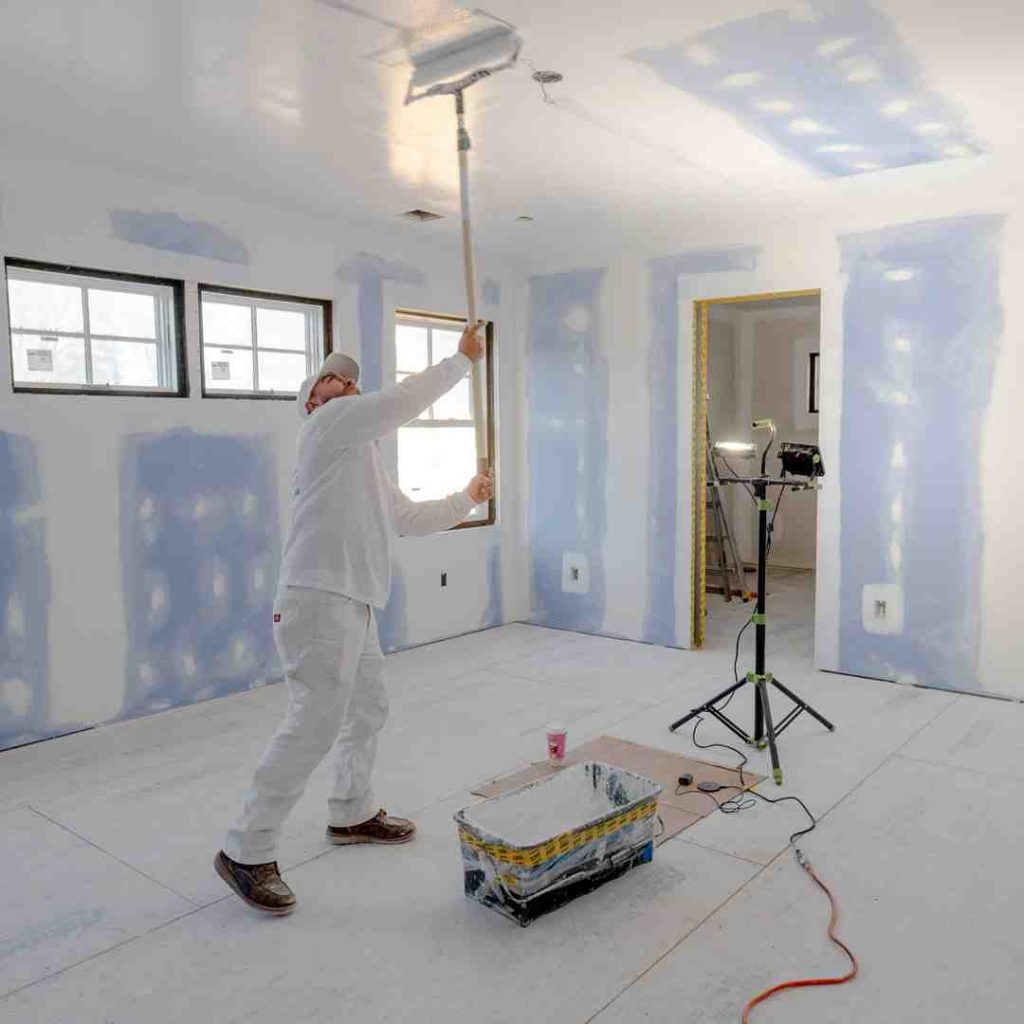
From Damaged to Dazzling
The process of drywall repair painting is key to restoring the beauty of your home. Whether you’re dealing with small dents, large holes, or cracks, proper repair and painting can make your walls look new again. This guide will walk you through the essential steps for a professional-grade finish.
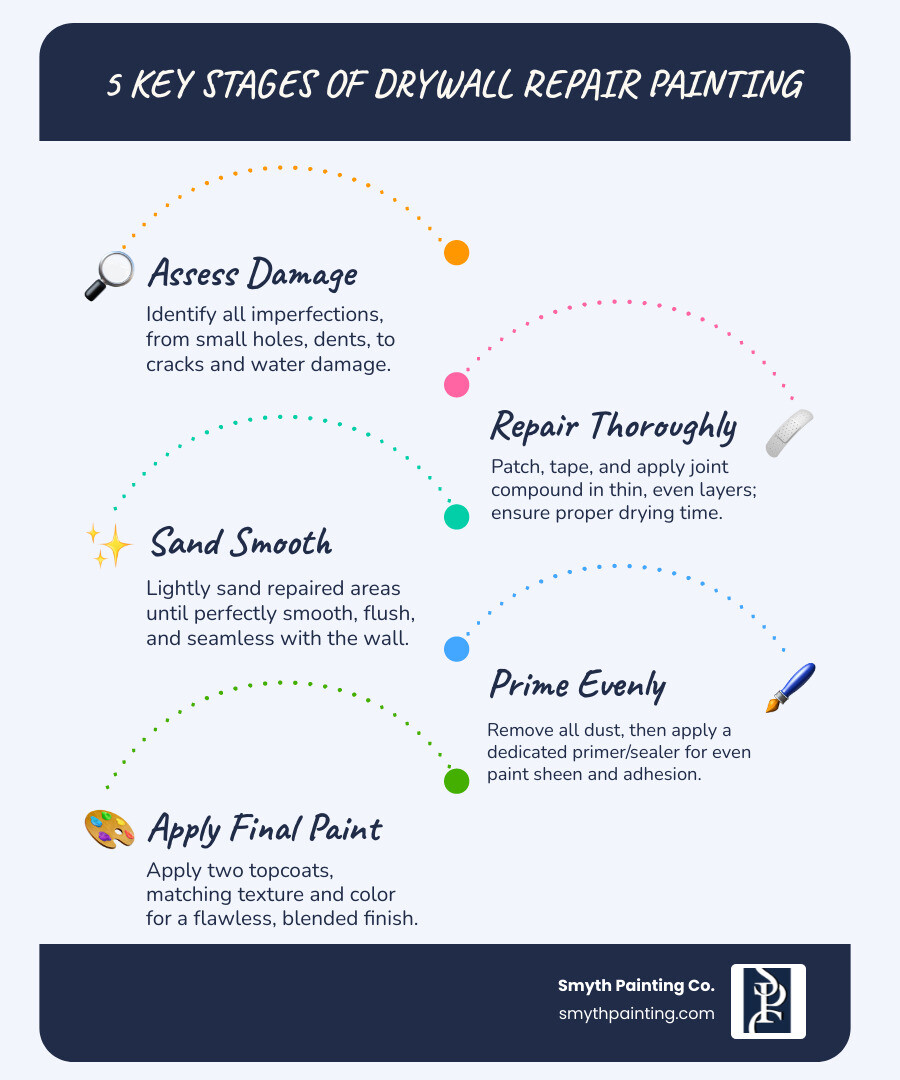
As Douglas Smyth, founder of Smyth Painting Co., I’ve overseen countless successful drywall repair painting projects since 2005. My experience has taught me the secrets to achieving a flawless finish every time, built on craftsmanship and reliability. Here are the key stages:
- Assess Damage: Identify all imperfections.
- Repair Thoroughly: Patch, tape, and apply joint compound.
- Sand Smooth: Sand repaired areas until perfectly smooth.
- Clean Dust: Remove all sanding dust from walls.
- Prime Evenly: Apply a dedicated primer/sealer.
Drywall repair painting helpful reading:
- Interior plaster repair
- Ceiling painting service
- Home painting estimate
Assessing the Damage: Know Your Enemy
Before you can begin, you must understand the extent of the damage. Identifying issues correctly is the first step in any drywall repair painting project.
Identifying Common Drywall Problems
Common issues we see in homes across Rhode Island and SE Mass include:
- Small Holes, Dents, and Scuffs: Caused by everyday accidents like doorknobs hitting the wall or furniture scuffs.
- Larger Impact Damage: Sizable holes from more significant impacts.
- Stress Cracks: These often appear near doorframes and windows due to the house settling.
- Popping Nails/Screws: Small bumps where fasteners have pushed through the drywall compound.
- Dented Corner Beads: The metal or plastic strips that protect outside corners can get bent or dented.
Addressing these issues promptly is vital for a smooth canvas. For guidance on fixing common issues, you might find this resource helpful: How To Patch a Hole in Drywall and Other Common Repairs.
Special Considerations for Water Damage
Water damage is a serious issue for drywall and requires careful attention. When drywall gets wet, it loses its structural integrity and can grow mold.
Our process for addressing water-damaged drywall involves:
- Identifying the Source: We always ensure the source of the leak is fixed before starting any repairs.
- Mold Inspection: If water damage is present, we check for mold. Affected sections must be removed and remediated.
- Complete Removal: Any drywall compromised by water, even if it appears dry, often needs to be cut out and replaced.
- Drying Time: After removal, the area behind the drywall needs to be thoroughly dried out.
- Structural Integrity: We also assess if the water damage has affected any underlying structural elements.
Ignoring water damage can lead to significant structural problems and unhealthy living conditions.
The Pro Toolkit: Gathering Your Supplies
A successful drywall repair painting project relies on having the right tools and materials.
Here’s a list of essential tools and materials:
- Joint Compound (Mud): For filling, taping, and finishing.
- Drywall Tape: Essential for reinforcing seams and patches.
- Putty Knives/Taping Knives: A set of different sizes (e.g., 4-inch, 6-inch, 10-inch) for application and feathering.
- Drywall Saw or Utility Knife: For cutting out damaged sections.
- Sanding Sponges/Drywall Sander: For smoothing compound.
- Dust Mask/Respirator: Crucial for protecting your lungs.
- Primer/Sealer: To prepare the repaired surface for paint.
- Drywall Screws and Screw Gun: For attaching new drywall sections.
- Backer Boards (Wood): For reinforcing patches.
- Straightedge: To check for flatness.
- Clean Rags/Sponge: For dust removal.
- Buckets: For mixing compound and cleaning tools.
Choosing the Right Joint Compound
The type of joint compound, or “mud,” you choose can significantly impact your repair.
- All-Purpose Compound: A versatile, ready-mixed compound suitable for most repairs.
- Topping Compound: Lighter and easier to sand, best used for final coats.
- Quick-Setting Compound (Hot Mud): A powder that hardens chemically in a set time (e.g., 20-90 minutes). It’s excellent for deep holes or quick repairs but requires fast work.
- Lightweight vs. Standard: Lightweight compounds are easier to sand, while standard compounds are more durable.
For most DIY projects, an all-purpose compound is a safe bet.
The Great Debate: Paper vs. Mesh Tape
- Paper Tape: The traditional choice, it’s very strong and provides excellent crack resistance, especially for flat seams and corners when embedded in compound.
- Mesh Tape: This self-adhesive fiberglass tape is easier to apply and is often preferred for smaller repairs. However, it’s generally not as strong as paper tape for preventing cracks in high-stress areas.
We lean towards paper tape for its superior strength, but mesh tape is a convenient option for small, non-critical repairs.
The Step-by-Step Guide to Drywall Repair Painting
This section outlines the essential steps to prepare drywall for painting, ensuring a smooth, flawless finish.
Fixing Minor Imperfections: Holes, Dents, and Nail Pops
Small imperfections are common but require precision.
- Preparation: For nail pops, tap the nail head slightly below the surface. Remove any loose paper or debris.
- First Coat: Apply a thin layer of all-purpose joint compound over the imperfection with a 4-inch or 6-inch putty knife.
- Scrape Flush: Immediately scrape the area flush with the wall, removing excess compound.
- Dry and Repeat: Allow the compound to dry completely. Apply a second thin coat if needed for deeper dents.
- Light Sanding: Once dry, lightly sand the area with fine-grit sandpaper until it’s perfectly smooth and blends with the wall.
Tackling Larger Holes and Cracks
Larger damage requires a more structured approach.
- Cut a Clean Patch: Cut a square or rectangular section around the damage. Always check for wires or pipes first! For cracks, cut away any loose tape and compound.
- Use Backer Boards (for holes): For holes larger than a few inches, insert wood backer boards behind the drywall and screw them in place to create a stable base.
- Install the Patch: Cut a new piece of drywall to fit the opening and screw it to the backer boards.
- Tape Seams: Apply drywall tape over all seams, embedding it in a thin layer of joint compound. For corners, crease paper tape and apply it one side at a time.
- Build Up Layers: Apply subsequent thin coats of joint compound, each one slightly wider than the last, feathering the edges to blend the repair.
- Drying Time: Each coat must dry completely (typically 24-48 hours) before the next is applied.
- Final Check: After the final coat is dry, use a straightedge to check for flatness before sanding.
The Crucial Prep & Priming Stage
Once the repairs are dry, the prep and priming stage is critical for ensuring excellent adhesion and a uniform finish in drywall repair painting.
Essential Prep for Drywall Repair Painting
Proper preparation is non-negotiable for a professional finish.
- Sanding: Use fine-grit sandpaper (100-120 grit) to lightly sand the repaired areas until they are perfectly smooth and flush with the wall.
- Dust Containment: Drywall sanding creates fine dust. Use drop cloths, seal off rooms, and wear a mask.
- Wiping Down Walls: After sanding, thoroughly wipe down all sanded areas with a damp rag or tack cloth to remove all dust. Paint won’t stick to a dusty surface.
- Checking for Smoothness: Use a bright light held at an angle to the wall to check for any imperfections that need more sanding.
- Caulking Trim: Caulk any gaps between the walls and trim (baseboards, door frames) after sanding but before priming for a clean, finished line.
Why Primer is Non-Negotiable for a Perfect Finish
Primer is the foundation for a durable, beautiful finish. It’s essential because it:
- Seals Porous Surfaces: New joint compound is very porous. Primer seals it, preventing the paint from soaking in unevenly.
- Prevents “Flashing”: It ensures the repaired patches and the existing wall absorb paint at the same rate, preventing differences in sheen or color.
- Promotes Adhesion: Primer creates an ideal surface for the topcoat to stick to, preventing peeling or chipping.
- Ensures Even Paint Sheen: It helps the final paint coat achieve its intended sheen (flat, eggshell, semi-gloss) evenly.
For new or repaired drywall, use a dedicated primer/sealer like a PVA primer (Glidden PVA Drywall Primer, Kilz PVA primer) or a high-quality acrylic primer like Zinsser Bulls Eye 1-2-3 Primer or PPG Seal Grip Interior/Exterior Acrylic Primer with Sealer. Avoid “self-priming” paints on new or repaired drywall. One coat of primer is usually sufficient.
Achieving a Seamless Finish: The Final Touches
The ultimate goal of drywall repair painting is to make the repair disappear. This requires meticulous attention to both texture and paint matching.
Matching Wall Texture: The Secret to Invisible Repairs
Matching the texture of the repaired area to the existing wall is what truly makes a repair invisible. Common textures include:
- Smooth Finish (Skim Coat): Achieved by applying very thin layers of diluted joint compound and sanding to a glass-smooth finish.
- Orange Peel: A subtle, bumpy texture that can be replicated using specialized spray cans or a hopper gun.
- Knockdown: A texture that’s sprayed on and then lightly “knocked down” with a trowel, creating a flatter, stucco-like appearance.
For minor repairs, aerosol texture cans can mimic common textures. For larger areas or more complex textures, professional expertise is often required to blend it perfectly.
Perfecting the Paint Job After Drywall Repair Painting
Once the texture is matched and the primer is dry, it’s time for the final paint coats.
- Use Original Paint: The best way to ensure a perfect color match is to use the same paint that was originally applied to the wall.
- Get a Color Match: If the original paint isn’t available, take a paint chip from the wall to a paint store for professional color matching. Remember to match the paint’s sheen (flat, eggshell, satin) as well.
- Apply Two Topcoats: For a durable and consistent finish, apply two full topcoats of paint.
- Blend New Paint into Old: When painting over a repair, feather the edges to blend seamlessly with the existing paint. This helps avoid a noticeable “picture frame” effect.
Ensuring a flawless finish when painting over repaired drywall is a hallmark of quality craftsmanship.
Frequently Asked Questions about Drywall Repair and Painting
Here are answers to common questions about drywall repair painting projects.
How long does drywall compound take to dry before painting?
Patience is key! Drywall compound (“mud”) must be completely dry before sanding or painting.
- Factors Affecting Time: Drying time depends on humidity, airflow, and compound thickness. Thin coats dry much faster.
- General Rule: Standard all-purpose compound needs 24-48 hours to dry per coat. Quick-setting compounds (“hot mud”) can be ready in as little as 20-90 minutes. Always check the manufacturer’s instructions. Painting too soon can ruin the repair.
Should I prime the whole wall or just the patch?
For the best results, we almost always recommend priming the entire wall.
- The Risk of “Flashing”: Priming only the patch can cause the final paint coat to look different in that area (a different sheen or color intensity). This is because the new patch has a different porosity than the rest of the wall.
- Why Prime the Whole Wall: To guarantee a uniform, professional finish, prime the entire wall from corner to corner. This creates a consistent base for your topcoat and prevents any variations in color or sheen. For very small repairs, you might get away with spot priming, but it’s risky.
What are the most common mistakes to avoid?
Avoid these common pitfalls for a successful drywall repair painting project:
- Applying Compound Too Thick: This leads to long drying times, cracking, and difficult sanding. Use multiple thin coats instead.
- Not Letting Compound Dry Completely: Rushing the drying process leads to weak repairs and poor paint adhesion.
- Oversanding: Sanding too aggressively can create a divot in the wall or damage the surrounding drywall paper.
- Skipping Primer: This is a critical error that leads to an uneven, blotchy finish.
- Poor Dust Cleanup: Leaving sanding dust on the walls will result in a gritty finish and poor adhesion.
- Not Checking for Utilities: Before cutting into drywall, always check for hidden electrical wires or plumbing.
- Ignoring the Source of Water Damage: If you don’t fix the leak, the damage will return.
When to Call the Pros for a Flawless, Stress-Free Result
While we’ve provided a comprehensive guide to drywall repair painting, we understand that not everyone has the time, tools, or inclination to tackle these projects themselves. That’s where professional services, like those offered by Smyth Painting Co., become invaluable.
Here are the key benefits of choosing professionals like Smyth Painting Co.:
- Expertise and Experience: We bring years of specialized experience to every project. This means we can accurately diagnose damage, select the right materials, and apply proven techniques for a durable repair and a flawless finish.
- Seamless Finish: Achieving a truly invisible repair, especially with texture and paint matching, is an art form. Our professionals have the skills and tools to carefully match textures and precisely match paint color and sheen.
- Time and Efficiency: We work efficiently, minimizing disruption to your home. While a DIY repair might stretch over several days, our team can complete projects in a timely manner.
- Proper Preparation and Priming: We follow all best practices for surface preparation, including thorough cleaning, proper sanding, and the correct application of specialized primers.
- No Mess, No Hassle Cleanup: We handle all the cleanup. We protect your home and ensure the area is spotless and dust-free.
- Peace of Mind and Warranty: We stand by our work. Smyth Painting Co. offers a 2-year warranty on our services, giving you confidence in the durability and quality of your drywall repair painting project.
For a high-quality, detailed, and professional approach to your drywall repair painting needs, we invite you to experience the Smyth Painting Co. difference.
Get a professional estimate for your residential painting project


