
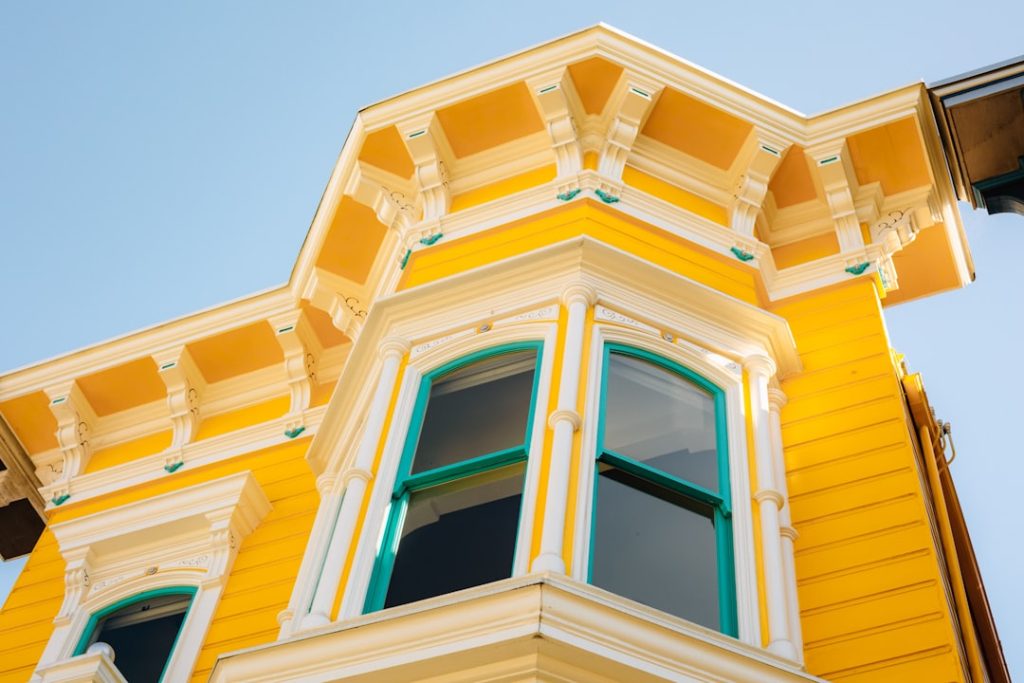
Why Historic Home Painting Demands Specialized Expertise
Historic home painting is far more than a cosmetic update—it’s an act of preservation requiring specialized knowledge, authentic materials, and meticulous technique. Here’s what makes it different from standard painting:
Key Differences: Historic vs. Modern Home Painting
| Aspect | Historic Home Painting | Modern Home Painting |
|---|---|---|
| Preparation | Extensive inspection for lead, rot, plaster stability, glazing integrity | Standard surface cleaning and sanding |
| Materials | Period-appropriate paints (oil-based, milk paint, limewash), compatible primers | Modern latex or acrylic paints |
| Color Selection | Era-specific palettes based on architectural style and historical research | Personal preference and current trends |
| Paint Removal | Careful assessment; stripping only when necessary to preserve original fabric | Aggressive removal common |
| Longevity Focus | Breathable finishes, substrate compatibility, authentic application techniques | Standard durability and coverage |
Historic home painting is about understanding original paint formulations, period-specific colors, and how to protect irreplaceable details. Before 1875, paints with hand-ground pigments created subtle color variations. Victorian homes featured deep colors like burgundy, while Colonial homes used subdued tones like muted red. Getting these details wrong compromises a home’s historical integrity and value.
The stakes are high: approximately 1.3 million historic buildings in the United States are at risk of demolition, and about 70% of historic homes require repainting every 5-10 years. Using historically accurate paint colors can increase a historic home’s property value by up to 20%.
Historically, architectural painting was a cultural record. As one Victorian writer noted, “the coming of a painter to a house was cause for celebration.” That same reverence should guide our preservation efforts today.
As founder of Smyth Painting Company, I’ve specialized in historic home painting projects throughout Newport County and Rhode Island since 2005, from Colonial farmhouses to Victorian mansions. My commitment to authentic techniques and materials ensures every project honors the home’s original craftsmanship while protecting it for the future.
Foundations: Understanding the Principles of Historic Preservation

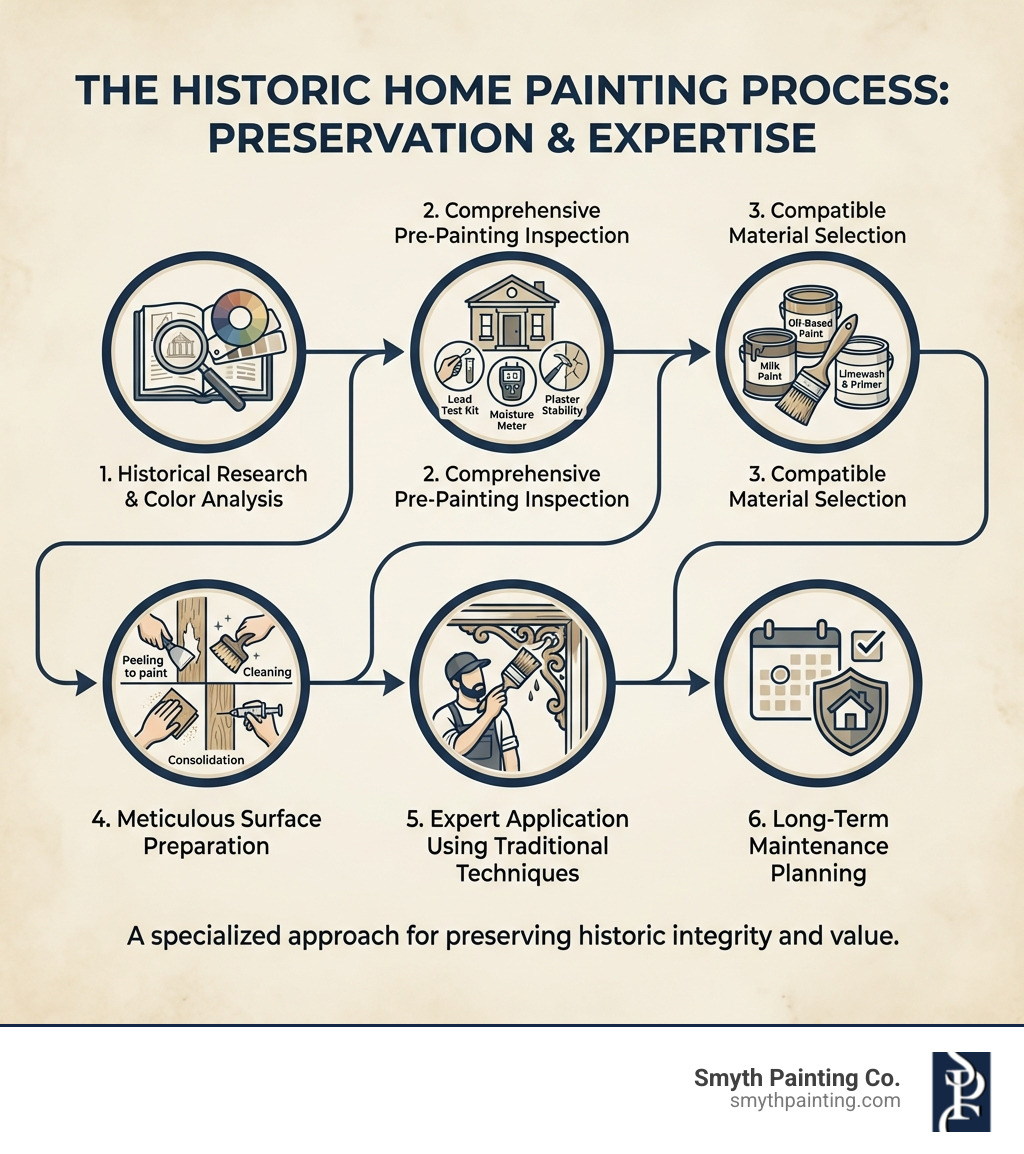
Approaching a historic home painting project is about preservation, not just aesthetics. It requires adhering to historical standards, ensuring color authenticity, and choosing durable, appropriate finishes to maintain the home’s character and value. Understanding historic paint technology is crucial for making informed decisions that honor the past. Learn more about our approach in Preserving Newport’s Historic Charm.
The Philosophy of Historic Home Painting: Standards, Colors, and Authenticity
Our work is guided by primary preservation standards, like those from the Secretary of the Interior, which emphasize minimal intervention and retaining original materials. We view painting as a critical part of preserving a building’s integrity, not just a decorative act.
Choosing authentic colors requires thorough investigation. We conduct archival research—studying old photos, drawings, and documents—and perform paint exposures, carefully revealing underlying layers to uncover the original palette. This scientific approach helps us interpret the building’s color history.
A Victorian-era home might feature rich, deep colors like burgundy or forest green, while a Colonial-era home could have more subdued tones like colonial blue or muted red. These era-specific palettes are vital for historical accuracy. Learn about historical preservation standards to understand these principles further.
Historic interiors often featured decorative techniques like stenciling or graining. We prioritize preserving or accurately recreating these elements. To ensure colors and techniques match the home’s style and period, we consult resources like Historic New England’s collections and local guides like Top 3 Historic Exterior Paint Colors in Newport, RI.
Determining the original paint type is crucial for compatibility and restoration. Laboratory analysis of paint samples can identify pigments and binders, revealing if the original was oil-based, water-based, or milk paint. This guides our selection of modern, compatible products that mimic historical performance.
Historic Paint Types, Finishes, and Durability
Understanding historic paints and their evolution is fundamental to successful historic home painting. Historically, paints were primarily oil-based or water-based.
Oil-based paints (linseed oil) were durable, glossy, and used on wood and metal. Water-based paints like whitewash and distemper were flat and used on interior plaster. Milk paint (casein) also offered a common matte finish. These paints had varying characteristics; some were breathable, while others formed a harder protective layer.
Paint finishes also play a significant role. Flat finishes helped hide imperfections in plaster or wood, while gloss finishes on trim and doors provided a formal look and easier cleaning. Our Paint Finishes: A Simple Guide explains these differences.
The evolution of paint technology impacts restoration. Early paints had unique textures from coarse pigments and natural binders. After 1875, factory-made paints standardized formulations. Modern paints are more complex, so we must ensure compatibility. For example, applying latex over unprepared oil-based paint can cause peeling.
Durable paint is crucial for protecting historic homes from environmental factors in Rhode Island and SE Mass, like UV rays and moisture. A durable paint resists cracking, fading, and chalking. We choose high-quality, breathable paints that withstand the elements and respect the historic substrate.
Here’s a comparison of common historic paint types:
| Characteristic | Oil-Based Paint | Water-Based Paint (Distemper/Calcimine) | Milk Paint (Casein) |
|---|---|---|---|
| Binder | Linseed oil (or other oils) | Animal glue, casein, plant gums | Milk protein (casein), lime |
| Finish | Glossy to semi-gloss (historically) | Flat, matte | Flat, matte |
| Durability | Good, hard-wearing (especially for wood/trim) | Delicate, less durable, easily soluble | Durable, breathable, good adhesion |
| Typical Use | Wood trim, doors, metal, exterior surfaces | Interior plaster walls, ceilings | Wood, plaster, sometimes furniture |
| Breathability | Less breathable | Highly breathable | Highly breathable |
| Modern Equivalent Considerations | Alkyd paints, some modern oils | Specialized mineral paints, flat latex (less authentic) | Modern milk paints, flat latex |
The Diagnostic Phase: Pre-Painting Inspection and Preparation
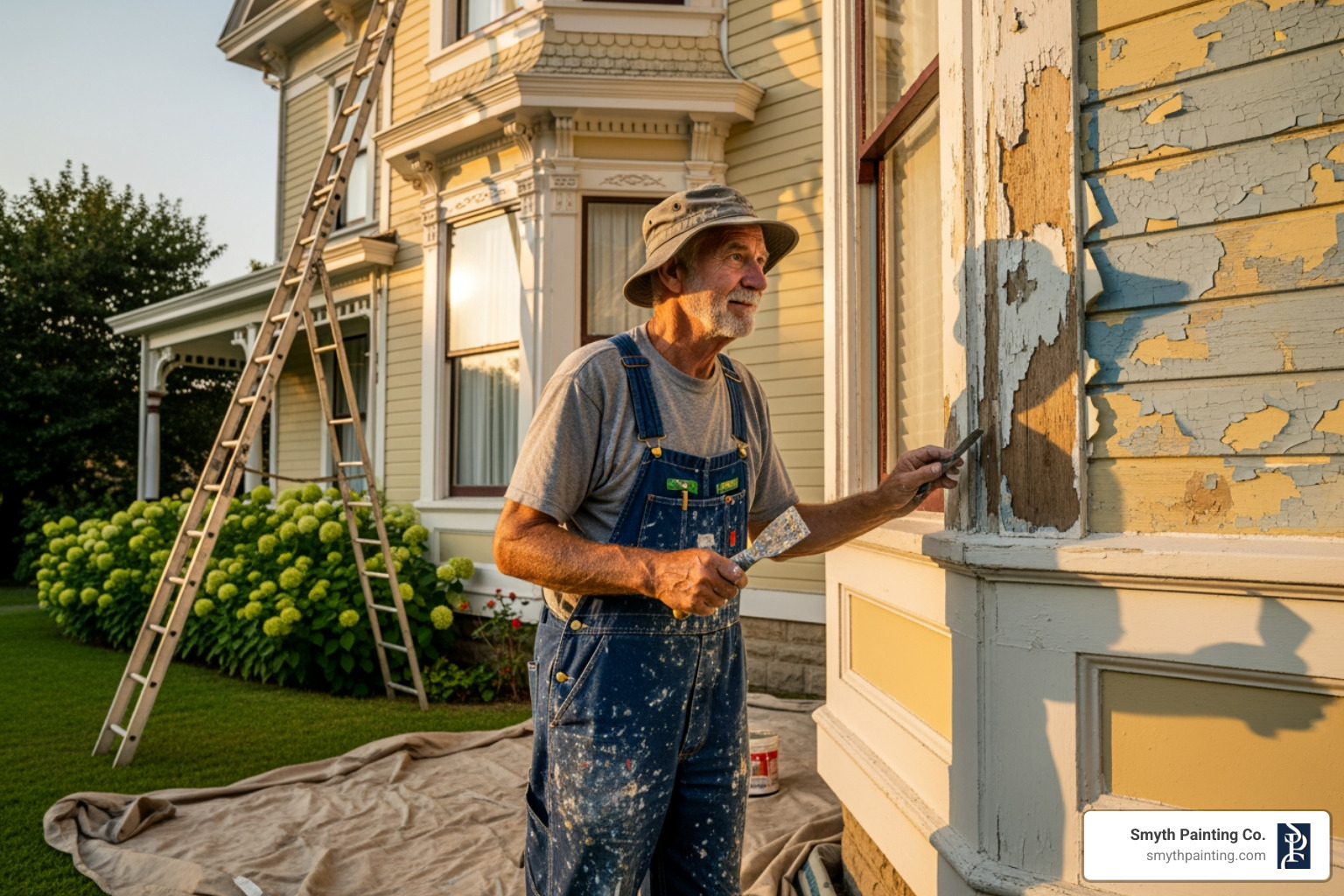
A thorough diagnostic phase is essential before any historic home painting begins. We uncover hidden issues that could compromise the paint job, assessing surface stability, moisture, lead paint safety, and VOCs. Paint is a protective finish needing a sound foundation, not a band-aid for underlying problems. For more on this, see Repainting My Old Home: What I Need to Know About Lead Paint.
Identifying Structural Issues Before Your Historic Home Painting Project
Identifying structural issues is a critical pre-painting step. We check for cracked window glazing, which can cause rot, and look for mold and mildew that require thorough treatment beyond surface cleaning. For exteriors, we use gentle Softwashing techniques. Unstable plaster must be repaired, as paint cannot hold it together. We identify and address any wood rot, replacing it if necessary. High-traffic areas like railings and doors require thorough degreasing for proper adhesion. Finally, we assess masonry; it generally shouldn’t be painted to allow it to breathe. If it was previously painted, we use breathable paints to avoid trapping moisture.
Here are 5 Key Warning Signs Your Historic Home Needs Repair Before Painting:
- Rot: Soft, crumbling, or discolored wood, especially around windows, doors, and trim.
- Unstable Plaster: Cracks, bulges, or areas where plaster is detaching from the wall.
- Peeling/Flaking Paint: Indicates underlying issues with moisture, compatibility, or surface preparation.
- Mold & Mildew: Dark spots, fuzzy growth, or musty odors, often caused by moisture.
- Damaged Glazing: Cracked or missing window putty, allowing water infiltration.
Assessing Existing Paint and Planning for Removal
We begin by assessing the existing paint layers for stability. If the paint is stable, cleaning and light sanding may suffice. If it’s unstable, complete removal might be necessary. Next, we determine the existing paint type (latex vs. oil) to ensure compatibility with new coats.
Paint stripping is necessary when layers obscure architectural details, when the existing paint is failing extensively, or when incompatible layers are causing problems. We use several removal methods with caution. Given lead paint risks, we prefer EPA-approved infrared tools that operate at lower temperatures. Chemical stripping is another option, but we carefully select strippers to avoid damaging the substrate or creating health hazards.
Health and safety are paramount, especially concerning lead paint and VOCs. We assume old paint contains lead and follow strict EPA protocols for containment, ventilation, and cleanup using HEPA vacuums. We also prioritize low- or zero-VOC products to protect our team and the occupants. We follow best practices like those in the Cambridge guide to Painting Historic Exteriors for best practices.
The Execution: A Step-by-Step Guide to Historic Home Painting
After the diagnostic phase, we begin the execution. This involves meticulous surface preparation, priming, and application, all while honoring the home’s historical context. Every step in historic home painting is done with precision. Our team provides custom Exterior Painting Services and Interior Painting Services for these unique properties.
Critical Surface Preparation for a Lasting Finish
Proper surface preparation is the cornerstone of a lasting paint job on a historic home. Our process includes thorough cleaning, scraping loose paint, and feathering the edges for a smooth transition. For lead paint, we use wet-sanding and HEPA-filtered tools to control dust. We use moisture meters to ensure wood is dry enough for painting, and we repair any holes or cracks with appropriate fillers like wood consolidants or epoxy. Finally, we apply caulk strategically only where needed to prevent water entry, allowing the house to breathe. Proper prep is key to avoiding common DIY Painting Pitfalls.
The Art of Priming and Applying Paint to Historic Surfaces
Primer is the essential intermediary between the surface and the finish coats, ensuring adhesion and a uniform surface. Selecting the right primer is critical. We often use an alkyd oil-based primer for old exterior wood and an alkali-resistant acrylic latex primer for interior plaster. Ensuring primer and topcoat compatibility is key.
For new wood elements, we prime all sides before installation for maximum protection. However, we follow the best practice of not painting surfaces that were originally left unpainted to preserve the home’s character.
Effective techniques are vital for longevity. We follow strict environmental guidelines, avoiding painting in extreme temperatures, high humidity, or direct sunlight to prevent poor adhesion and brush marks. Brushing is often preferred for exteriors as it forces paint into the wood for a better bond. For window sashes, we extend the paint 1/16 inch onto the glass to seal the glazing.
Our approach is guided by museum-quality standards, like those from Historic New England, which often specify a three-coat system. You can View museum-quality Paint Specifications for details. For plaster restoration, we often use traditional lime plaster. After patching, we sand the surface smooth to ensure proper paint adhesion and a sound substrate.
Preserving Your Work: Long-Term Care and Maintenance
After a historic home painting project, our commitment continues with long-term care. A paint job is an investment that needs ongoing attention to withstand New England weather. Regular cleaning, timely touch-ups, and maintenance are key to preserving your home’s beauty and integrity. For cleaning insights, see our guide to Softwashing.
Cleaning and Maintenance Strategies for Longevity
Gentle, consistent care is key to maintaining painted surfaces. We recommend annual inspections to catch minor issues early. For cleaning, use gentle methods like hand scrubbing with mild detergent. We use groundwater-safer alternatives to harsh cleaners like TSP. Never pressure wash historic painted surfaces, as it can damage the wood and force moisture into the walls.
Address minor failures like small chips or cracks promptly to prevent larger problems. Use the exact same paint for touch-ups. We recommend storing leftover paint in a dry, warm, clearly labeled container.
For wooden elements, especially decks and porches, keeping up with maintenance is vital. We’ve compiled some important information on 7 Warning Signs Your Deck Needs Repairs, which highlights how proactive maintenance can prevent costly damage.
By following these cleaning and maintenance strategies, we can significantly extend the life of your historic home painting project, ensuring its beauty and protection for decades to come.
Frequently Asked Questions about Historic Home Painting
We often hear similar questions from homeowners starting on a historic home painting journey. Here are some of the most common, along with our expert insights.
How do I choose the right colors for my historic home’s era?
Choosing authentic colors involves research and analysis. We identify your home’s architectural style and period, then consult historic color palettes from resources like Historic New England. For example, Victorian homes often featured vibrant, multi-color schemes, while Colonial homes used more muted tones. We can also perform a paint analysis, carefully revealing original paint layers to find the exact historic colors. Finally, we always test colors on a small area of your home, as lighting and surroundings can affect their appearance. We also consider regional preferences found in Rhode Island and SE Mass.
Is it always necessary to strip all the old paint off?
No, complete paint removal isn’t always necessary or desirable. We follow preservation principles, retaining original materials when possible. We only recommend complete stripping for:
- Widespread Paint Failure: When paint is peeling or flaking extensively.
- Incompatible Layers: When different paint types are causing adhesion problems.
- Obscured Details: When thick paint hides architectural details.
- Lead Paint Abatement: When removal is deemed safer than encapsulation, which must be done using lead-safe practices.
If existing paint is stable, proper cleaning and sanding are often sufficient. We always assess paint stability and test for lead before deciding on the best approach.
What are the biggest risks of painting a historic home myself?
While tempting, DIY historic home painting carries significant risks that can be costly in the long run, especially for the historic homes in Rhode Island and SE Mass.
- Damaging Historic Materials: Old-growth wood and lime plaster are fragile and can be easily damaged by aggressive modern techniques or incompatible products.
- Improper Surface Preparation: This is the biggest risk. Missing underlying issues like rot or moisture guarantees premature paint failure and costly re-dos.
- Lead Paint Exposure: Most historic homes have lead paint. Disturbing it without professional safety measures can cause lead poisoning, a serious health hazard.
- Using Incompatible Paint: Applying the wrong paint type can cause peeling, trap moisture, and damage the underlying material.
- Devaluing Your Home: Using historically inaccurate colors or finishes can detract from the home’s architectural character and lower its property value.
These risks are why this work is best left to professionals who understand historic preservation.
Conclusion: Entrusting Your Home’s Legacy to the Experts
As we’ve explored, historic home painting is a meticulous process, demanding far more than just a fresh coat of color. It’s an intricate dance between historical preservation standards, scientific investigation, and skilled craftsmanship. From the careful diagnostic phase of identifying hidden structural issues and assessing existing paint, to the precise execution of surface preparation and paint application, every step is critical to preserving your home’s legacy.
This isn’t merely a cosmetic upgrade; it’s an investment in your home’s value, its historical integrity, and its enduring charm. Getting it right ensures longevity, protects against future damage, and honors the unique story embedded in its walls.
The importance of expertise in this field cannot be overstated. At Smyth Painting Co., we understand the unique challenges and profound rewards of working with historic properties across Rhode Island and SE Mass. Our team is dedicated to providing high-quality, detailed, and professional work, combining excellent communication with eco-friendly options and a smooth, stress-free customer experience. We bring a deep appreciation for the past and a commitment to protecting your home for the future.
For professional results that honor your home’s history and ensure its beauty endures, trust the experts. We’re here to help you open up the Victorian visions and period-perfect charm of your historic property. Learn more about our residential painting services and let us help you paint your home’s next chapter with care and authenticity.


