

Why a Career in Painting is a Smart Move
Commercial and residential painters are skilled professionals who transform and protect properties through expert paint application. These careers offer two distinct paths: residential painters focus on homes, working directly with homeowners on interior and exterior projects with attention to personal style and detail, while commercial painters tackle larger-scale projects like office buildings, retail spaces, and warehouses, often using specialized equipment and working flexible schedules to minimize business disruption.
Key Differences at a Glance:
- Residential Painters: Work in homes, interact directly with homeowners, handle smaller projects, follow daytime schedules, focus on aesthetics and personal preferences
- Commercial Painters: Work in business properties, coordinate with contractors and property managers, manage large-scale projects, often work nights/weekends, prioritize durability and code compliance
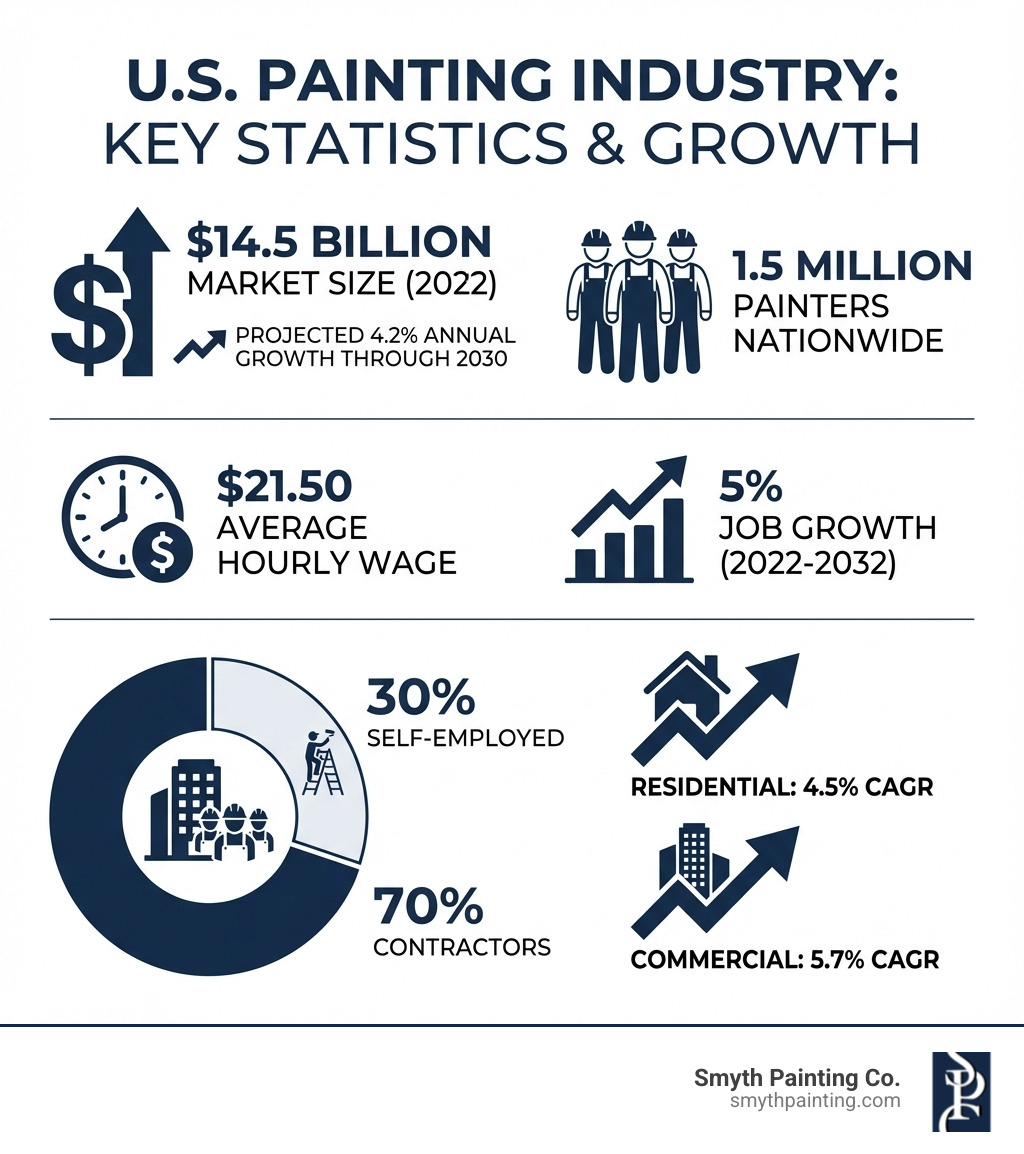
- Average Pay: $21.50 per hour nationally
- Job Growth: 5% projected growth from 2022 to 2032 (faster than average)
- Market Size: U.S. painting and coating market valued at $14.5 billion in 2022
The painting industry is experiencing steady growth, with demand for skilled painters rising faster than most occupations. Whether you’re drawn to the personal satisfaction of changing someone’s living room or the challenge of coating a multi-story commercial building, painting offers tangible results you can see at the end of every workday. The industry employs approximately 1.5 million painters in the United States, with roughly 70% working for painting contractors and 30% self-employed.
I’m Douglas Smyth, founder of Smyth Painting Company, where I’ve guided both commercial and residential painters through projects across Newport County and greater Rhode Island since 2005. Throughout my career building a respected painting contractor business, I’ve seen how the right skills, professionalism, and attention to detail create rewarding career paths in both residential and commercial painting.
The Two Paths of a Painter: Residential vs. Commercial
Choosing a career as a painter means stepping into a vibrant industry with diverse opportunities. The primary difference between commercial and residential painters lies in the scale, environment, and objectives of their projects. While both demand precision and a keen eye, the day-to-day realities of these two specializations can be quite distinct.
Here’s a comparison to help you understand the different career paths:
| Aspect | Residential Painting | Commercial Painting |
|---|---|---|
| Work Environment | Homes, apartments, condos | Offices, retail stores, warehouses, schools, churches, hotels |
| Project Scale | Smaller, more personalized, often single-family homes | Larger, multi-unit, industrial, often entire buildings |
| Typical Schedule | Primarily daytime, Monday-Friday | Often after-hours, nights, weekends to minimize business disruption |
| Client Interaction | Direct with homeowners, emphasis on personal style | With general contractors, property managers, business owners, focus on functionality and deadlines |
| Required Skills | Fine detail, color consultation, customer service | Project management, specialized equipment operation, adherence to codes, durability focus |
The career differences are significant, influencing everything from the tools you’ll use to the people you’ll interact with. Work environments shift from the intimate setting of a home to the busy atmosphere of a commercial complex. Project scope expands dramatically, moving from a single room or exterior of a house to entire multi-story buildings or large industrial facilities. Consequently, client relationships evolve, requiring different communication styles and priorities.
The Residential Painter: Creating Dream Homes
As a residential painter, your canvas is someone’s home. This path offers a unique opportunity for personal client interaction, as you’ll often work directly with homeowners to bring their vision to life. This means a high attention to detail is paramount, ensuring every stroke contributes to the desired aesthetic. Residential projects typically involve smaller crews and often follow daytime schedules, allowing for a more predictable work-life balance.
We pride ourselves on providing exceptional residential painting services, understanding that we’re not just painting walls, we’re painting dreams. Our work often involves interior and exterior homes, where precision and careful preparation are key. Beyond just walls, residential painters frequently tackle tasks like cabinet refinishing, changing kitchens and bathrooms with a fresh new look. Strong customer service skills are essential here, as you’ll be guiding clients through color choices, understanding their preferences, and ensuring their complete satisfaction. It’s rewarding to see the immediate, positive impact your work has on a family’s living space. You can learn more about our comprehensive residential services and what we offer our clients in Rhode Island and SE Mass.
The Commercial Painter: Building Business Environments
For those drawn to larger canvases and bigger challenges, a career as a commercial painter might be your calling. These projects often involve large-scale changes, working on offices, retail spaces, warehouses, and other business properties across our service areas in Rhode Island and SE Mass. You’ll frequently find yourself coordinating with general contractors, architects, and property managers, making strong communication and project management skills invaluable.
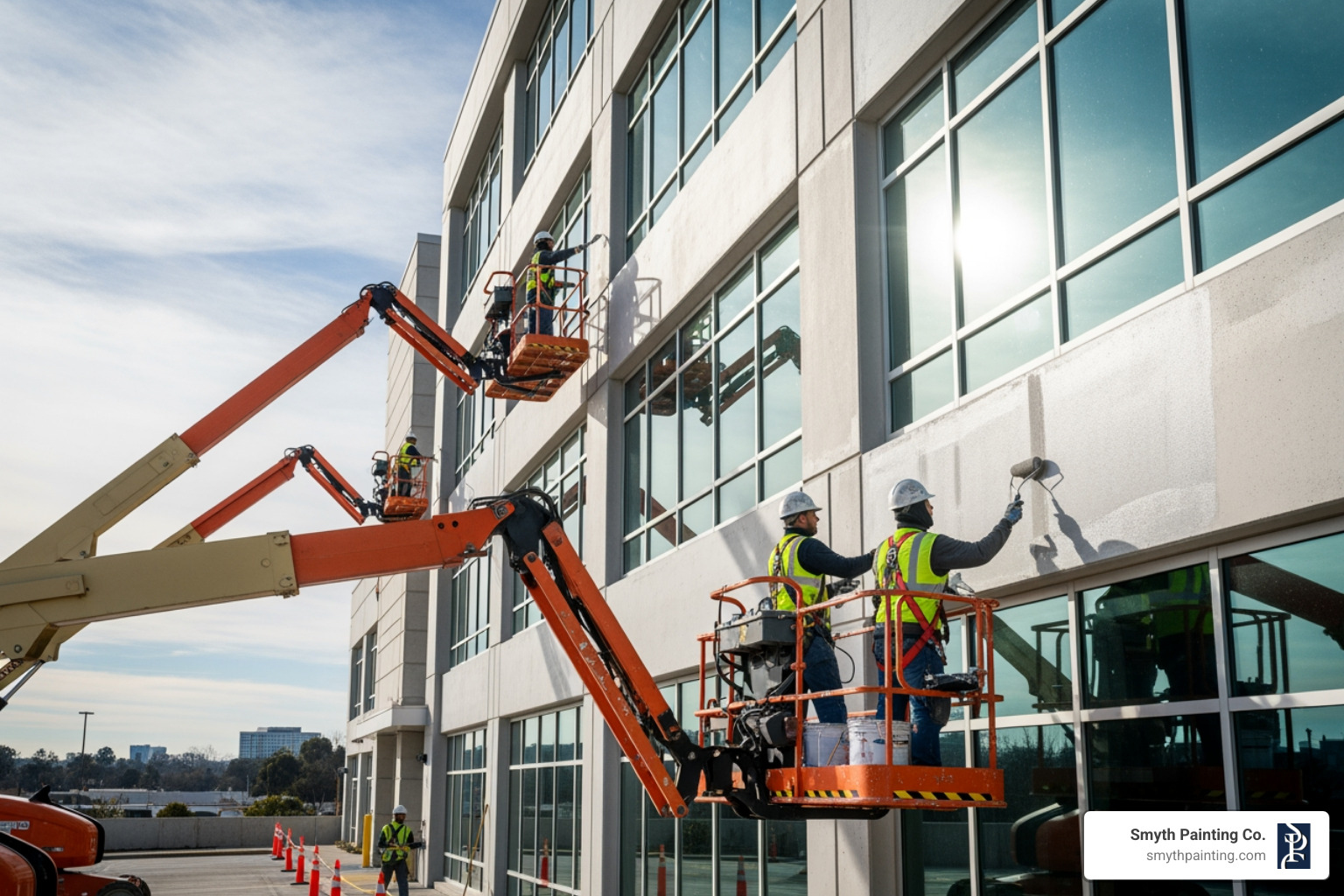
Commercial painting often requires specialized equipment, such as powerful sprayers and aerial lifts, to efficiently cover vast surfaces and reach towering heights. Due to the need to minimize disruption to business operations, commercial projects often demand after-hours and weekend schedules. The focus here is less on personal aesthetics and more on durability, functionality, and adherence to specific building codes and requirements. We understand the importance of creating professional and welcoming business environments, offering robust commercial painting services that stand the test of time.
Core Skills and Services in Your Painter’s Toolkit
Regardless of whether you pursue residential or commercial painting, mastering the craft is fundamental. The art of painting goes far beyond simply applying paint to a surface; it involves a deep understanding of materials, techniques, and preparation. The secret to professional-grade painting, as we’ve learned over years of experience, is found in thorough, expert preparation. This includes everything from cleaning and sanding to priming surfaces for optimal adhesion and a smooth finish. Using quality materials, including premium paints and appropriate tools, ensures longevity, better coverage, and a superior result that satisfies our clients every time.

Common Services for Residential Painters
Residential painters need a versatile skill set to cater to the varied needs of homeowners. Here are some typical tasks we perform for our residential clients:
- Interior wall painting: This involves everything from meticulous surface preparation to applying multiple coats for a flawless finish.
- Exterior Painting Services: Protecting homes from the elements while enhancing curb appeal, often involving power washing, scraping, and caulking before paint application.
- Deck staining: Preserving and beautifying outdoor living spaces.
- Wallpaper removal: A notoriously tricky task that often requires professional expertise to avoid damage.
- Drywall repair: Fixing minor imperfections, cracks, or holes before painting to ensure a smooth, uniform surface.
- Customer color consultation: Guiding homeowners through color choices and finishes to achieve their desired aesthetic.
Residential projects often require a delicate touch and an understanding of how colors and finishes can impact the mood and style of a home. We ensure every detail is perfect, from the living room to the bedrooms.
Specialized Services for Commercial Painters
Commercial painting demands a different set of specialized skills and services, often focusing on durability, efficiency, and specific industry requirements. These include:
- High-durability coatings: Applying robust paints for floors, walls, and high-wear areas that need to withstand heavy traffic, chemicals, or extreme conditions.
- Masonry coating: Protecting and beautifying brick, concrete, and stucco surfaces.
- Large-scale power washing: Essential for preparing vast commercial exteriors, ensuring optimal paint adhesion.
- Applying specialty paints: This can include fire-resistant coatings for safety, anti-graffiti paints for urban environments, or antimicrobial paints for healthcare facilities.
- Working safely at heights: Operating specialized equipment like aerial lifts and scaffolding requires specific training and adherence to strict safety protocols.
- Tilt-up repairs and painting: Addressing difficult-access projects, often involving patching and caulking to protect against water intrusion.
For commercial and residential painters, the ability to adapt and specialize in these areas can significantly expand career opportunities and earning potential within the painting industry.
Building Your Career as one of the top commercial and residential painters
Becoming a successful painter, whether in the commercial or residential sector, involves more than just wielding a brush. It’s about professionalism, mastering project management, and diligently building a strong reputation based on quality work and reliability. As a team, we understand that every project, big or small, contributes to our legacy and our future.
Safety and Regulations
Safety is non-negotiable in our industry. For commercial and residential painters, understanding and adhering to building codes and safety regulations is paramount. This includes OSHA (Occupational Safety and Health Administration) standards, which protect workers from workplace hazards. Given the age of many properties in Rhode Island and SE Mass, EPA Lead-Safe Certification is also crucial for projects involving lead-based paint, ensuring safe handling and containment. We always maintain comprehensive liability insurance to protect both our team and our clients. Companies like Sherwin-Williams also emphasize their commitment to ethical practices, which extends to their workforce and supply chain, a good example for any painting business to follow as detailed in their reports.
Career Progression for commercial and residential painters
The painting industry offers flexible career paths. Approximately 70% of painters are employed by painting and coating contractors, like us, while the remaining 30% are self-employed or work for other industries. Joining a professional team can provide consistent work, mentorship, and opportunities to tackle diverse projects. As you gain experience, building a portfolio of completed projects becomes invaluable. In a highly competitive industry where customer satisfaction is key, the value of positive customer reviews cannot be overstated—they are the bedrock of a strong reputation and continued success. We know that happy clients are our best advertisements!
Scheduling and Operations for commercial and residential painters
Managing schedules and operations effectively is crucial for both residential and commercial painters. For commercial jobs, the goal is often to minimize business disruption. This can mean working night and weekend shifts to complete projects outside of regular business hours. Understanding project timelines, whether for a quick residential refresh or a multi-phase commercial overhaul, is vital for client satisfaction and efficient resource allocation. Effective communication with property managers, general contractors, and homeowners ensures that expectations are met, and projects run smoothly. We prioritize clear communication, ensuring a smooth, stress-free customer experience from start to finish.
Frequently Asked Questions about a Painting Career
Considering a career as a painter? Here are some common questions we often hear from aspiring commercial and residential painters.
How much can a professional painter earn?
The average hourly wage for a painter in the U.S. is $21.50. However, this can vary significantly based on several factors. Your location within Rhode Island or SE Mass, your level of experience, and whether you specialize in commercial or residential painting can all influence your earning potential. For instance, commercial projects might command higher rates due to their complexity and specialized requirements. Self-employed contractors or business owners, especially those with a strong reputation and efficient operations, often have higher earning potential than those working for wages. The painting and coating market is growing, with the global commercial painting market projected to grow from $160.5 billion in 2022 to $250.1 billion by 2030, and the residential market also seeing healthy growth at a CAGR of 4.5% from 2023 to 2030, indicating strong demand for skilled professionals.
Do I need formal training or certification to become a painter?
While there isn’t a mandatory national license for painters, on-the-job training is very common and often the most effective way to learn the trade. Many painters start as apprentices, learning from experienced professionals. Certifications, especially those like EPA Lead-Safe Certification, can significantly increase your job prospects and are often required for specific projects, particularly in older homes common in our service area. While formal degrees aren’t typically necessary, some vocational schools offer painting programs. Local requirements, however, can vary, so it’s always wise to check with local authorities in Rhode Island and SE Mass regarding any specific licensing or registration needed to operate as a painting contractor.
What are the physical demands of being a painter?
Painting is a physically demanding job that requires stamina and strength. You’ll often be standing for long periods, lifting heavy equipment and paint cans, and working on ladders and scaffolding, sometimes at significant heights. Repetitive motions, like brushing and rolling, are also common. Therefore, good physical fitness is important to prevent injuries and maintain productivity. Adhering to safety protocols, using proper lifting techniques, and taking regular breaks are crucial for a long and healthy career as a painter. Think of it as a workout that also pays the bills!
Conclusion: Paint Your Path to a Successful Career
The world needs skilled commercial and residential painters, and the industry is ripe with opportunity. With a projected demand growth of 5% from 2022 to 2032, a career in painting offers not just job security in a growing market but also immense personal and professional satisfaction. From the delicate artistry required for interior residential spaces to the robust, large-scale changes of commercial buildings, you’ll constantly develop new skills and apply your craftsmanship.
At Smyth Painting Co., we believe in the power of a fresh coat of paint—and the power of a rewarding career. We value craftsmanship, attention to detail, and a positive team environment, ensuring our painters are equipped to deliver high-quality, professional work with excellent communication and a stress-free customer experience across Rhode Island and SE Mass. The satisfaction of seeing tangible results at the end of each day, knowing you’ve transformed a space and protected a property, is truly best.
If you’re ready to pick up a brush and paint your path to a successful career, we encourage you to explore the possibilities within this vibrant trade. Learn more about our approach to quality interior painting and how we bring spaces to life.


