

Why Your Home’s Exterior Wood Deserves Attention
Exterior wood restoration is the process of bringing weathered, damaged outdoor wood surfaces back to life through cleaning, repairing, refinishing, and protecting them from future damage. Whether it’s a faded deck, cracked siding, or peeling door trim, restoration can save you thousands compared to full replacement while dramatically improving your home’s appearance.
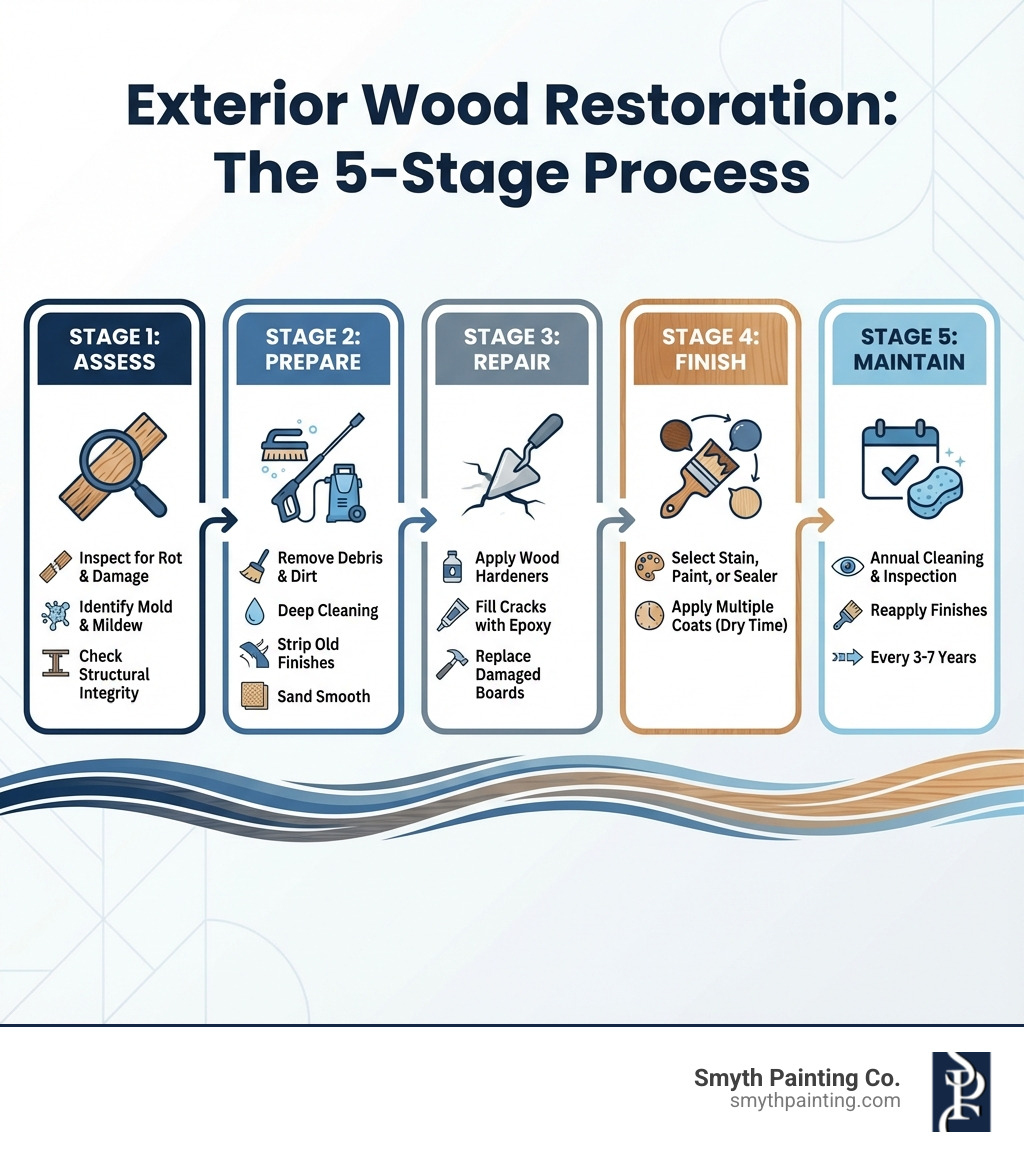
Quick Overview: The 5 Stages of Exterior Wood Restoration
- Assess – Inspect for rot, cracks, mold, and structural damage
- Prepare – Clean thoroughly, remove old finishes, and sand surfaces smooth
- Repair – Fill cracks, consolidate soft wood, and replace severely damaged sections
- Finish – Apply protective stains, sealers, or paints appropriate for your wood type
- Maintain – Inspect annually and reapply finishes every 3-7 years depending on exposure
Wood adds timeless character to your home’s exterior—from decks and fences to siding and trim. But New England weather is brutal. UV rays break down wood fibers, rain causes swelling and rot, and temperature swings create cracks and splits. Left unchecked, these issues compound quickly, turning minor cosmetic problems into expensive structural failures.
The good news? Most exterior wood can be restored rather than replaced, often at a fraction of the cost. The exterior wood restoration market is growing rapidly—projected to increase by $1.23 billion from 2021 to 2026 at a 5.11% annual growth rate—because homeowners are finding that proper restoration and maintenance can extend wood’s lifespan by decades while preserving its natural beauty.
This isn’t just about aesthetics. Proper surface preparation, moisture control, and the right protective coatings are crucial for protecting your investment. Research from the National Park Service confirms that wood properly prepared and finished can perform well for 7+ years, while neglected wood may need extensive repairs or replacement within just a few seasons.
I’m Douglas Smyth, founder of Smyth Painting Company, and I’ve been helping Rhode Island homeowners restore and protect their exterior wood since 2005. Through years of tackling everything from historic Newport properties to modern coastal homes, I’ve learned that successful exterior wood restoration requires the right combination of preparation, products, and technique—which is exactly what this guide will teach you.
Exterior wood restoration word roundup:
Is Your Wood Crying for Help? Signs It’s Time for Restoration
Our homes in Rhode Island and SE Massachusetts face a unique set of environmental challenges. From harsh winters to humid summers, the elements are constantly at work on our exterior wood surfaces. Understanding these environmental factors helps us recognize when our wood is “crying for help” and needs a little TLC.
Environmental Factors that Contribute to Deterioration:
- UV Radiation: The sun’s ultraviolet (UV) rays are relentless. They break down the lignin in wood, causing a process called photodegradation. This leads to surface roughening, erosion, and the familiar graying of wood. We’ve seen many a beautiful deck turn dull and faded under the New England sun. Even new exterior wood benefits from proper staining and maintenance to combat this.
- Moisture Damage: Rain, snow, dew, and high humidity are constant threats. Wood is hygroscopic, meaning it absorbs and releases moisture. This constant swelling and shrinking create stress, leading to checking (small cracks) and larger cracks. Moisture also encourages the growth of surface mildew and causes stains. If wood stays wet long enough, it can rot.
- Temperature Fluctuations: The freeze-thaw cycles we experience can exacerbate moisture damage, leading to further expansion and contraction that stresses wood fibers and finishes.
- Atmospheric Pollutants: While less visible, pollutants can also contribute to the chemical degradation of wood surfaces over time.
These factors combine to create a variety of visual cues that tell us it’s time for exterior wood restoration.
Common Signs of Exterior Wood Deterioration:
- Graying or Faded Wood: This is often the first and most obvious sign of UV damage. The once rich color of your wood starts to look dull and lifeless.
- Cracking and Splintering: Small checks can widen into larger cracks, making surfaces rough and prone to splintering. This is particularly common on decks and railings.
- Peeling Paint or Stain: If your wood is painted or stained, chipping, blistering, or peeling indicates that the finish has failed and is no longer protecting the wood underneath. This is a clear signal that the underlying wood is exposed to the elements.
- Mold and Mildew Growth: Dark green, black, or even white fuzzy patches are a sure sign of moisture accumulation and biological growth. This not only looks unsightly but can also contribute to wood degradation.
- Soft or Spongy Spots (Rot): This is a more serious sign. If you can push into the wood with a screwdriver and it feels soft or crumbles, you likely have wood rot. This requires immediate attention. Our article, 7 Warning Signs Your Deck Needs Repairs and Paint Before the Harsh New England Winter, digs deeper into these critical indicators for decks specifically.
Deciding Between Repair and Replacement
When facing deteriorated wood, a critical question arises: should we repair or replace it? The good news is that for many issues, exterior wood restoration is a viable and cost-effective solution.
Repair is often appropriate when:
- Damage is localized, such as small areas of rot or a few cracked boards.
- The structural integrity of the overall piece is sound.
- The historic character of the wood feature is important to preserve. As the National Park Service guidelines on wood features emphasize, retaining original features is paramount for historic preservation, and repair should always be prioritized over replacement if feasible.
Replacement is usually necessary when:
- Damage is extensive, affecting a large portion of the wood or its structural integrity.
- The wood is severely rotted, soft, and crumbling throughout.
- The cost of repair would exceed the cost of replacement.
For instance, if a few deck boards are rotten, we can replace just those individual planks. However, if the entire deck frame is compromised, replacement might be the safer and more economical option in the long run. We always conduct a thorough assessment to help our clients make the best decision for their property.
The Essential Steps of Exterior Wood Restoration
Successfully reviving your outdoor wood is a systematic process. It’s not just about slapping on a new coat of paint or stain; it’s about meticulous preparation, careful repair, and thoughtful finishing. The sequence of these steps is crucial for achieving a beautiful, long-lasting result that can withstand the unique climate of Rhode Island and SE Massachusetts.
Step 1: Thorough Cleaning and Preparation
This is arguably the most critical stage of exterior wood restoration. As the National Park Service notes in their technical guide on Proper Painting and Surface Preparation, proper surface preparation can add years to the life of a paint job. We need a clean, sound surface for any new finish to adhere properly.
- Debris Removal: Start by removing all loose debris, leaves, dirt, and anything else that’s accumulated on the wood. A leaf blower or a stiff broom works well for this. For decks, it’s also important to clear debris from between deck boards, as this can trap moisture and promote rot. A putty knife or a laminate scoring tool can be useful here.
- Cleaning: Next, we clean the wood surface thoroughly. For general dirt, grime, and light mildew, commercial deck cleaners are effective. Many contain sodium percarbonate, which is an environmentally friendly option. For heavier mildew or algae, non-chlorine oxygenated bleach products are excellent. We always recommend reading product labels carefully and testing in an inconspicuous area first. We find that for homes in Rhode Island, soft washing is often better than power washing for cleaning exterior surfaces, including wood, as it uses lower pressure and specialized cleaning solutions to safely remove contaminants without damaging the wood fibers.
- Stripping Old Finishes: If there’s an old, peeling, or oxidized finish, we’ll need to strip it. Deck finish strippers, chosen for their causticity (milder, biodegradable options are preferred), are applied according to manufacturer instructions. This ensures that the new finish has a clean, uniform surface to bond to. Always protect surrounding plants and surfaces with plastic sheeting.
- Rinsing: After cleaning or stripping, a thorough rinse with clear water is essential to remove all chemical residues.
- Drying: Allow the wood to dry completely for several days before proceeding. The wood’s moisture content should be below 14% for optimal primer bonding, especially important in our humid coastal climate.
Step 2: Sanding for a Smooth Finish
Once the wood is clean and dry, sanding prepares the surface for the new finish, ensuring smoothness and better adhesion.
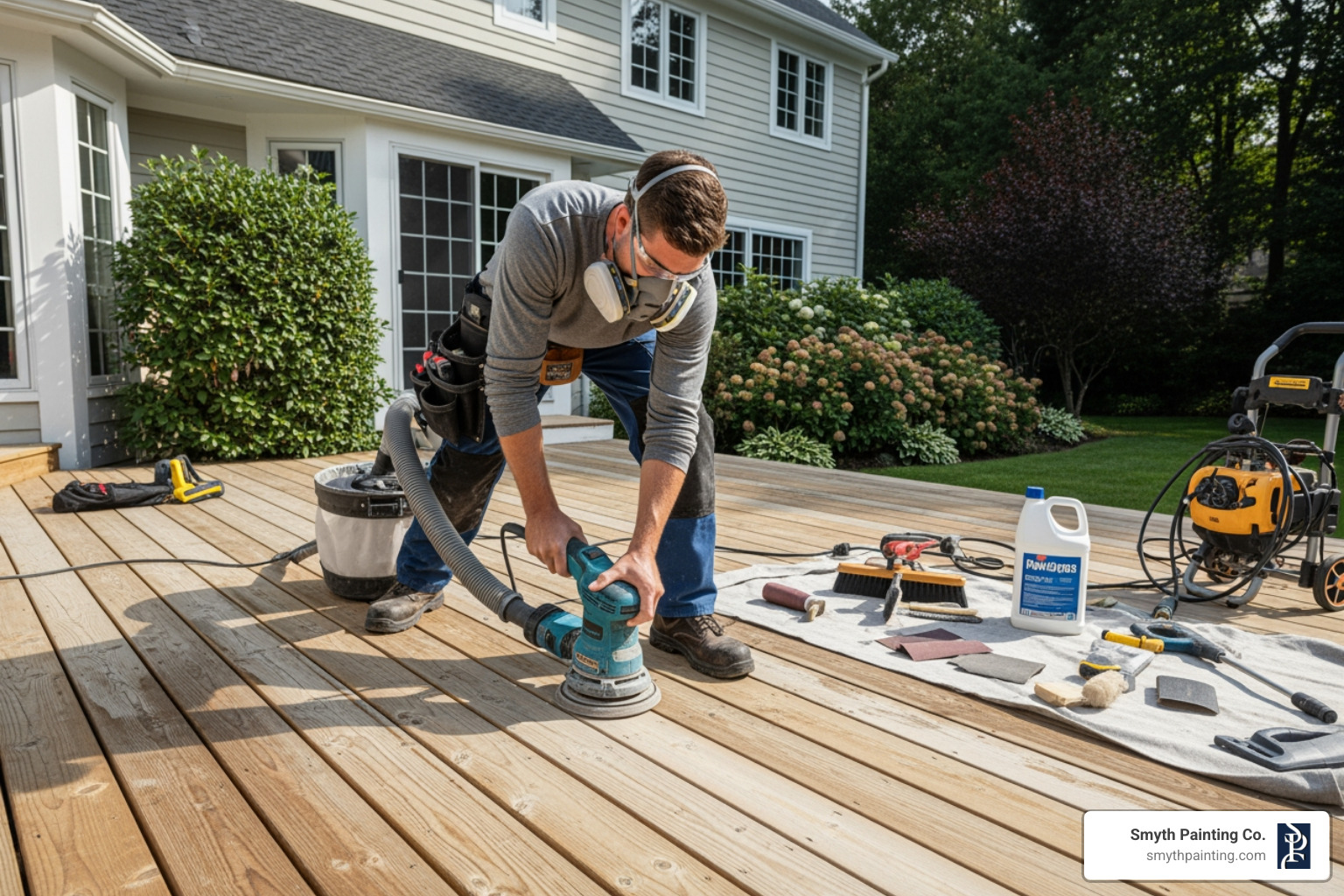
- Sanding Tools: For larger, flat surfaces like decks, an orbital sander or a sanding machine can save a lot of time and effort. For railings, trim, or intricate details, hand sanding is often necessary.
- Sandpaper Grits: We typically start with an 80-grit sandpaper to remove any remaining rough spots, raised grain, or minor imperfections. This grit is coarse enough to smooth the surface without being overly aggressive. Finer grits (e.g., 100 or 120) can be used for a smoother finish if desired, especially on handrails or furniture.
- Sanding Technique: Always sand along the wood grain, not against it, to avoid unsightly scratches. Apply light, even pressure.
- Dust Removal: After sanding, thoroughly remove all sanding dust using a leaf blower, vacuum, or damp cloth. A dust-free surface is crucial for proper finish adhesion.
Step 3: Repairing Damaged Wood: The Core of Exterior Wood Restoration
With the surface clean and smooth, it’s time to address any damage. This step is critical for the longevity and structural integrity of your restored wood.
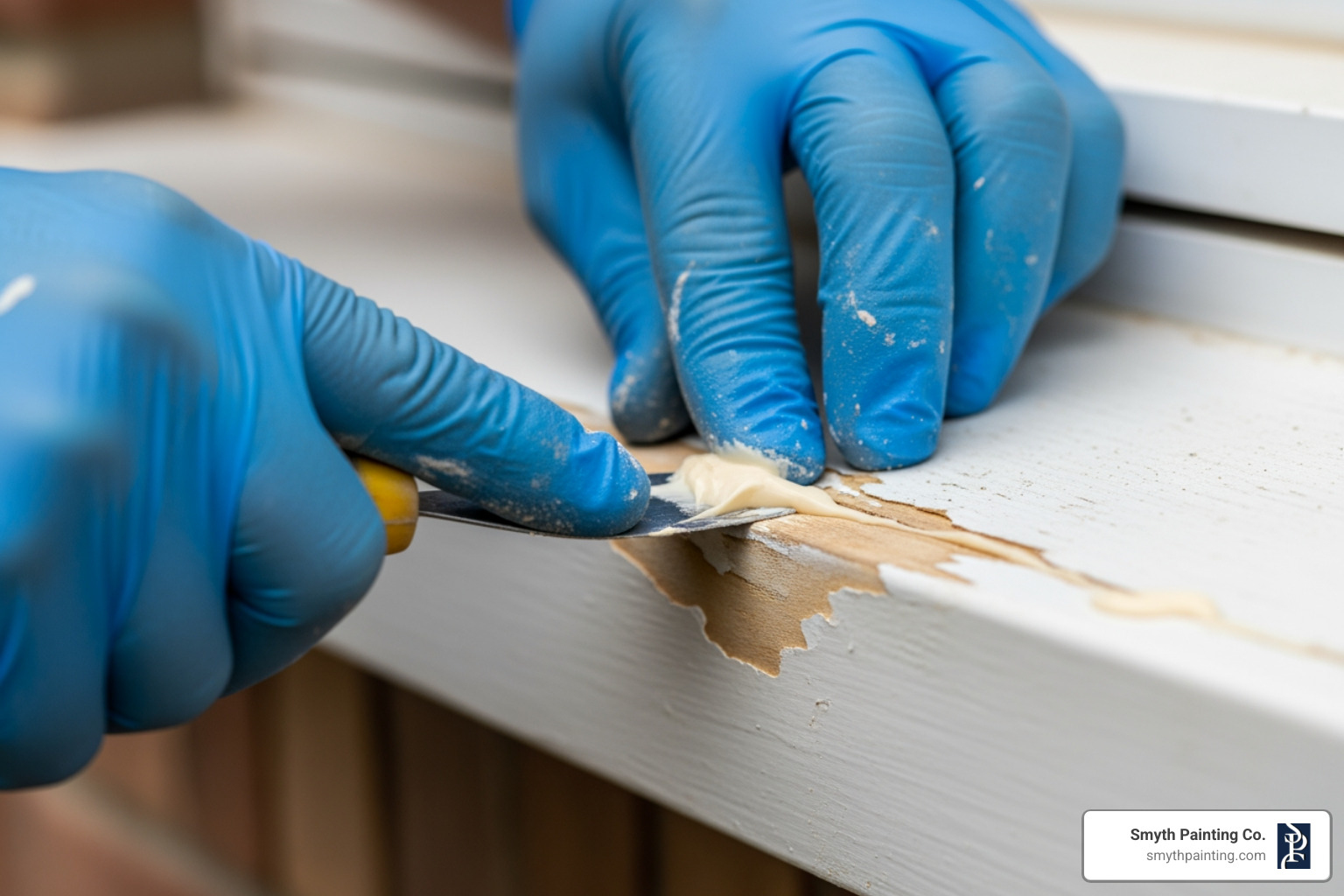
- Wood Hardeners: For areas with minor rot or soft spots that are not structurally compromised, a wood hardener can be applied. These products soak into the wood, strengthening the deteriorated fibers and creating a solid base for fillers.
- Epoxy Wood Fillers: For larger holes, cracks, or areas where wood has been removed due to rot, epoxy wood fillers are an excellent solution. They are durable, weather-resistant, and can be sanded, stained, and painted just like wood. We carefully apply these fillers, shaping them to match the original profile of the wood.
- Replacing Severely Damaged Boards: If boards are extensively rotted or structurally unsound, replacement is necessary. We carefully measure the damaged section, cut new rot-resistant wood (like pressure-treated pine, redwood, or cedar) to size, and fit it securely. For decks, this often means replacing individual planks.
- Securing Loose Fasteners: Popping or loose nails should be removed and replaced with longer nails, special decking nails, or exterior-grade decking screws. This prevents further movement and ensures the stability of the structure.
Gearing Up: Essential Tools and Materials
Having the right arsenal of tools and materials is half the battle when starting on an exterior wood restoration project. Here’s what we typically have on hand:
- Safety Gear:
- Rubber gloves (for handling chemicals)
- Safety glasses or goggles
- NIOSH-approved respirator (especially if dealing with lead paint on older homes, which is a real concern in Newport and other historic areas, or strong chemical fumes)
- Long-sleeved shirts and pants
- Cleaning Supplies:
- Stiff fiber bristle brushes
- Leaf blower or broom
- Garden hose with spray nozzle
- Commercial deck cleaner (sodium percarbonate-based)
- Oxygenated bleach or specific mildew treatment
- Deck finish stripper (if needed)
- Plastic sheeting or drop cloths (to protect plants and surrounding areas)
- Hand-pump garden sprayer (for applying cleaners/strippers)
- Repair Products:
- Wood hardener
- Exterior-grade epoxy wood filler
- Wood putty (for minor imperfections)
- Replacement wood (pressure-treated, redwood, or cedar, cut to size)
- Exterior-grade screws or nails
- Pry bar, hammer, drill
- Sanding Equipment:
- Orbital sander or sanding machine
- Hand sanding blocks
- 80-grit and 100-grit sandpaper
- Finishing Applicators:
- High-quality paint brushes (synthetic for water-based, natural for oil-based)
- Paint rollers with appropriate nap for textured surfaces
- Stain pads or applicators
- Paint trays
- Clean rags for wiping excess stain
Finishing and Long-Term Protection
Once the wood is clean, smooth, and repaired, the final step in exterior wood restoration is applying a protective finish. This isn’t just about making it look good; it’s about protecting your investment from future weather damage. The right finish will shield your wood from UV rays, moisture, and biological growth, ensuring its longevity in the challenging New England climate.
Choosing the Right Finish for Your Exterior Wood Restoration Project
The choice of finish depends on the type of wood, its condition, and the desired aesthetic. We often weigh the balance between appearance, protection, and maintenance.
| Finish Type | Appearance | Protection Level | Maintenance Frequency |
|---|---|---|---|
| Paints | Opaque, completely covers wood grain, wide color range | Highest UV and moisture protection; forms a protective film. | Generally 5-10 years, but can peel if not properly applied or if moisture gets trapped. |
| Solid Stains | Opaque, covers wood grain, rich colors | High UV and moisture protection; penetrates wood fibers better than paint, less prone to peeling. | 3-7 years, easier to reapply than paint as it often doesn’t require full stripping. |
| Semi-Transparent Stains | Allows some wood grain to show through, tints wood’s natural color | Good UV and moisture protection; penetrates wood, doesn’t form a surface film that can peel. | 2-5 years, depending on exposure. Requires reapplication when color fades or water no longer beads. |
| Clear Sealers/Water Repellents | Preserves natural wood appearance, no color change | Minimal UV protection (unless UV inhibitors are added); primarily repels water. | 1-2 years, requires frequent reapplication. Not recommended as a standalone finish for long-term protection, especially in harsh conditions. Often combined with penetrating oils or stains. |
For maximum protection against the elements, especially in areas prone to moisture and sun exposure like coastal Rhode Island, opaque finishes like paints and solid stains offer the most durable barrier. They contain pigments that block UV light, significantly slowing down the degradation process. Semi-transparent stains are a popular choice for those who want to improve the natural beauty of the wood while still providing good protection. Clear sealers, while appealing for their natural look, offer the least protection and require the most frequent maintenance. Some products combine stain and sealer, offering convenience.
Application Best Practices
Once you’ve chosen your finish, proper application is key to its performance and longevity.
- Applying with the Grain: Always apply stains and paints in the direction of the wood grain. This ensures even absorption and a smooth finish, preventing streaks and blotches.
- Proper Dry Times: Adhere strictly to the manufacturer’s recommended dry times between coats. Rushing this step can lead to adhesion issues, bubbling, or a less durable finish. This is especially important in humid New England summers.
- Number of Coats: Most finishes require at least two coats for optimal protection and color depth. Some very porous or weathered wood might benefit from a third coat.
- Following Manufacturer Instructions: Each product has specific instructions regarding temperature ranges for application, surface preparation, and cleanup. We always follow these diligently to ensure the best possible outcome. For example, painting in cold weather (below 40°F) can prevent proper primer bonding, leading to premature paint failure.
Common Challenges and When to Call a Professional
While the idea of a DIY exterior wood restoration project can be appealing, it’s not without its potential pitfalls. We’ve seen how easily homeowners can stumble, turning a seemingly straightforward task into a costly headache. Our guide on DIY Painting Pitfalls explores these in more detail.
Common DIY Pitfalls:
- Improper Preparation: Skipping or rushing the cleaning and sanding steps is the most common mistake. If the surface isn’t truly clean, dry, and sound, the new finish won’t adhere properly, leading to peeling, bubbling, and premature failure.
- Wrong Product Choice: Using an interior product outdoors, selecting a finish that isn’t suitable for your wood type or exposure, or choosing a clear sealer when a solid stain is needed for protection can all lead to disappointing results and wasted effort.
- Uneven Application: Applying too much or too little product, or not working with the grain, can result in an inconsistent finish, blotches, and an unprofessional appearance.
- Ignoring Weather Conditions: Applying finishes in direct sunlight, extreme heat, or during periods of high humidity or impending rain can severely impact drying times and the final finish quality.
Hidden Risks
Beyond aesthetic missteps, there are more serious, hidden risks associated with exterior wood restoration, especially in older homes common throughout Rhode Island, from Newport to Barrington.
- Lead Paint: Many homes built before 1978 have lead-based paint. Disturbing lead paint without proper precautions can release toxic dust, posing significant health risks to your family and the environment. This requires specialized handling, personal protective equipment, and containment. The National Park Service’s technical notes on paint removal highlight the stringent safety measures required for lead-based paint. For us, preserving the historic charm of Newport often means carefully navigating these concerns.
- Unseen Structural Damage: What looks like surface rot might be a symptom of deeper structural issues. Without a professional eye, you might repair the visible damage only for the problem to resurface, potentially leading to more extensive and expensive repairs down the line. We look for signs like inadequate drainage, moisture intrusion points, and insect damage that might not be immediately obvious.
Benefits of Professional Service
This is where professional exterior wood restoration services truly shine. While we applaud the DIY spirit, some projects are best left to the experts.
- Expertise and Efficiency: Our team at Smyth Painting Company brings years of experience in diagnosing wood deterioration, selecting the right products for New England conditions, and applying them with precision. We know the nuances of different wood types and finishes, ensuring a durable and beautiful result. Our professional painters are trained in the best practices for surface preparation, paint removal, and application.
- Specialized Tools and Techniques: We have access to industrial-grade equipment, from soft washing systems to specialized sanding tools, that ensure thorough preparation and efficient application.
- Safety and Compliance: We are well-versed in handling hazardous materials like lead paint and ensuring all work complies with safety regulations, protecting your home and family.
- Long-Term Value: A professionally restored exterior not only looks fantastic but also lasts longer, providing better protection for your home and maximizing your investment. We offer high-quality, detailed, and professional work with excellent communication and eco-friendly options, ensuring a smooth, stress-free customer experience.
Conclusion: Protect Your Investment for Years to Come
We’ve explored the journey of exterior wood restoration, from recognizing the first signs of wear and tear to carefully preparing, repairing, and finishing your outdoor surfaces. The message is clear: your exterior wood is a valuable asset, and with the right care, it can continue to improve your home’s beauty and curb appeal for many years to come.
Regular maintenance and timely exterior wood restoration offer significant benefits: they extend the lifespan of your wood, preserve its aesthetic appeal, and often prove to be a more cost-effective solution than full replacement. By understanding the environmental factors at play in Rhode Island and SE Massachusetts, and by following the essential steps of cleaning, sanding, repairing, and applying the right finish, you can protect your investment against the elements.
The key to longevity lies in consistency. Annual cleaning and inspection of your exterior wood surfaces can catch minor issues before they escalate, making future maintenance simpler and less intensive.
For a flawless, long-lasting finish on your Rhode Island home, trust the professionals at Smyth Painting Company. With our expertise in high-quality, detailed, and professional exterior painting and restoration services, we’re here to help you weather any storm.
Get a free estimate for your residential restoration project today, and let us bring your outdoor wood surfaces back to life!


