

Understanding the Skilled Trade of Interior Painting
An interior painter is a skilled tradesperson who applies paint, wallpaper, and other finishes to interior surfaces of buildings, changing spaces through both protective and aesthetic treatments. Here’s what defines this profession:
Key Responsibilities:
- Surface Preparation – Cleaning, scraping, sanding, repairing cracks and holes
- Paint Application – Using brushes, rollers, or spray equipment to apply coatings
- Decorative Work – Installing wallpaper, applying specialty finishes, advising on color schemes
- Project Management – Reading specifications, estimating costs, assembling scaffolding
What Sets Them Apart:
- Not an interior designer (who plans spaces and aesthetics)
- Not an automotive or industrial painter (who work on vehicles or machinery)
- Includes apprentices working toward journeyperson status
The work goes far beyond simply rolling paint on walls. It demands technical expertise in surface preparation, material knowledge, color theory, and the physical stamina to stand, bend, and work at heights throughout 35-40 hour work weeks.
As Douglas Smyth, founder of Smyth Painting Company serving Newport County and Rhode Island since 2005, I’ve guided countless projects requiring the full range of skills an interior painter must master, from historic home restorations to modern commercial spaces. This guide breaks down everything you need to know about this essential trade.
The Art and Science: What an Interior Painter and Decorator Really Does
The role of an interior painter is a fascinating blend of practical skill, artistic vision, and meticulous attention to detail. We don’t just apply color to walls; we transform environments, improve moods, and protect surfaces for years to come. Our work requires a deep understanding of materials, techniques, and client desires, whether we’re refreshing a cozy bedroom in Little Compton, RI, or overseeing a large-scale commercial project in Providence.
Core Duties: From Preparation to Perfection
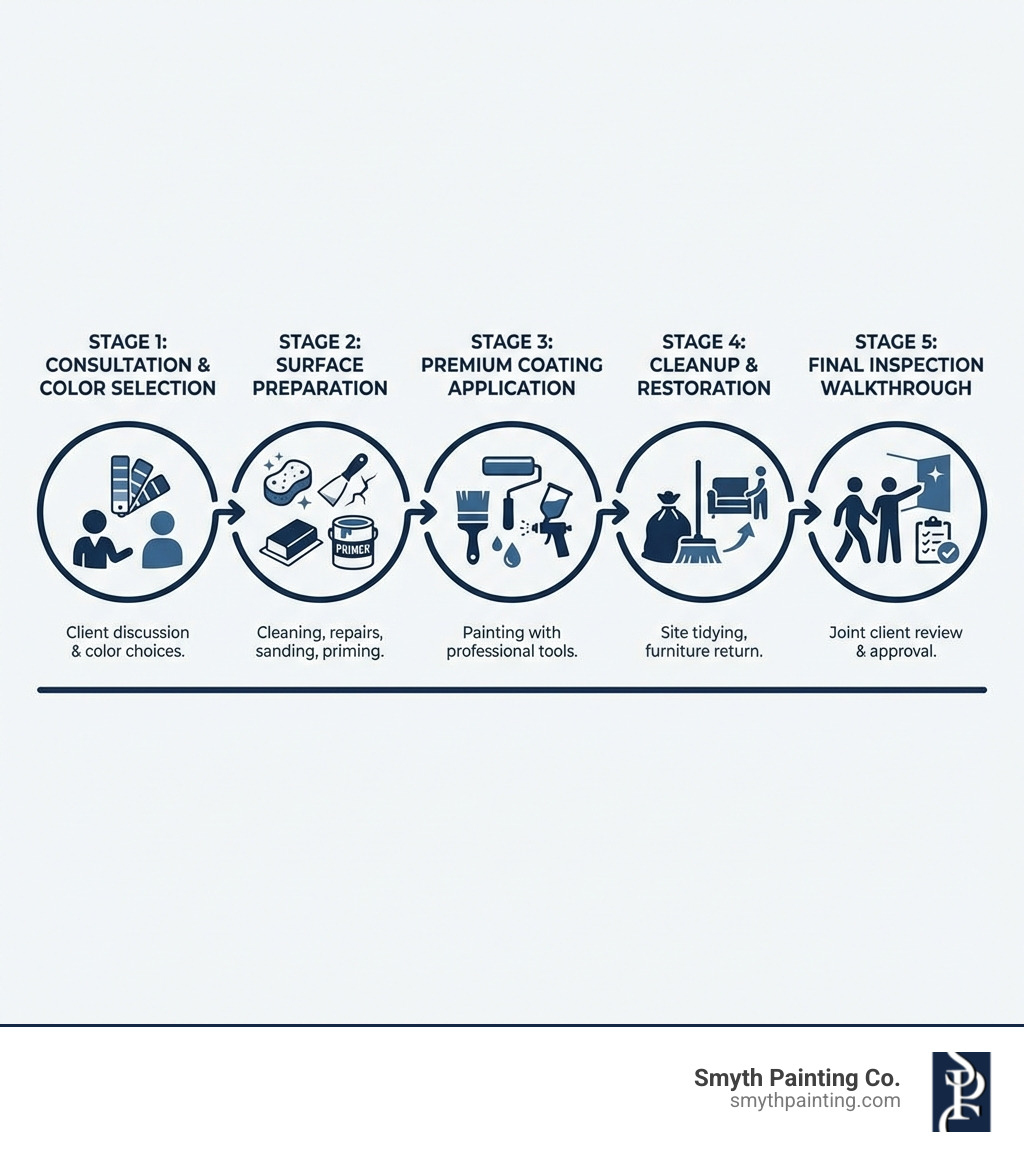
The journey to a beautifully finished interior begins long before the first brushstroke. The primary duties and responsibilities of an interior painter are extensive and critical to the final outcome.
First and foremost, we carefully read specifications. This involves understanding the client’s vision, reviewing blueprints or design plans, and determining the scope of work, including specific colors, finishes, and any special treatments required. This initial step is crucial for accurate cost estimates and ensuring that the final product aligns perfectly with expectations.
Next, and arguably the most vital stage, is surface preparation. This is where the magic (and a lot of elbow grease) truly happens. We begin with thorough surface cleaning, removing dirt, grime, and grease that could compromise paint adhesion. This often involves scraping and sanding to smooth out imperfections, remove old, loose paint, and ensure a uniform texture. For older homes in Barrington, RI, or historic properties in Newport, this might also include careful removal of old wallpaper.
Any cracks and holes in walls must be expertly repaired, patched, and filled to create a flawless canvas. Following repairs, we apply primers and sealers. Priming is essential for consistent color application, improved paint adhesion, and blocking stains. It’s like laying a perfect foundation for a beautiful home.
Only after meticulous preparation do we move to the exciting part: applying the paint. Whether using brushes for precision cutting, rollers for broad, even coverage, or spray equipment for efficiency on larger surfaces, we apply paint with skill and care. This also extends to specialized finishes like stains, lacquers, enamel, oil, varnish, and even fire retardant coatings where specified. For walls that demand more than just paint, we also measure, cut, and apply wallpaper or fabric with precision. And let’s not forget the ceilings! Our Ceiling Painting Service Complete Guide details our comprehensive approach to this often-overlooked surface.
Residential vs. Commercial Painting: Understanding the Difference
Here’s a snapshot of the key differences:
| Feature | Residential Painting | Commercial Painting |
|---|---|---|
| Project Scale | Typically smaller (single rooms, full homes) | Often large-scale (offices, retail, multi-unit buildings) |
| Detail Orientation | High, focus on aesthetic perfection, personalized finishes | High, focus on durability, brand consistency |
| Client Interaction | Direct, personalized advice, color consultations | Often through project managers, strict specifications |
| Timelines | More flexible, custom to homeowner’s schedule | Strict deadlines, often off-hours to minimize disruption |
| Material Focus | Wide range of decorative paints, specialty finishes | Durable, high-performance coatings, often low-VOC |
| Equipment | Standard brushes, rollers, smaller sprayers | Larger sprayers, specialized equipment for large areas |
| Safety Considerations | Standard home safety, lead paint awareness | OSHA compliance, public safety, complex scaffolding |
Our Interior Painting Services cater specifically to homeowners looking for personalized attention and exquisite finishes. For businesses, our Commercial Interior Painting Services focus on efficiency, minimal disruption, and the application of robust, long-lasting coatings designed to withstand high traffic and maintain a professional appearance.
Defining the Role: Painter vs. Interior Designer and Other Trades
It’s important to clarify what an interior painter is, and perhaps more importantly, what they are not. While we play a crucial role in the aesthetics of a space, our profession is distinct from several other related occupations.
An interior painter is the artisan who executes the finish. We bring the design vision to life by expertly preparing surfaces and applying paints, wallpapers, and decorative treatments. We understand the technical properties of coatings, how they interact with different surfaces, and the best methods for application to achieve a durable and beautiful result. We can advise on color theory and finish options, but our primary focus is on the physical change of the space.
An Interior Designer, by contrast, is a professional who plans the space and aesthetic. They conceptualize the overall look and feel, select furniture, fixtures, lighting, and finishes, and create detailed plans that an interior painter then follows. They are the visionaries, and we are the skilled hands that execute that vision.
Other trades, while also involving paint, operate in entirely different contexts:
- Automotive Painter: Specializes in painting vehicles, requiring specific techniques and materials for car bodies.
- Industrial Painter: Applies protective coatings to machinery, bridges, and other large structures, often in harsh environments, focusing on corrosion protection and durability over decorative appeal.
To understand how these roles are formally categorized, one can refer to occupational classification systems. For example, the Canadian system provides a detailed National Occupational Classification (NOC) that distinguishes these roles based on their core responsibilities and qualifications. While we operate under US regulations and licensing, these classifications highlight the specific focus and expertise required for each trade. Our expertise lies squarely within the field of changing and protecting interior building surfaces.
The Makings of a Master: Essential Skills and Qualities
To excel as an interior painter requires more than just a steady hand and a good eye for color. It demands a unique combination of technical prowess, artistic sensibility, and personal attributes that ensure both a superior finish and a smooth client experience. Whether working on a historic home in Newport or a modern office in East Greenwich, RI, our team embodies these crucial characteristics.

Technical Skills for the Modern Interior Painter and Decorator
The technical skills are the bedrock of our profession. Without them, even the most beautiful color palette would fall flat.
- Attention to Detail: This is paramount. Every brushstroke, every seam of wallpaper, every repaired imperfection contributes to the overall quality. We carefully inspect surfaces, ensure crisp cut-in lines, and verify even color application. It’s the difference between a good job and an exceptional one.
- Hand-Eye Coordination: Precision is key, especially when cutting in around trim, windows, and ceilings. This skill allows us to apply paint cleanly and accurately, preventing drips and ensuring sharp edges.
- Color Theory: Understanding how colors interact, how light affects them, and how to create specific moods is a subtle art. We guide clients through color selection, helping them choose hues that complement their existing decor and desired ambiance, from a vibrant dining room in Bristol, RI, to a serene bedroom in Narragansett.
- Tool Proficiency: From various types of brushes and rollers to sprayers, sanders, and scaffolding, we must be adept with a wide range of tools and equipment. Knowing which tool to use for each task ensures efficiency and a superior finish.
- Safety Protocols: Working with paints, solvents, and at heights requires strict adherence to safety guidelines. This includes proper ventilation, use of personal protective equipment, and safe ladder/scaffolding practices. For homes built before 1978, we are acutely aware of the considerations around lead paint, as detailed in our guide Repainting My Old Home: What I Need to Know About Lead Paint.
- Material Knowledge: We understand the properties of different paint types, primers, and sealers, including options like Environmentally Friendly Wall Paint. This allows us to recommend the best products for durability, appearance, and specific environmental considerations, especially for clients in environmentally conscious communities like Little Compton, RI.
For a broader perspective on the skills valued in trades, you can review an Essential Skills Profile. While this example is from Canada, the underlying principles of essential skills like reading, numeracy, and problem-solving are universally applicable to skilled trades in Rhode Island and SE Mass.
Personal Qualities for Success
Beyond the technical abilities, certain personal qualities lift an interior painter and decorator from merely competent to truly exceptional.
- Problem-Solving: Every project presents its unique challenges – an unexpected surface issue, a tricky corner, or a client’s last-minute change of heart on a color. Our ability to think on our feet and find effective solutions ensures the project stays on track and the client remains happy.
- Communication Skills: Clear and consistent communication with clients, from the initial consultation to the final walkthrough, is vital. We ensure clients in places like South Kingstown, RI, or Swansea, MA, are informed, comfortable, and confident throughout the process.
- Reliability: Showing up on time, adhering to schedules, and consistently delivering on promises builds trust. Our clients rely on us to complete their projects efficiently and to the highest standard.
- Time Management: We often juggle multiple tasks within a project, from surface prep to drying times between coats. Effective time management ensures projects are completed within agreed-upon timelines, minimizing disruption to our clients’ lives.
- Physical Stamina: Painting and decorating can be physically demanding. It involves standing for long periods, bending, reaching, and lifting equipment. Maintaining good physical fitness is essential to perform the job safely and effectively.
- Customer Service Focus: Our goal is client satisfaction. We listen to needs, offer professional advice, and go the extra mile to ensure a smooth, stress-free experience. We pride ourselves on the positive feedback we receive from homeowners across our service areas, from North Kingstown to Westerly, RI.
Smyth Painting Company has been providing services to our community for over twenty years. We are confident we can assist you in executing your paint projects whether residential, commercial interior or exterior. We are the professional painters who will get the job done.


