
Why Homeowners in Rhode Island and SE Mass Struggle to Avoid Peak Summer Painting Delays
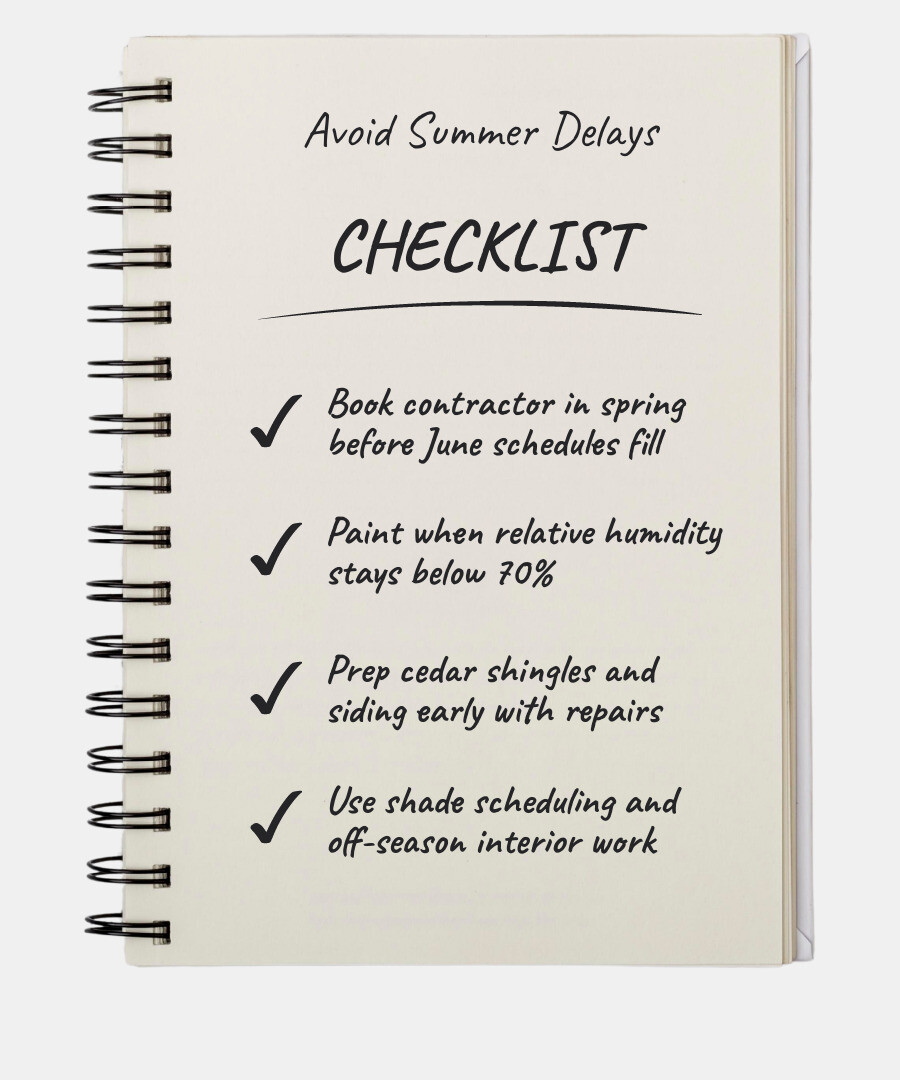
If you want to avoid peak summer painting delays, here is what works:
- Book your contractor in spring — before June, when schedules fill fast
- Plan around humidity — paint when relative humidity is below 70%
- Prep surfaces early — address rot, caulk, and washing before the busy season
- Let professionals manage heat — experienced painters schedule around shade and temperature
- Consider interior work off-season — fall and winter free up prime exterior slots
Every June, the same thing happens across Newport County and the South Shore. Homeowners call looking for a painter — and the best contractors are already booked out for weeks. Summer feels like the obvious time to tackle exterior painting. The weather is warm, the days are long, and the house finally has your attention.
But here is the problem: everyone else has the same idea.
Summer is the busiest season for painting contractors in New England. Schedules fill quickly, and when they do, your project gets pushed — sometimes into conditions that are less than ideal. High humidity slows drying. Extreme heat causes paint to blister and fail. Afternoon thunderstorms interrupt exterior work. A job that should take 5 to 10 days can stretch far longer when the calendar and the weather work against you.
Rhode Island and southeastern Massachusetts add another layer of complexity. Coastal humidity, salt air, and cedar shingle exteriors demand careful timing and proper preparation. Rush a paint job in the wrong conditions here, and you may be repainting in two years instead of ten.
I’m Douglas Smyth, founder of Smyth Painting Company, and I’ve been helping Rhode Island homeowners avoid peak summer painting delays since 2005 — through careful scheduling, honest planning, and a deep understanding of how New England weather affects exterior paint performance. In this guide, I’ll walk you through five practical steps to keep your project on track and your results lasting.
The Science of Weather: Why You Must Avoid Peak Summer Painting Delays
To protect your home, you have to understand that modern exterior paints are sophisticated chemical systems. They do not simply “dry” like a puddle of water; they cure through a precise chemical process that requires specific environmental conditions. When you push a project into the absolute peak of summer heat, you are fighting against chemistry.
Understanding how weather affects exterior commercial painting projects is essential for residential properties too. When temperatures climb, the air temperature is only half the story. The substrate temperature—the actual temperature of your cedar shingles, clapboard, or trim—can be significantly higher than the ambient air temperature.
This gap is driven by thermal mass lag. A dark-colored trim or a south-facing cedar shingle wall absorbs solar radiation all day. Even if the air temperature in Middletown or Newport is a comfortable 82°F, the surface of your siding can easily exceed 120°F in direct sunlight. This extreme surface heat bakes the paint instantly upon contact, disrupting the curing process and leading to early coat failure. For a deeper look at these surface temperature dynamics, you can read research on Phoenix summer painting and substrate temperature limits, which highlights how substrate heat impacts coatings.

How High Substrate Temperatures and Humidity Ruin Paint Adhesion
When a surface is too hot, the water or solvents in acrylic latex paint evaporate too quickly. This rapid solvent evaporation prevents the paint film from leveling out properly, leaving unsightly brush and roller marks. Worse, it dries the outer skin of the paint before the underlying layer can bond to the substrate. This trapped moisture and air expand under the hot sun, causing bubbling, blistering, and peeling.
Humidity is the other major player in Southern New England. If you live in Tiverton, Little Compton, or Jamestown, you are intimately familiar with thick, muggy summer mornings. When relative humidity climbs above 70%, the air is already saturated with moisture. Paint cannot release its water content efficiently into highly humid air. This slows drying times to a crawl and prevents proper adhesion. For some helpful context on handling these elements, check out these summer painting tips.
Coastal New England Challenges: Salt Air and Moisture
Coastal homes in Narragansett, Wickford, and Aquidneck Island face a double threat: high moisture levels and salt air. Salt is hygroscopic, meaning it naturally attracts and holds moisture. If paint is applied over a surface that has a thin layer of salt residue or trapped morning dew, the paint will lock that moisture against the wood.
Over time, this trapped moisture leads to wood rot, paint peeling, and structural damage behind your beautiful cedar shingles. This is why proper surface prep and timing are non-negotiable. Taking a DIY approach during a humid weekend often leads to frustration, which is why understanding the value of hiring external painters near me can save you both your weekend and your sanity.
Five Strategic Steps to Secure Your Project Timeline
Avoiding delays is all about working with the seasons rather than fighting them. Let’s look at how the seasons stack up for painting in our region:
| Season | Typical Conditions | Pros | Cons |
|---|---|---|---|
| Spring | Mild, transitional, occasional rain | Excellent drying temperatures (50°F–70°F) | Unpredictable rain showers |
| Summer | Hot, highly humid, strong sun | Long daylight hours, predictable dry days | Extreme heat, high humidity, packed contractor schedules |
| Fall | Warm days, cool nights, lower humidity | Most stable curing conditions, lower humidity | Shorter daylight hours |
By looking at why seasonal timing matters in painting projects, we can build a strategic plan to get your home painted without the stress of summer scheduling bottlenecks.
Step 1: Book in Spring to Avoid Peak Summer Painting Delays
The single most effective way to avoid peak summer painting delays is to start your planning in the spring. While most homeowners wait until the weather gets warm in June to start calling contractors, the smartest homeowners have already secured their spots by April or May.
By taking care of your planning early, you gain the flexibility to choose the absolute best weather window for your home. If you want to navigate this process smoothly, learning finding experienced house painters without the stress is a great place to start. Additionally, industry experts agree on why spring is the perfect time to paint, as it allows you to beat the summer rush entirely.
Step 2: Plan Around High-Humidity Windows to Avoid Peak Summer Painting Delays
In places like Barrington, Bristol, and Warren, summer humidity can linger for days. When we schedule your exterior project, we monitor the relative humidity and the dew point closely.
We aim to apply paint only when the relative humidity is safely below 70%. If we hit a stretch of sticky, muggy weather, we pause application and focus on dry preparation work. We use professional moisture meters to test the wood before a single brush touches your siding. Waiting for these dry windows ensures the paint cures into a durable, protective shell. Working with top rated house painters who understand these local climate patterns is key to protecting your investment.
Step 3: Prepare Your Cedar Shingles and Siding Early
Proper preparation is 75% of a high-quality paint job. For our coastal New England homes, this means addressing cedar shingles and trim boards long before the paint cans are opened.
We highly recommend performing surface preparation early in the season. This includes gentle soft washing to remove salt residue, mold, and mildew without forcing water deep into the wood fibers (which high-pressure power washing can do). It also gives us time to complete necessary carpentry repairs, such as replacing rotted trim or damaged shingles. Partnering with established RI painting contractors ensures that these vital prep steps aren’t rushed.
Step 4: Trust Professional Painters to Chase the Shade
When the summer heat is unavoidable, professional crews use a technique called “chasing the shade.” This means we plan our workday to follow the sun around your house.
We start early in the morning on the west-facing walls, which are still cool from the night. As the sun rises and heats up the south and west sides, we move our operations to the east and north-facing walls, which are now cast in shade. This keeps the substrate temperature within a safe working range, maintains a wet edge to prevent lap marks, and ensures the paint cures slowly and evenly.
Step 5: Consider Off-Season Interior Painting
If you want to maximize your exterior painting options, consider shifting your interior projects to the cooler months. Tackling interior painting in the winter is a fantastic strategy.
Because indoor environments are climate-controlled, we can achieve flawless results on your walls, trim, and kitchen cabinets during the winter without worrying about New England’s outdoor humidity. Booking your professional interior painting services between November and March not only keeps your summer clear for exterior work, but it also gives you access to highly flexible scheduling options during our traditional off-season.
Secure Your Spot on Our Schedule
Don’t let the peak summer rush push your home’s maintenance into the autumn dampness. By planning ahead, booking early, and trusting professional techniques, you can enjoy a beautiful, long-lasting finish that stands up to the New England elements.
Ready to plan your next project? Contact Smyth Painting Company today to secure your spot and ensure your home gets the care, detail, and protection it deserves.


