

Why Artists Are Rethinking Their Paint Choices
Environmentally friendly acrylic paint offers artists a way to create without the environmental guilt. Here’s what you need to know:
Top Eco-Friendly Acrylic Options:
- Bio-Based Acrylics – Use renewable plant sources (corn, soy, sugarcane) instead of petroleum, reducing fossil fuel reliance by up to 50%
- Recycled Acrylics – Made from reclaimed paint destined for landfills, diverting waste from the 70 million gallons discarded annually in the US
- Non-Toxic Certified Paints – Look for the AP Seal from the Art & Creative Materials Institute, guaranteeing safety for all ages
What Makes Them Eco-Friendly:
- Replace petroleum-based binders with renewable biological sources
- Reduce carbon footprint and fossil fuel dependency
- Avoid animal-derived components
- Use recycled and recyclable packaging
Traditional acrylic paint presents a real dilemma for environmentally conscious artists. The medium we love is essentially liquid plastic – made from acrylic polymer emulsion, a synthetic resin derived 100% from fossil fuels. When you rinse your brushes, microscopic particles enter the water supply as microplastics. As one artist put it: “I love painting in watercolor and gouache, but have always avoided acrylic paints because of their fumes and toxicity.”
But here’s the good news: the art materials industry is finally catching up with artists’ values. Bio-based formulations now replace petroleum ingredients with renewable sources like algae and corn. Recycled paint options keep gallons out of landfills. These aren’t compromise products – they’re professional-grade paints that perform just as well as traditional acrylics.
I’m Douglas Smyth, and through two decades leading Smyth Painting Company in Rhode Island, I’ve witnessed the painting industry’s evolution toward sustainability, from large-scale commercial projects to intimate residential work. Understanding environmentally friendly acrylic paint options matters whether you’re an artist working in your studio or a homeowner choosing finishes for your historic New England home – the choices we make with paint have real environmental impact.
The Hidden Environmental Cost of Traditional Acrylics
For years, acrylic paints have been a staple in artists’ studios and homes across Rhode Island and SE Mass, prized for their versatility, fast drying times, and vibrant colors. However, beneath their glossy surface lies a significant environmental footprint that many of us are only just beginning to fully understand.
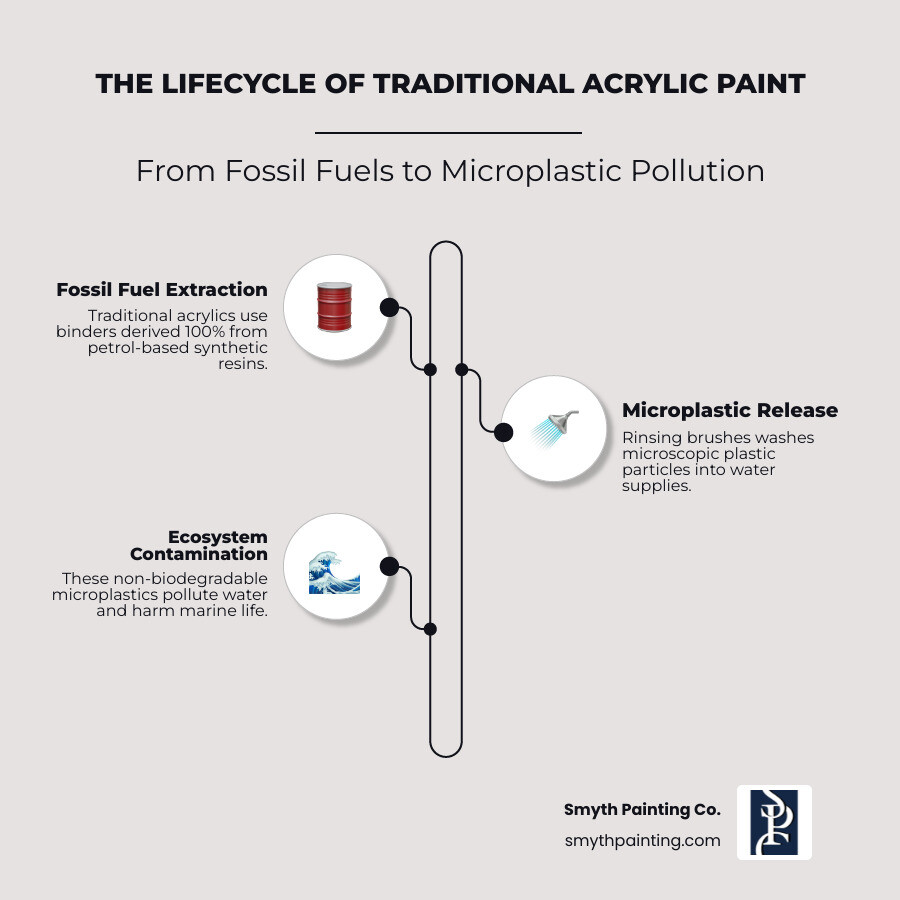
At its core, traditional acrylic paint is a synthetic resin binder called acrylic polymer emulsion, which is essentially liquid plastic. The resin base of a typical professional acrylic paint is made from 100% petrol-derived ingredients sourced from fossil fuels and other non-renewable substances. This means that every tube of conventional acrylic paint we use contributes to our reliance on fossil fuels, a key driver of climate change.
The environmental concerns don’t stop at production. When we wash our brushes under the tap, those tiny, colorful molecules, which are individual until the water evaporates, clump together (polymerise) to form a paint film. If washed off before drying, these microscopic particles can enter the water supply as microplastics. While artist color is a very small part of the overall coatings market, every little bit adds up, and these microplastics can persist in our ecosystems for centuries, harming aquatic life and potentially entering our food chain.

Beyond microplastics, the disposal of acrylic paint waste poses another challenge. A staggering 70 million gallons of paint are destined for landfills in the US alone. When paint, whether liquid or semi-liquid, ends up in landfills, it can leach hazardous chemicals into the soil and groundwater. Some traditional acrylic paints can also contain Volatile Organic Compounds (VOCs) that contribute to air pollution and can cause respiratory issues, and other toxic components that raise general toxicity concerns. While many modern acrylics are low-VOC, the synthetic nature and end-of-life impact remain a concern for us.
For us at Smyth Painting Co., advocating for sustainable practices extends beyond just the home. We believe in providing our clients in Newport, Portsmouth, and across Southern New England with options that are both beautiful and kind to the planet. Understanding the issues with traditional acrylics is the first step towards embracing environmentally friendly acrylic paint alternatives.
What Makes an Environmentally Friendly Acrylic Paint?
The good news is that innovation in the art materials industry is providing us with more and more choices for environmentally friendly acrylic paint. These alternatives address the concerns of traditional acrylics by focusing on sustainable sourcing, reduced toxicity, and better end-of-life solutions.
The primary difference lies in the composition of the paint’s binder, the component that holds the pigment together. Instead of relying entirely on fossil-fuel-derived polymers, eco-friendly acrylics incorporate materials from renewable sources or use recycled content.
Here’s a quick comparison of how they stack up:
| Feature | Traditional Acrylics | Bio-Based Acrylics | Recycled Acrylics |
|---|---|---|---|
| Binder Source | 100% Petroleum-derived | Partial Bio-based (plant/algae) | Reclaimed post-consumer paint |
| Carbon Footprint | Higher (fossil fuel extraction) | Lower (renewable resources) | Lower (waste diversion) |
| Microplastic Risk | High (if improperly disposed) | High (still plastic, but greener source) | High (still plastic, but repurposed) |
| Toxicity Concerns | Can vary; some VOCs/additives | Generally lower (non-toxic focus) | Can vary; often non-toxic certified |
| End-of-Life | Landfill/microplastic | Landfill/microplastic (better origin) | Diverts from landfill |
| Sustainability Focus | Low | Resource renewal, fossil fuel reduction | Waste reduction, circular economy |
Understanding Bio-Based and Recycled Formulations
Bio-based acrylics are a significant step forward. While they are still acrylics and form a durable plastic film, their key innovation is replacing a substantial portion of the petroleum-derived resin with binders from renewable, biological sources. This means ingredients sourced from living or once-living organisms like corn, soy, sugarcane, and even algae. For instance, some bio-based formulations can halve the reliance on fossil fuels in their resin base. This shift significantly reduces the carbon footprint associated with paint production, making them a more sustainable choice. We’ve seen this kind of innovation in other industries, and it’s exciting to see it come to art supplies.
Recycled acrylic paints take a different approach to sustainability by tackling waste. These paints are made from reclaimed paint that would otherwise end up in landfills. Companies collect and process unused or leftover paint, filtering, blending, and re-pigmenting it to create new, high-quality art paints. This process directly diverts millions of gallons of paint from waste streams, embodying a true circular economy principle. It’s a fantastic example of how we can give materials a second life, much like we might repurpose an old piece of furniture with a fresh coat of paint.
Key Certifications to Look For
When choosing environmentally friendly acrylic paint, certifications play a vital role in ensuring both safety and environmental claims are legitimate. One of the most important certifications for art materials in the US is the AP Seal from the Art & Creative Materials Institute (ACMI).
The AP Seal indicates that a product is certified non-toxic and safe for use by children and adults. This certification means the product has been evaluated by a toxicologist and contains no materials in sufficient quantities to be toxic or injurious to humans, including chronic health hazards. While it doesn’t directly address the biodegradability of the paint, it assures us that the materials are safe for our studios and homes in places like Narragansett and Wakefield, especially if we have little ones around.
Beyond the AP Seal, some brands may pursue other environmental certifications related to manufacturing processes, VOC content, or sustainable sourcing. Always look for transparent labeling and information from manufacturers to make informed choices.
What are the benefits of using an environmentally friendly acrylic paint?
Choosing environmentally friendly acrylic paint offers a multitude of benefits for artists, our communities, and the planet:
- Reduced Carbon Footprint: By opting for bio-based paints, we directly contribute to a reduction in fossil fuel dependency and greenhouse gas emissions associated with paint production. Recycled paints divert waste, saving energy and resources that would otherwise be used to create new materials.
- Safer Studio Environment: Many eco-friendly options prioritize low or no VOCs and non-toxic formulations, leading to better indoor air quality. This is particularly beneficial for artists who spend long hours in their studios, ensuring a healthier space for creation.
- Supporting Innovation: By purchasing sustainable art materials, we encourage manufacturers to invest further in research and development of even greener solutions. We become part of the movement driving positive change in the industry.
- Aligning Values with Practice: For many artists, creativity is deeply connected to a love for nature and a desire to make the world a better place. Using eco-friendly paints allows us to align our artistic practice with our environmental values, making our art truly sustainable from concept to canvas.
- Professional Quality and Archival Properties: Modern environmentally friendly acrylic paint options are designed to meet the high standards of professional artists. They offer excellent pigment load, lightfastness, and archival stability, ensuring our artwork endures for generations, just like our commitment to the environment.
Your Guide to a Greener Studio: Practical Tips for Artists
Making the switch to environmentally friendly acrylic paint is a fantastic start, but our journey towards a greener studio doesn’t end there. Our daily habits and studio practices also play a crucial role in minimizing our environmental footprint. At Smyth Painting Co., we know that small changes in our painting routines can lead to significant positive impacts.

Smart Paint Practices
Being mindful of how we use our paint can drastically reduce waste. Here are a few tips we’ve learned:
- Use What You Need: It sounds simple, but often we squeeze out more paint than necessary. Start with small dollops and add more as needed.
- Palette Management: Instead of discarding leftover paint on your palette, consider scraping it into a “junk” color for underpaintings or textural work. If you use a non-absorbent palette, leftover paint can sometimes be spritzed with water and covered to stay workable for a short period.
- Use Mediums: Acrylic mediums can extend your paint, change its consistency, and create various effects, often making your paint go further. It’s also worth noting that some artists are exploring alternatives to acrylic mediums, such as using cold wax medium with a biodegradable varnish for a more eco-conscious approach.
- Choosing the Right Finishes: Just as we advise homeowners on selecting the right paint finishes for your project to ensure durability and longevity, artists should consider how their chosen paint and mediums will perform to avoid rework and waste.
- Avoid Common Pitfalls: Whether you’re painting a masterpiece or your living room wall, knowing how to avoid common DIY painting mistakes helps conserve materials and prevent unnecessary waste.
Proper Waste and Water Disposal
The biggest environmental challenge with acrylics, even eco-friendly ones, is preventing microplastics from entering our waterways. The good news is there are effective solutions:
- Water Filtration System: Inspired by methods used in water reclamation plants, artists can create a simple filtration system in their studio. Golden Artists Paints, for example, shared a method more than 20 years ago that involves allowing rinse water to settle.
- Flocculation: This fascinating process involves adding a flocculant (like alum or a specific paint flocculant product) to your rinse water. It causes the tiny paint particles to clump together, or “flocculate,” and sink to the bottom.
- Settling Solids: After flocculation, or simply by letting your rinse water sit undisturbed, the paint solids will settle at the bottom of your container.
- Decanting Clean Water: Carefully pour off the clear water from the top. This water can often be reused for rinsing brushes (though not for mixing with paint), or safely poured down the drain, as it’s largely free of paint particles.
- Drying Sludge: The remaining paint sludge at the bottom should be allowed to completely dry out. Once it’s solid, it can be disposed of in your regular trash, preventing liquid paint from contaminating landfills. It’s the amount of paint, not the amount of water, that determines the environmental impact.
By adopting these practices, we can significantly reduce the amount of microplastics entering our local water systems in places like Bristol and Warren.
Exploring Other Eco-Conscious Materials
While our focus is on environmentally friendly acrylic paint, expanding our material palette can further reduce our environmental impact:
- Powdered Earth Pigments: These natural pigments, when mixed with plant-based binders or even a biodegradable acrylic medium, offer rich colors with minimal environmental processing. One artist mentioned using powdered earth pigments before, mixed with acrylic medium, but noted it required a well-ventilated studio.
- Gouache and Gansai: These opaque water-medium paints are excellent alternatives. Gouache, used for centuries, consists of natural pigment, water, and a binding agent like gum arabic. Both can be re-wetted and dried to a matte finish, and can even be thinned to resemble watercolor, offering versatility without the plastic binder.
- Plant-Based Gesso: For those concerned about priming surfaces, a Portsmouth artist formulated a soy gesso, a VOC-free product, demonstrating local innovation in eco-friendly art supplies. You can read more about this innovation here: Portsmouth artist formulates soy gesso, a VOC-free product.
- Connecting with Other Artists: We are not alone in this journey! Many artists are struggling with the same dilemmas regarding materials. Joining communities of eco-friendly artists can provide invaluable support, tips, and shared knowledge. We encourage you to Join a community of eco-friendly artists to share ideas and find inspiration.
Frequently Asked Questions about Eco-Friendly Acrylics
As we explore new options, it’s natural to have questions. Here, we address some common concerns about environmentally friendly acrylic paint.
Are bio-based acrylics as good as traditional ones?
The short answer is, yes, they are designed to be. Manufacturers of bio-based acrylics, like Liquitex, explicitly state their goal is to provide professional-grade paint without compromise. This means they are formulated to offer:
- Performance: Bio-based acrylics are engineered to perform comparably to their traditional counterparts in terms of consistency, flow, and workability.
- Lightfastness: Extensive testing ensures that these paints, like traditional acrylics, resist fading over time when exposed to light, ensuring the longevity of your artwork. Liquitex, for instance, tests colors for 300 hours in a Q-sun machine, equivalent to 100 years in gallery conditions.
- Durability: Once dried, the paint film is robust and archival, just like traditional acrylics.
- Tinting Strength: High pigment loads are prioritized in development, meaning the colors are vibrant and strong, allowing for excellent coverage and mixing.
- Archival Quality: They are formulated to be stable and long-lasting, suitable for fine art.
However, there can be minor differences. For example, some specific colors in a bio-based range might have a slightly more matte sheen compared to their traditional heavy body equivalents, such as Ultramarine Blue, Burnt Umber, and Chromium Oxide Green in certain brands. These are often subtle variations that artists can adapt to or even incorporate into their unique style.
Are “bio-based” paints biodegradable?
This is a common and important question, and the answer requires clarification. While “bio-based” implies a connection to natural materials, it does not mean the paint is biodegradable once dried.
Environmentally friendly acrylic paint, even with bio-based components, still forms a durable acrylic polymer film once the water evaporates. This film, like traditional plastic, is not designed to biodegrade quickly in the natural environment. The “bio-based” aspect refers to the source of the ingredients (renewable plants instead of fossil fuels), which reduces the paint’s carbon footprint during production, but not its decomposition properties post-application.
So, once the paint is dried on your canvas or project, it will not biodegrade. This means proper disposal of paint waste (drying sludge and putting it in the trash) remains crucial to prevent microplastic pollution.
What are the challenges of switching to eco-friendly acrylics?
While the benefits are clear, we understand that transitioning to environmentally friendly acrylic paint can come with its own set of challenges for artists in Jamestown, North Kingstown, and beyond:
- Cost: Sustainable materials sometimes come at a higher price point due to specialized manufacturing processes, sourcing of renewable ingredients, or smaller production scales. However, as demand grows, prices tend to become more competitive.
- Availability: While major brands are increasingly offering eco-friendly lines, the sheer variety of colors and mediums might not yet match that of traditional acrylics. This can mean a more limited selection at some art supply stores.
- Texture Differences: As mentioned, some bio-based formulations might have slight variations in sheen or handling compared to the exact traditional acrylics artists are accustomed to. This might require a period of adjustment and experimentation.
- Drying Times: While generally similar, subtle differences in drying times might occur between formulations.
- Artist Workflow Adjustments: For artists whose creative process is deeply intertwined with specific materials, making a switch can feel like a big ask. It might require adapting existing techniques or exploring new ways of working, which can be both a challenge and an exciting opportunity for artistic growth. As one artist reflected, substituting acrylic paint in their workflow might require not only some changes in their process but also a change in the look of their work.
Despite these potential problems, the increasing quality and availability of eco-friendly options make it an increasingly viable and rewarding choice for artists committed to sustainability.
Conclusion: Paint a Brighter, Greener Future
Our journey into environmentally friendly acrylic paint reveals a clear path forward for artists and homeowners alike. We’ve seen that traditional acrylics, while versatile, carry a hidden environmental cost in their fossil fuel origins and potential for microplastic pollution. However, the art materials industry is evolving, offering innovative solutions that allow us to pursue our passion without compromising our planet.
From bio-based formulations that reduce our reliance on petroleum to recycled paints that divert waste from landfills, and certifications like the AP Seal that assure safety, the alternatives are here. These aren’t just “good enough” options; they are professional-grade paints that deliver on performance, lightfastness, and archival quality, empowering artists to create beautiful, lasting work with a clear conscience.
By adopting smart studio practices, diligently managing our water and waste, and exploring other eco-conscious materials like natural pigments and plant-based gessos, we can significantly minimize our environmental footprint. Every conscious choice, from the pigments we select to how we clean our brushes, contributes to a larger movement.
At Smyth Painting Co., we believe in making choices that benefit both our clients and our environment. Just as we offer eco-friendly options for painting homes in Newport County and Aquidneck Island, we champion sustainable practices in the broader world of paint. Whether you’re an artist creating a vibrant piece or a homeowner envisioning a fresh look for your living space, the choices we make with paint have a real impact. Let’s make that impact a positive one, painting a brighter, greener future for generations to come.
Ready to bring a fresh, eco-conscious look to your home? Learn more about our professional painting services and how we can help you make a beautiful, sustainable choice.


