

Why Eco-Friendly Painting Matters for Your Home and Health
Eco friendly painting is the practice of using paints and techniques that minimize harmful chemicals, reduce environmental impact, and improve indoor air quality. Here’s what makes paint eco-friendly:
- Low or Zero VOCs – Contains 50 grams per liter or less of volatile organic compounds
- Natural Ingredients – Uses plant-based resins, natural pigments, and biodegradable materials
- Water-Based Formulas – Avoids toxic solvents required by oil-based paints
- Third-Party Certifications – Verified by GREENGUARD, Green Seal, or similar standards
- Sustainable Production – Made with renewable resources and minimal waste
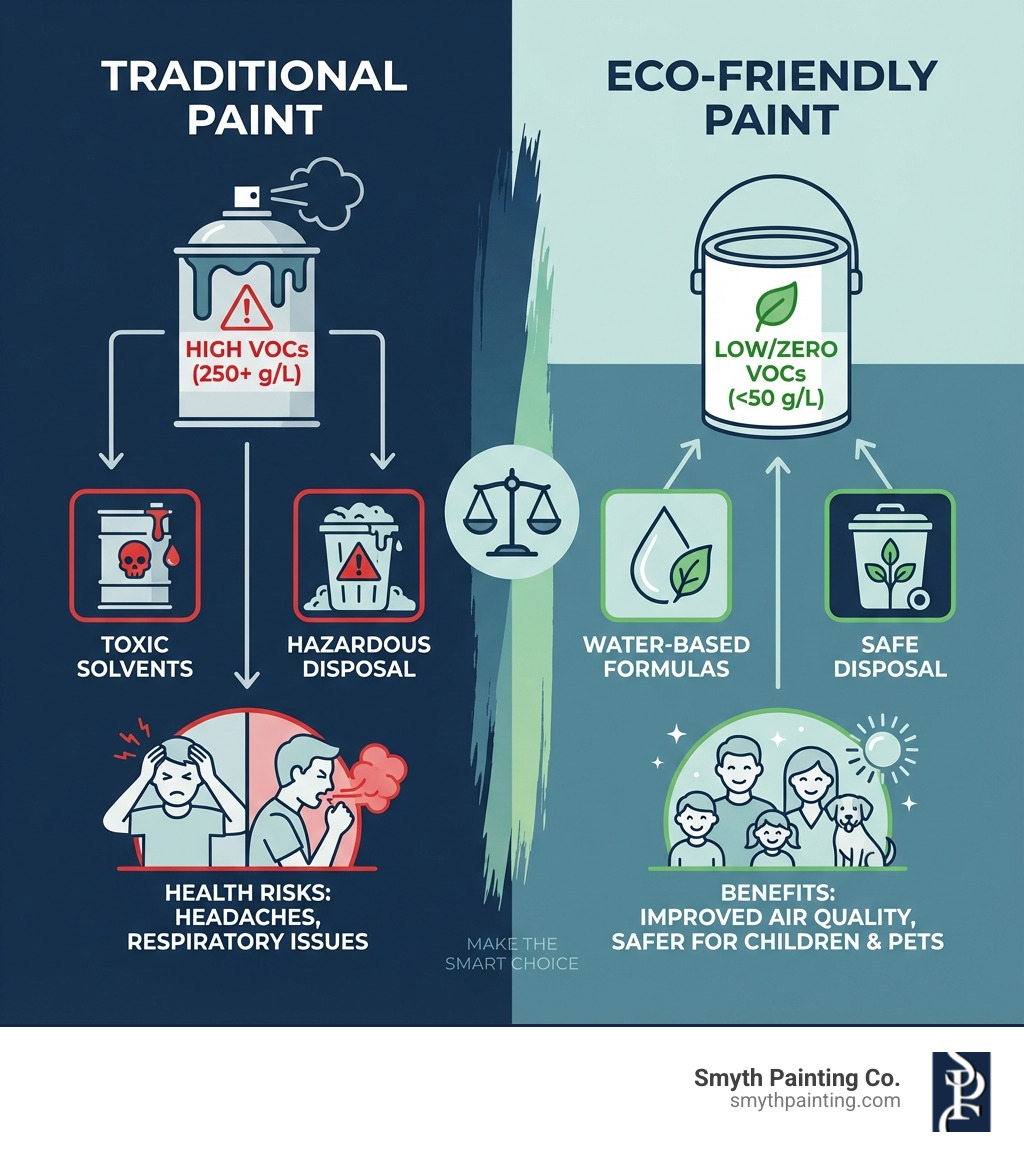
When you think about painting your home, you probably focus on color swatches and finishes. But the paint you choose affects more than just how your walls look—it impacts the air you breathe, your family’s health, and the environment. Traditional paints contain volatile organic compounds (VOCs) that can be two to five times more concentrated indoors than outdoors, according to EPA research. These chemicals off-gas for days or even weeks after application, potentially causing headaches, respiratory problems, and worse.
The good news? The paint industry has evolved dramatically. Modern eco-friendly paints perform just as well as traditional options—sometimes better—while protecting your home and the planet. Major brands now offer low-VOC and zero-VOC formulas with excellent coverage, durability, and color retention. Natural alternatives like milk paint and clay paint provide even more sustainable options for specific projects.
This guide will walk you through everything you need to know about eco friendly painting: what makes paint truly green, how to identify genuinely sustainable products amid marketing claims, and the practical steps to complete an environmentally responsible painting project. You’ll learn about certifications that matter, disposal methods that protect local ecosystems, and why water-based paints are usually the smarter choice for both interior and exterior work.
I’m Douglas Smyth, founder of Smyth Painting Company, serving Newport County and greater Rhode Island since 2005. Through years of residential and commercial painting projects, I’ve witnessed how eco friendly painting delivers exceptional results while creating healthier homes for families throughout our community. Let me show you why going green is the smart choice for your next painting project.
The Problem with Traditional Paint: More Than Just a Smell
That familiar “new paint smell” is a red flag for Volatile Organic Compounds (VOCs) and other harmful chemicals. These aren’t just an unpleasant odor; they represent serious environmental and health concerns associated with traditional paints, which often contain a cocktail of hazardous additives like biocides and heavy metals that off-gas into your home.
When these paints are applied, and for a long time afterward, these substances are released into the air, contributing to indoor air pollution and potentially damaging the ozone layer. The environmental impact extends further, affecting water quality and soil when paints are improperly disposed of or washed into drainage systems.
Understanding Volatile Organic Compounds (VOCs)
What are VOCs? They are organic chemicals that easily vaporize into the air as gases—a process known as off-gassing. Paint is a leading source of VOCs like benzene, formaldehyde, and toluene.
The EPA notes that VOC concentrations are about two to five times higher indoors, as our enclosed homes trap these chemicals. During a project, especially when stripping old paint, VOC levels can skyrocket up to 1,000 times higher, which is why proper ventilation is always crucial.
Exposure can cause short-term effects like headaches, dizziness, and irritation of the eyes, nose, and throat. More serious or prolonged exposure is linked to liver, kidney, and central nervous system damage, and even certain cancers. Some VOCs also damage the ozone layer. For more information, refer to the Environmental Protection Agency’s detailed explanation.
Environmental Concerns Beyond VOCs

Beyond VOCs, the entire lifecycle of traditional paint leaves a substantial footprint. Its production often relies on fossil fuels, and it contains fungicides, pesticides, and heavy metals that are harmful to ecosystems.
When improperly disposed of, these chemicals can leach into the ground, contaminating soil and groundwater—a major concern for sensitive coastal ecosystems in Rhode Island and SE Mass. If paint enters waterways, it can harm aquatic life and disrupt ecosystems. That’s why we emphasize responsible practices in every project, from Newport to North Kingstown.
What Makes a Paint Eco-Friendly?
So, what makes a paint ‘eco-friendly’ or ‘non-toxic’? It’s about a fundamental shift in ingredients, manufacturing, and lifecycle impact. At Smyth Painting Co., we believe in transparent choices for your home.
At its core, eco friendly painting minimizes harmful chemicals and maximizes sustainability, starting with the reduction or elimination of Volatile Organic Compounds (VOCs).
Low-VOC vs. Zero-VOC: The EPA limits ‘low-VOC’ latex paints to 250 grams per liter (g/L). ‘Zero-VOC’ paints go further, containing no more than 5 g/L. Some natural formulas, like milk paint, can be entirely VOC-free, which is crucial for indoor air quality.
Another key aspect is the paint’s composition.
Water-Based vs. Oil-Based Paints:
| Feature | Water-Based (Latex/Acrylic) | Oil-Based (Alkyd) |
|---|---|---|
| VOCs | Generally low-VOC or zero-VOC (under 50 g/L) | Historically high-VOC; low-VOC options available but less common |
| Cleanup | Easy with soap and water | Requires mineral spirits or paint thinner |
| Disposal | Easier, often can be dried out and disposed of with household trash (check local regulations) | Requires hazardous waste disposal |
| Durability | Excellent for interior and exterior, flexible, resists cracking, good color retention | Very hard, durable, smooth finish, good for high-traffic areas, can yellow over time |
| Environmental | Lower environmental impact, fewer harsh chemicals | Higher environmental impact, more harsh chemicals |
Water-based paints are generally the greener and safer option.
Natural Ingredients: Eco friendly painting often uses natural ingredients like earth-mineral pigments and plant-based binders (resins or casein). These alternatives reduce reliance on petroleum-based products. Milk and clay paints, for example, are made from simpler, often biodegradable ingredients, offering a gentle option for furniture or accent walls in a historic Newport home.
Key Characteristics of Eco-Friendly Painting
When we talk about eco friendly painting, we look for products that benefit your home in places like Jamestown and Narragansett, and the wider world.

Here are the key characteristics we prioritize:
- Low or Zero VOC Content: This is fundamental for better indoor air quality. GREENGUARD certified paints have less than 50 g/L of VOCs, while Green Seal certified paints have limits of 50 g/L (flat) to 100 g/L (non-flat).
- Natural and Renewable Resources: These paints use ingredients from nature, like plant-based resins and natural pigments, rather than synthetic, petroleum-based compounds, reducing the carbon footprint.
- Biodegradability: The goal is to minimize persistent chemicals. Natural paints, in particular, tend to break down more readily, reducing long-term ecological impact.
- Reduced Toxins: Eco-friendly paints avoid other hazardous chemicals like heavy metals, formaldehyde, and harsh biocides.
- Sustainable Manufacturing: This includes energy-efficient processes, minimal waste, responsible sourcing, and often, the use of recycled packaging.
Identifying Truly Eco-Friendly Painting Options
With the rise of “greenwashing”—misleading environmental claims—it can be hard to steer products. At Smyth Painting Co., we help clients in Tiverton and Portsmouth identify genuinely eco friendly painting options.
Reading Labels and Technical Data Sheets (TDS): Look beyond front-of-can claims. Reputable manufacturers provide Technical Data Sheets (TDS) online with detailed information on VOC content and chemical composition. A company hesitant to provide a TDS is a red flag.
Third-Party Certifications: This is your strongest tool. Independent organizations test products against strict standards. Look for these trusted seals:
- GREENGUARD Label: Paints with the GREENGUARD label have less than 50 g/L of VOCs. The Gold certification indicates even stricter emissions limits.
- Green Seal Standards: Green Seal certified paints have VOC limits of 50 g/L (flat) and 100 g/L (non-flat), plus criteria for sourcing, manufacturing, and performance.
- EPA Recommendations: The EPA provides criteria for greener paints. Explore their recommendations for interior latex paint to understand the benchmarks.
Avoiding “Greenwashing”: Be wary of vague terms like “natural” or “earth-friendly” without supporting data. “Low odor” doesn’t always mean low VOCs. Always look for specific numbers and credible third-party verification.
The Health and Performance Benefits of Going Green
Choosing eco friendly painting isn’t just about being kind to the planet; it’s a direct investment in the health and well-being of your family and the longevity of your home. We’ve seen the positive impact these choices have on our clients in communities from Bristol to Wakefield.
Improved Indoor Air Quality: This is perhaps the most significant health benefit. By using low-VOC or zero-VOC paints, we drastically reduce the emission of harmful chemicals into your home’s air. This means less “new paint smell” and, more importantly, less exposure to irritants and toxins. The EPA notes that VOC effects are about two to five times higher indoors than outdoors, so minimizing these airborne chemicals directly contributes to a cleaner, safer breathing environment.
Reduced Allergies and Respiratory Issues: For individuals with allergies, asthma, or other respiratory sensitivities, traditional paints can be a trigger. The absence of harsh VOCs and other irritants in eco-friendly paints can significantly reduce the likelihood of flare-ups, making your indoor environment more comfortable and healthier for everyone, including children and pets. This is especially important in homes where young children or elderly family members reside, as their developing or aging respiratory systems are more vulnerable.
Safer for Children and Pets: Children spend a lot of time on the floor and are more susceptible to environmental toxins. Pets, too, can be affected by airborne chemicals. Non-toxic paints ensure that the surfaces they interact with—and the air they breathe—are free from hazardous compounds, creating a safer living space for your entire family, furry friends included.
Durability and Coverage Comparison: A common misconception is that eco friendly painting means sacrificing quality. This couldn’t be further from the truth! Modern low-VOC and zero-VOC paints from reputable brands have advanced significantly. They offer:
- Excellent Coverage: Many eco-friendly paints provide superior hiding power, often requiring fewer coats than traditional paints. For example, ECOS Paints offers a gallon that covers 560 sq. feet, which is more than most traditional options.
- Durability and Longevity: Formulations with 100% acrylic polymers in water-based paints provide exceptional adhesion, flexibility, and resistance to cracking, peeling, and fading. This means your paint job will look beautiful and last for years, even in high-traffic areas.
- Mildew Resistance: Many eco-friendly paints are formulated with natural or non-toxic mildew inhibitors, making them ideal for humid environments like bathrooms or basements in New England homes.
- Scrubbability: Modern zero-VOC paints are often highly washable and scrubbable, allowing for easy cleaning of everyday marks and stains without damaging the finish.
- Color Retention: High-quality pigments and advanced binders ensure that colors remain vibrant and true over time, resisting yellowing or fading.
Choosing eco friendly painting means you don’t have to compromise. You get a beautiful, long-lasting finish while actively contributing to a healthier home and a cleaner environment.
Your Guide to a Sustainable Painting Project
Choosing an eco friendly painting approach for your home, from a cottage in Little Compton to a historic property in Newport, means adopting a mindset that reduces waste and respects our environment. It’s about more than just healthier paint. Here’s how we approach a sustainable painting project.
Project Planning: Careful planning is the cornerstone of a sustainable project.
- Calculating Paint Needs: We carefully measure spaces to calculate the exact amount of paint needed, minimizing waste. A gallon typically covers 350-400 square feet.
- Minimizing Waste: This starts with precise measurement and includes careful prep to protect surfaces, reducing spills and cleanup materials.
- Surface Preparation: Proper prep is crucial for longevity. Clean, smooth surfaces ensure optimal adhesion, meaning your paint job will last longer and require less frequent repainting.
Eco-Friendly Tools and Techniques
The commitment to eco friendly painting extends beyond the paint can to the tools and techniques we employ to bring your vision to life.
- Sustainable Brushes: Look for brushes with renewable bamboo handles or those made from recycled materials.
- Recycled Plastic Rollers: Opt for high-quality rollers with cores made from recycled plastics that can be cleaned and reused.
- Reusable Paint Trays: Choose durable metal or recycled plastic trays that can be cleaned and reused, instead of disposable ones.
- Minimalist Techniques: Adopting minimalist techniques, like limiting your color palette, can reduce the number of paint cans needed.
- Proper Application to Avoid Waste: Skilled application minimizes drips and splatters, saving paint and reducing the need for cleaning solutions.
Sustainable Cleanup, Disposal, and Upcycling
The final cleanup stage is where we can make a significant environmental difference. For our clients in places like North Kingstown and South Kingstown, responsible disposal is key.
- Proper Brush and Roller Cleaning: For water-based paints, clean tools with soap and water. Collect the rinse water, let the paint solids settle, then dispose of the dried sludge and clear water according to local regulations. This prevents paint from entering the sewer system.
- Safe Paint Disposal: Never pour liquid paint down the drain. Many communities in Rhode Island and SE Mass offer paint recycling or hazardous waste collection days. If paint is completely dried out, it can often be disposed of with regular trash, but always check local rules first.
- Upcycling Leftover Paint: Don’t let extra paint go to waste!
- Creative Projects: Use it for small DIY projects like painting picture frames or decorative accents.
- Donating Unused Paint: Many local charities, schools, or community theaters welcome donations of usable leftover paint.
- Upcycling and Recycling in Projects: Use old newspapers as drop cloths and recycle them when dry. Fabric scraps can be used as cleaning rags. For artists, reclaimed wood or recycled paper are excellent sustainable canvas alternatives.
Frequently Asked Questions about Eco-Friendly Painting
We often hear great questions from our clients across Aquidneck Island and beyond about making the switch to eco friendly painting. Here are some of the most common ones:
Is eco-friendly paint more expensive than traditional paint?
Historically, eco-friendly paints did come with a higher price tag, and for some specialized natural paints (like pure earth pigments), they still might. This can be a limitation or challenge for some consumers. However, the market has evolved significantly. Many major brands now offer low-VOC and zero-VOC options that are competitively priced with their traditional counterparts. When considering the long-term benefits—like improved indoor air quality and potential health savings from reduced exposure to toxins—the initial cost difference often balances out. Think of it as an investment in your home’s health and the environment. Plus, some eco-friendly paints boast better coverage, meaning you might need less paint overall.
How does the performance of natural paints like milk or clay paint compare to modern latex paints?
Natural paints like milk paint and clay paint offer a unique aesthetic and are excellent for certain applications, but their performance characteristics can differ from modern acrylic or latex paints.
- Aesthetic: Natural paints often provide a beautiful, matte, breathable finish with a rich, earthy look that is highly desirable for specific design styles, especially in historic homes.
- Durability: While durable in their own right, milk and clay paints might not offer the same level of scrubbability or stain resistance as high-performance modern latex paints, particularly those with 100% acrylic polymers. They are generally less flexible than latex, which can be a consideration for surfaces that experience movement.
- Application: They can be easy to apply but may require different preparation or sealing methods. Milk paint, for example, often comes in powder form and needs to be mixed.
- Coverage: Coverage can vary; some natural paints offer good hiding, while others might be more translucent.
- Best Use: We often recommend natural paints for furniture, decorative accents, or interior walls where a specific matte, breathable finish is desired, rather than for high-traffic areas or exteriors where the robust protection of modern eco-friendly latex might be preferred. It’s about choosing the right tool for the job!
How long do Zero-VOC paints need to off-gas or cure?
While zero-VOC paints contain minimal to no VOCs, they still need time to dry and cure. The “off-gassing” associated with harmful VOCs is significantly reduced or eliminated in these paints. However, they can still have a mild, temporary odor as the water evaporates and the binders cure. This odor is generally non-toxic and dissipates much faster than with traditional paints, often within a few hours to a day or two.
For optimal results and to ensure the paint has fully cured and hardened, it’s always best to allow the recommended drying and curing times specified by the manufacturer, which can range from a few days to a few weeks depending on humidity, temperature, and ventilation. Even with zero-VOC paints, we always recommend good ventilation during and immediately after painting to help with drying and clear any residual mild odors.
Conclusion
Choosing eco friendly painting for your home in Rhode Island or SE Mass is more than just a trend; it’s a smart, responsible decision that benefits everyone. We’ve explored the significant environmental concerns associated with traditional paints, primarily the harmful VOCs and other hazardous chemicals that compromise indoor air quality and ecological health.
But we’ve also finded the incredible advancements in the paint industry, offering truly eco-friendly alternatives that don’t just minimize harm but actively contribute to healthier living spaces. From low-VOC and zero-VOC formulations to natural pigments and sustainable practices, the options for a greener paint job are abundant and perform exceptionally well. You get improved indoor air quality, reduced health risks for your family (including children and pets), and a durable, beautiful finish that stands the test of time.
At Smyth Painting Co., we are deeply committed to providing high-quality, detailed, professional work with an emphasis on eco friendly painting options. We believe in creating beautiful spaces that are also healthy and sustainable for our community. We handle every project with meticulous care, from proper surface preparation to sustainable cleanup and disposal, ensuring a smooth, stress-free experience for you.
Making the switch to eco friendly painting is a powerful way to improve your home’s comfort, protect your family’s health, and contribute to a healthier planet. It’s the smart choice for modern homes and a legacy we are proud to build with you.
Start your high-quality, eco-friendly painting project with us today, and let us bring your vision to life, responsibly.


