

Why Your Paint Choices Matter More Than You Think
Eco-friendly paint options are formulated to minimize health risks and environmental impact. They feature low or zero volatile organic compounds (VOCs), use natural ingredients, are often water-based, and come in sustainable packaging. Key characteristics include:
- Low-VOC or Zero-VOC formulas – Contain significantly fewer harmful emissions.
- Natural, plant-based ingredients – Made with renewable resources like plant oils and minerals.
- Water-based formulations – Use water instead of petroleum-based solvents.
- Third-party certifications – Verified by standards like Green Seal, GREENGUARD, or ECOLOGO.
The paint you choose affects your home’s air quality, your family’s health, and the environment. Traditional paints release harmful chemicals called VOCs for weeks after application, with indoor concentrations sometimes reaching 10 times higher than outdoors.
For homeowners in Rhode Island and SE Massachusetts, especially those with historic properties requiring extensive painting, this is a crucial consideration. Fortunately, the eco-friendly paint industry has evolved, and modern formulas now deliver professional-grade performance without the health or environmental compromises of traditional paints.
I’m Douglas Smyth, founder of Smyth Painting Company. Over two decades serving Newport County and greater Rhode Island, I’ve seen eco-friendly paints evolve from flawed early formulas to today’s high-performance coatings. My team has helped hundreds of homeowners select and apply these paints, protecting their historic properties and their families’ wellbeing.
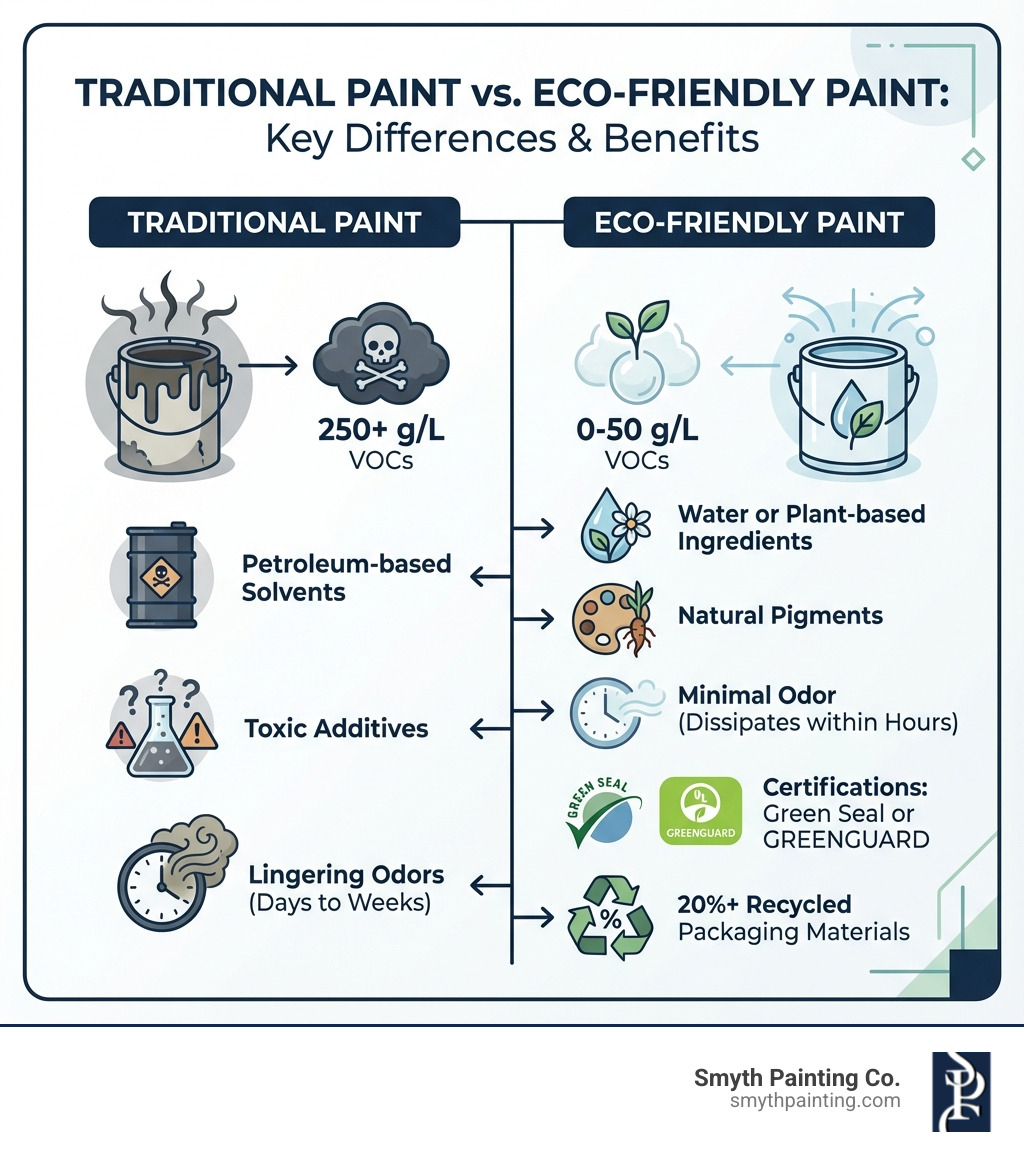
The Problem with Traditional Paints: Health and Environmental Risks
Traditional paints often contain a cocktail of chemicals, with the primary culprits being Volatile Organic Compounds (VOCs). These compounds vaporize into the air, and while they serve functions in paint like stabilizing and thickening, their release into our homes poses significant risks.
The EPA highlights that due to poor ventilation, VOC concentrations can be up to 10 times higher indoors than outdoors. This continuous off-gassing is what creates that “new paint smell.” During paint stripping, these levels can become 1,000 times higher, drastically increasing exposure.
Health concerns from VOC exposure range from short-term issues like headaches, dizziness, nausea, and allergic reactions to severe long-term risks. According to the Environmental Protection Agency, prolonged exposure can lead to liver, kidney, and central nervous system damage, and even certain cancers.
The environmental impact is also significant. VOCs react with sunlight to form ground-level ozone, a key component of smog that harms vegetation and public health. Some VOCs also contribute to the depletion of the protective ozone layer.
The lingering “new paint smell” is a sign of this chemical off-gassing, which can make spaces in your Middletown or Portsmouth home uncomfortable for weeks. At Smyth Painting Co., we prioritize solutions that minimize these impacts for a healthier experience.
What to Look For: Defining and Identifying Eco-Friendly Paint Options
Choosing an eco-friendly paint is straightforward once you know what to look for. A truly green paint minimizes harm to human health and the environment throughout its lifecycle.
Key Characteristics and Certifications
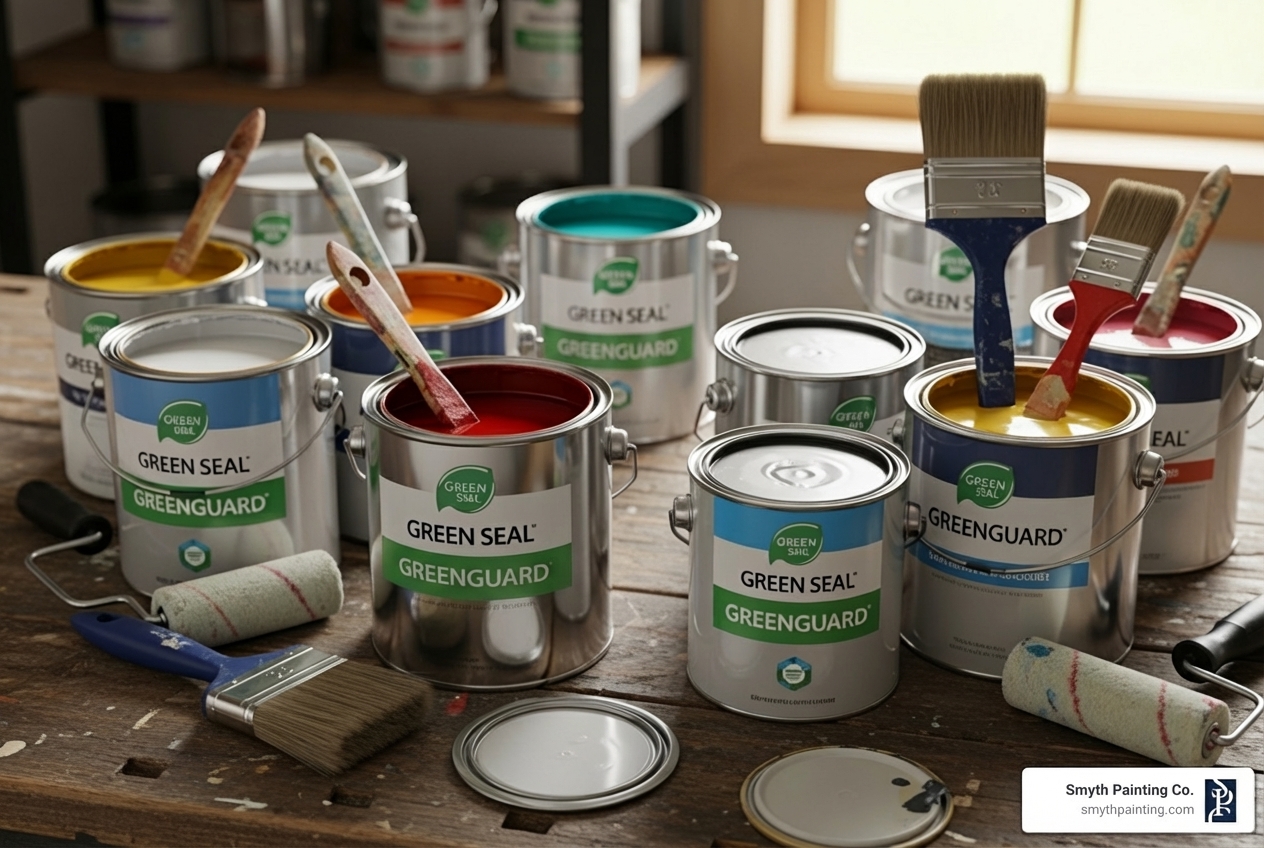
The most reliable way to identify genuinely eco-friendly paint options is by looking for key characteristics and third-party certifications, which cut through marketing jargon.
- Low-VOC vs. Zero-VOC: This is the primary distinction. While the EPA’s “low-VOC” limit is 250 g/L for latex paints, certified eco-friendly paints are much stricter. “Zero-VOC” paints can contain up to 5 g/L, so it’s important to know that “zero” isn’t always absolute.
- Natural Ingredients: Many green paints use renewable resources like plant-based oils, clay, or milk proteins instead of petroleum-based chemicals.
- Water-Based Formulas: Using water as the primary solvent significantly reduces VOC emissions and allows for easy cleanup.
- Third-Party Certifications: These independent seals are your best guide. Look for logos from:
- Green Seal: Certifies paints with VOCs under 50 g/L (flat) or 100 g/L (non-flat), and also verifies safer chemicals and sustainable packaging.
- GREENGUARD: Also requires VOCs under 50 g/L. The GREENGUARD Gold standard has even stricter limits, making it ideal for schools, healthcare facilities, and homes with sensitive individuals.
- ECOLOGO: Another trusted label that certifies products meeting life-cycle based sustainability standards.
Relying on these certifications helps you avoid “greenwashing”—misleading claims about a product’s environmental benefits. For more guidance, the EPA offers recommendations for greener paints.
The Benefits of Choosing Low- and Zero-VOC Paints
The shift to low- and zero-VOC paints offers tangible benefits for your home in Bristol, Warren, or Barrington.
First, you’ll see a dramatic improvement in indoor air quality. These paints emit far fewer harmful compounds, which means the strong “new paint smell” is replaced by a minimal odor that dissipates quickly. This allows for faster re-occupancy of spaces, minimizing disruption to your life.
Most importantly, cleaner air is safer for sensitive individuals. If you have children, pregnant women, or family members with asthma or allergies, using non-toxic paints is a crucial step in protecting their well-being. It provides peace of mind and a healthier living environment for everyone.
Exploring the Spectrum of Sustainable Paints
The world of eco-friendly paint options is diverse, offering a range of solutions with unique characteristics perfect for homes across Rhode Island and SE Mass.
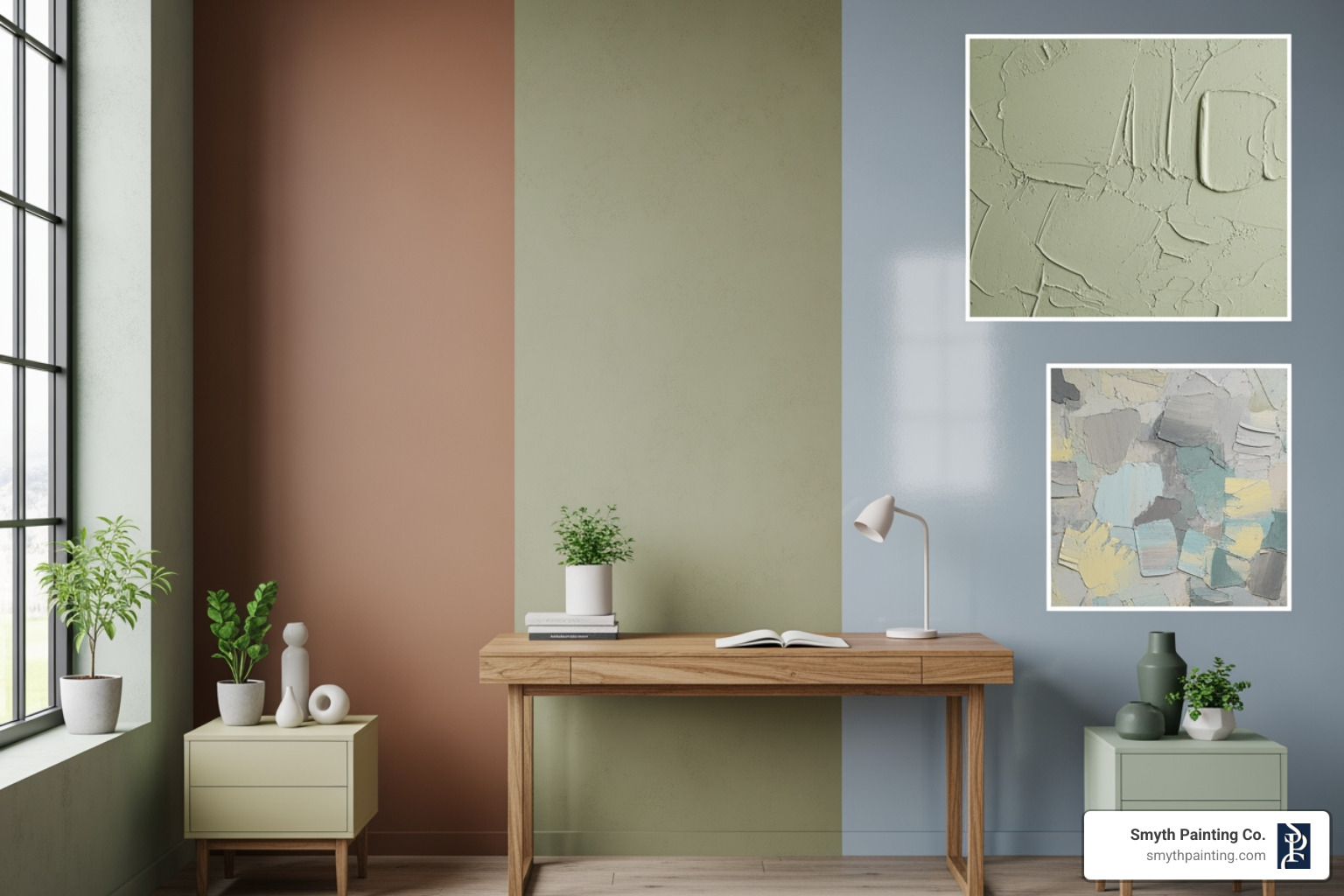
Types of Eco-Friendly Paint
- Water-based Paints: The most common type, including latex and acrylic paints. They are low in VOCs, dry quickly, and clean up with water. Most modern low- and zero-VOC paints fall into this category.
- Paints with Plant-Based Ingredients: Formulated with natural oils, resins, and pigments, these paints are often biodegradable and renewable, offering a unique depth of color.
- Milk Paints: Made from milk protein (casein), lime, and natural pigments, this traditional option provides a unique matte, chalky finish, ideal for a rustic look on furniture or raw wood.
- Clay Paints: Using clay and other minerals, these paints offer a breathable, velvety matte finish. Their breathability helps regulate humidity, making them great for older homes.
- Paints with Recycled Content: A truly circular solution, these paints are created from leftover, unused paint, diverting waste from landfills.
For more on changing your home with these options, see our Interior Painting Services.
Key Qualities and Applications
Beyond ingredients, these paints offer distinct performance qualities. Breathability, found in clay and mineral paints, is crucial for older homes as it prevents moisture buildup. The use of natural pigments often results in richer, more nuanced colors.
Regarding durability, modern eco-friendly paint options are just as robust as traditional paints. High-quality brands like Benjamin Moore’s Eco Spec and Behr Premium Plus are known for excellent scrubbability and resistance to wear. You don’t have to compromise on your desired aesthetic, as a full range of finish options from matte to semi-gloss is available.
The right paint depends on the surface and location.
- Interior Walls, Ceilings, and Furniture: Most low-VOC latex/acrylic paints are perfect for walls and ceilings. For furniture, milk paints and specially formulated acrylics are popular choices. Our Cabinet Refinishing services can revitalize your kitchen with these options.
- Exteriors: Exterior paints must withstand our coastal climate, requiring superior UV resistance, mold/mildew resistance, and flexibility. While a breathable clay paint is great indoors, it won’t offer the weather protection needed outside. We specialize in selecting high-performance, durable eco-friendly paints for exteriors. Learn more on our Exterior Painting Services page.
Performance, Cost, and Making the Switch
The biggest question many homeowners have about eco-friendly paint options is whether they can truly match the performance of traditional paints, and if the investment is worth it. The answer, unequivocally, is yes.
Performance and Long-Term Value
Myths about poor coverage or durability are outdated. Today’s eco-friendly paint options are engineered for professional-grade results. For instance, some brands like ECOS Paint offer superior coverage rates (up to 560 sq. feet per gallon), meaning you may need fewer coats.
Durability and washability are also on par with, or even better than, conventional paints. Brands like Benjamin Moore (Eco Spec) and Behr (Premium Plus) are praised for their durability, easy maintenance, and stain resistance. This longevity means less frequent repainting, saving you money and resources over time.
| Feature | Traditional Paint | Eco-Friendly Paint Options |
|---|---|---|
| Cost | Lower upfront | Higher upfront |
| Durability | Good (can vary) | Excellent (modern formulas) |
| Health Impact | High VOCs, potential health risks | Low/Zero VOCs, safer for health |
| Coverage | Standard (e.g., 350-400 sq ft/gal) | Often superior (e.g., ECOS Paint 560 sq ft/gal) |
| Odor | Strong, lingering | Minimal, dissipates quickly |
| Environmental | Contributes to smog, landfill waste | Reduced emissions, sustainable packaging |
Frequently Asked Questions about Eco-Friendly Paints
It’s natural to have questions when switching to eco-friendly paint options. Here are answers to some common concerns.
Are ‘zero-VOC’ paints completely free of VOCs?
Not exactly. The term “zero-VOC” means the paint contains a negligible amount of VOCs, typically up to 5 grams per liter (g/L) in the base paint. However, the color tints added at the store can introduce VOCs. To ensure the final product has the lowest possible emissions, it’s important to use a zero-VOC colorant system. Brands like Benjamin Moore offer this with their Gennex® Color Technology, ensuring the paint remains zero-VOC even after tinting.
Is eco-friendly paint as durable as conventional paint?
Absolutely. This is a persistent myth, but modern eco-friendly paint options have advanced significantly. High-quality formulas from leading brands use premium binders and pigments to deliver exceptional durability, washability, and coverage. Certifications like Green Seal and GREENGUARD also include performance testing, so you can be confident that a certified paint will stand up to daily wear and tear.
How do I dispose of leftover eco-friendly paint?
Proper disposal is crucial. Since most eco-friendly paint options are water-based, the process is simpler than with solvent-based paints.
- For small amounts, you can air-dry the paint until it’s completely solid. Add kitty litter or shredded paper to speed up the process. Once hardened, it can often be disposed of with regular household trash.
- Always check local regulations in your Rhode Island or SE Mass town, as rules can vary.
- For larger quantities, look for paint recycling programs. Many communities and retailers offer drop-off points for reuse.
As professionals, we manage all leftover materials responsibly, ensuring your project is green from start to finish.
Conclusion: Painting a Greener Future for Your Home
As we’ve explored, eco-friendly paint options have evolved dramatically, offering homeowners in Rhode Island and SE Mass a compelling alternative to traditional paints. The days of sacrificing performance for sustainability are long gone. Today, we have access to high-quality, durable, and beautiful paints that actively contribute to a healthier home and a greener planet.
Let’s quickly recap the benefits:
- Healthier living space: By significantly reducing or eliminating VOCs, these paints improve indoor air quality, making your home safer for everyone, especially children, pregnant women, and those with allergies or asthma.
- Environmental responsibility: Choosing eco-friendly paint options means reducing harmful emissions, supporting sustainable manufacturing, and minimizing waste, lowering your home’s environmental footprint.
- Exceptional performance: Modern green paints offer excellent coverage, durability, and washability, ensuring your investment lasts longer and looks fantastic.
We believe in empowering homeowners to make sustainable choices. Whether you’re refreshing a single room in Wickford, repainting a historic facade in Newport, or undertaking a full renovation in South Kingstown, opting for eco-friendly paints is a decision you can feel good about. It’s a simple yet impactful way to create a sanctuary that nurtures both your family and the environment.
Finally, remember the value of professional application. While the paint itself is crucial, expert preparation, efficient application, and responsible disposal are equally important for maximizing the benefits of your chosen eco-friendly paint options. At Smyth Painting Co., our team is not only skilled in delivering high-quality, detailed work but is also committed to utilizing eco-friendly practices that ensure a smooth, stress-free, and sustainable customer experience.
Ready to transform your home with colors that care? Let us help you paint a greener future.
Start your residential painting project with eco-friendly options today


