

Why Painting Stucco Right Matters for Your Home
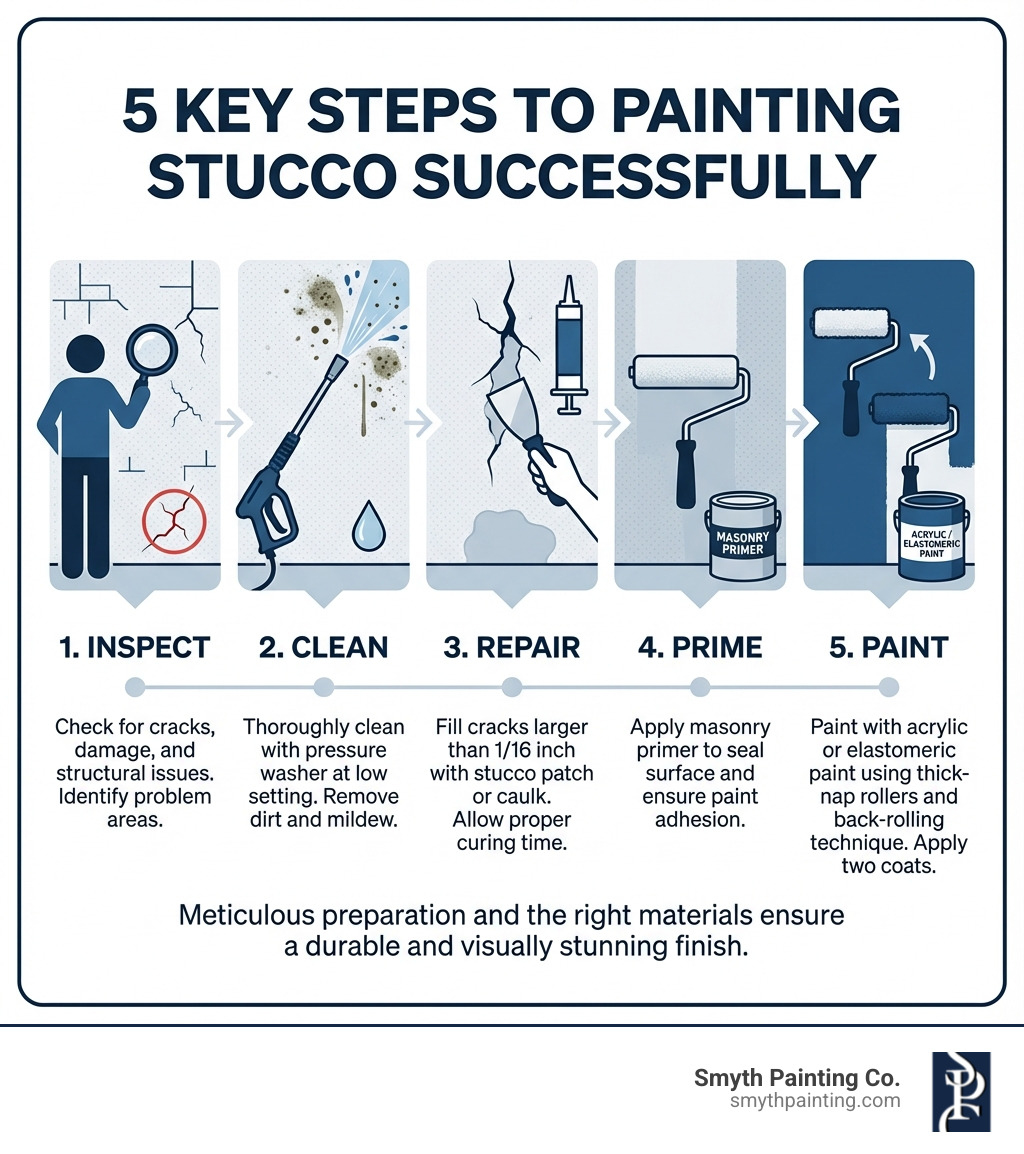
The best way to paint stucco involves meticulous preparation, the right materials, and proven application techniques that ensure your finish lasts for years. Here’s what you need to know:
Quick Answer: The 5 Essential Steps
- Inspect – Check for cracks, damage, and moisture issues
- Clean – Pressure wash to remove dirt, mildew, and chalk
- Repair – Fill cracks and patch damaged areas with proper materials
- Prime – Apply masonry primer to seal and ensure adhesion
- Paint – Use acrylic or elastomeric paint with thick-nap rollers and back-rolling
Stucco is a durable, insulating, and fire-resistant finish with a timeless texture. However, its porous surface presents unique painting challenges. It absorbs moisture and paint quickly, requires special techniques for even coverage, and is prone to cracking. Painting over damage without proper repair leads to peeling and failure.
The good news? A proper paint job boosts curb appeal and protects your home from the elements for 5-10 years or more.
As founder of Smyth Painting Company, I’ve spent nearly two decades perfecting the best way to paint stucco on homes throughout Newport County and Rhode Island. My team has tackled everything from historic facades to modern EIFS systems, and we know what works.
Understanding Your Stucco Before You Paint
Stucco, a mix of cement, sand, and lime, is a classic finish in Rhode Island and Southeastern Massachusetts, known for its insulation and fire resistance. However, its porous, textured surface poses painting challenges. It’s highly absorbent, causing paint to dry unevenly and requiring significantly more product for full coverage. Its rigidity also makes it prone to cracks. Addressing these issues before painting is crucial for a durable finish and is the first step in finding the best way to paint stucco effectively. For more insights into our painting processes and how we tackle various projects, you can always visit our blog.
Traditional vs. Synthetic Stucco (EIFS)
Before we even consider opening a paint can, understand what type of stucco you’re dealing with. There are two primary types: traditional and synthetic, also known as EIFS (Exterior Insulation Finishing System). Each has distinct characteristics that affect how we approach painting and repair.
| Feature | Traditional Stucco | Synthetic Stucco (EIFS) |
|---|---|---|
| Composition | Cement, sand, lime, and water applied over metal mesh. | Layers of foam insulation, mesh, and a synthetic finish. |
| Sound Test | Sounds solid when you knock on it. | Sounds hollow when you knock on it. |
| Durability | More durable and rigid. | Typically softer and less rigid. |
| Painting Considerations | More breathable, often requires masonry-specific paints. | Can be less breathable; paint needs to be flexible. |
| Repair Methods | Requires cement-based patching compounds. | Often repaired with acrylic-based patching materials. |
Traditional stucco is a hard coat system, while EIFS is an Exterior Insulation Finishing System. EIFS is typically softer than traditional stucco and maintains its color longer, but traditional stucco is generally more durable. The distinction is vital because the paint and repair materials we use must be compatible with the specific stucco type to ensure proper adhesion and longevity.
Identifying and Treating Common Stucco Issues
Before any paint touches your walls, a thorough inspection is paramount. Stucco surfaces can develop several common issues that need to be addressed to achieve the best way to paint stucco and ensure a lasting finish.
One frequent problem is efflorescence. This is a white, powdery salt deposit caused by moisture moving through the stucco. It prevents paint adhesion and must be treated. We address the moisture source, then remove deposits with a wire brush and a masonry cleaner like DRYLOK Etch.
Another common adversary is mildew. Common in our humid climate, mildew appears as black or green stains. We eliminate it with a specialized mildew cleanser or a bleach/water solution to ensure a clean surface for painting.
Finally, we often encounter chalking paint on older stucco exteriors. This is a powdery residue from degraded paint that prevents new paint from adhering. We remove it with thorough pressure washing, sometimes followed by a masonry surface conditioner or an additive like EmulsaBond to the first coat of paint to promote adhesion. For more in-depth guidance on painting stucco, a reliable resource is A guide to painting stucco.
The Essential 5-Step Stucco Preparation Process
The secret to a durable, beautiful stucco paint job isn’t just in the paint itself, but in the meticulous preparation that precedes it. Skipping steps here is a recipe for disaster. Our comprehensive 5-step preparation process ensures your stucco is ready to receive and hold paint effectively.
This stage involves a detailed surface inspection, thorough cleaning, precise repairs, and strategic priming. Proper preparation lays the foundation for success.
Step 1 & 2: Thorough Cleaning and Drying
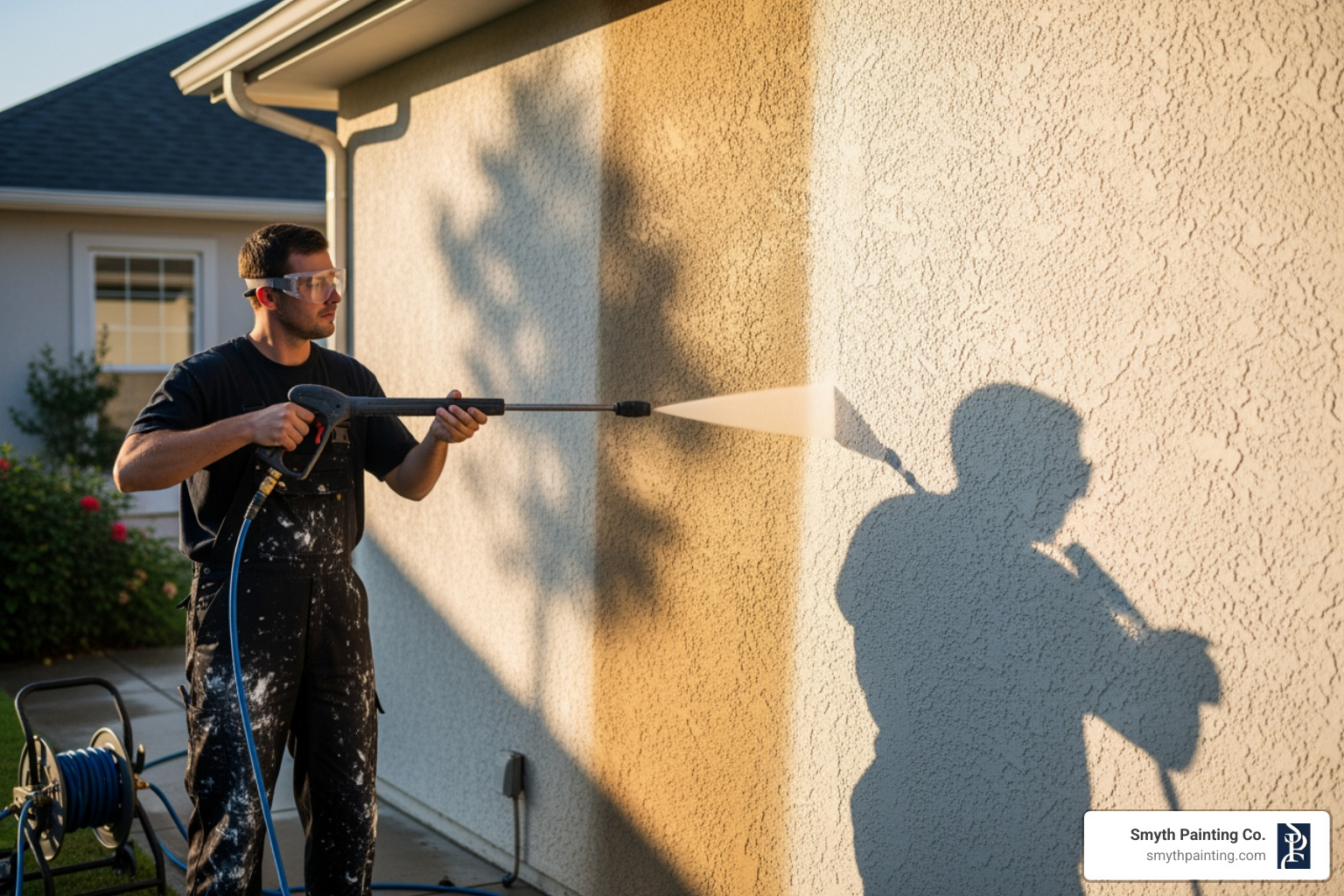
First things first: your stucco needs a bath! A clean surface is non-negotiable for proper paint adhesion. We use a pressure washer with caution, keeping the pressure below 1,500 PSI and maintaining a safe distance from the wall. Using a stucco-safe detergent, we work from top to bottom. After a thorough rinse, the stucco needs to dry completely. This typically takes 24-48 hours, but can be longer in humid coastal weather. Painting a damp surface traps moisture, which leads to blistering and peeling.
Step 3: Repairing Cracks and Damage
Stucco is rigid and will develop cracks over time. Repairing these imperfections is critical for a flawless and long-lasting finish.
- Hairline Cracks (less than 1/16 inch): For these tiny fissures, a flexible elastomeric paint can often bridge the gap effectively.
- Cracks Larger than 1/16 inch: These require direct intervention. We widen the crack into a V-groove to help the repair material adhere, then fill it with a high-quality stucco patching compound or paintable acrylic caulk. For larger holes, we remove loose material, apply the patch in layers, and feather the edges to blend with the existing texture. It’s crucial to let the patch cure completely (up to 10 days) before painting.
- Cracks Larger than 1/4 inch or in a Diagonal/Stairstep Pattern: These can be a red flag for structural damage. We always recommend consulting a structural professional to address the root cause before any cosmetic repairs.
The goal is to create a smooth, stable, and uniform surface, ready for primer and paint.
Step 4 & 5: Addressing Efflorescence and Priming
Once repairs are cured and the surface is clean, we address any remaining efflorescence and prime. If any powdery residue persists after initial cleaning, we remove it with a wire brush and masonry cleaner.
Next is priming, a step we never skip on stucco. A primer seals the highly porous surface, preventing a splotchy finish and ensuring the topcoat adheres properly. We use a high-quality acrylic masonry primer designed for alkaline surfaces like stucco. For new stucco, it’s critical to let it cure for 30-60 days before priming. We spot-prime all repaired areas to ensure they blend seamlessly. The primer is applied with a thick-nap roller and must dry completely before painting.
The Best Way to Paint Stucco: A Step-by-Step Application Guide
With the preparation complete, we’re finally ready for the fun part: applying the paint! This is where our expertise truly shines, ensuring not just a beautiful color, but a durable and long-lasting finish that can stand up to the coastal weather of Rhode Island and Southeastern Massachusetts.

Achieving the best way to paint stucco means selecting the right materials and employing specific application techniques designed to tackle stucco’s unique texture and porosity.
Choosing the Right Paint and Tools for Stucco
Selecting the correct paint and tools is paramount for a successful stucco painting project. Using the wrong products can lead to premature failure and a less-than-stellar appearance.
Paint Selection:
- Acrylic Latex Paint: This is generally our go-to for stucco. High-quality acrylic latex paints are durable, flexible, and allow the stucco to “breathe,” reducing the risk of trapped moisture. They also offer excellent color retention.
- Elastomeric Paint: For stucco with numerous hairline cracks, this paint is an excellent choice. It forms a thick, flexible coating that can expand and contract, effectively bridging small cracks and providing superior waterproofing. While more expensive, its durability can be cost-effective long-term. However, it has poorer color retention than high-end acrylics and is difficult to paint over later.
- Masonry Paint: These paints are specifically formulated for masonry surfaces, offering a good balance of breathability and durability.
The best way to paint stucco involves choosing a paint that is compatible with the stucco type and suitable for the local climate.
Essential Tools:
- Thick-Nap Rollers: Stucco’s rough texture demands a roller with a thick nap (3/4-inch to 1-inch) to push paint into all the crevices.
- Paint Sprayer: For large areas, an airless sprayer is often the most efficient tool for quick application and excellent penetration.
- Brushes: Professional-grade synthetic bristle brushes are essential for “cutting in” around windows, doors, and trim.
The Best Way to Paint Stucco for a Flawless Finish
Once we have the right paint and tools, it’s all about the application technique. Stucco painting requires patience and a specific approach.
- Cutting In: We start by using a brush to carefully paint around all edges, trim, windows, and doors.
- Spraying Technique (if applicable): When spraying, we use a consistent, sweeping motion with 50% overlap. For heavy textures, we spray from multiple angles to ensure the paint penetrates every surface.
- Back-Rolling Method: This is the most critical step. Immediately after spraying a section, we use a thick-nap roller to “back-roll” the wet paint, pushing it deep into the stucco’s pores. This improves adhesion and eliminates pinholes. Back-rolling is essential even when not spraying.
- Working in Sections & Maintaining a Wet Edge: Stucco absorbs paint quickly, so we work in manageable sections to maintain a “wet edge,” blending new paint into still-wet paint to prevent lap marks and streaks.
- Applying Two Coats: For optimal durability and color, we always apply two coats of paint, allowing the first coat to dry completely (typically 24 hours) before applying the second.
By following these techniques, we ensure a professional, long-lasting finish on your stucco exterior. For more details on our complete exterior painting process, please visit our exterior painting services page.
How to Calculate Paint Needs and Choose a Sheen
One of the biggest surprises for homeowners is how much paint stucco consumes due to its porous, textured nature.
Paint Calculation:
Stucco’s texture means it has a greater surface area and absorbs more paint. Expect a gallon to cover 200-300 square feet, about 30-50% less than on a smooth surface. We plan for at least double the amount of paint compared to a typical house and always buy extra for touch-ups.
Choosing a Sheen:
The paint sheen impacts the final look and durability.
- Flat Sheen: This is the most popular choice. A flat (or matte) finish is excellent at hiding imperfections and small cracks, maintaining the stucco’s natural, earthy appearance.
- Satin Sheen: A satin (or eggshell) sheen offers slightly more durability and is easier to clean. It can provide necessary moisture protection in wet climates, though it may highlight imperfections more than a flat finish.
The choice often comes down to personal preference and the condition of the stucco. For older stucco, a flat sheen is typically the best way to paint stucco to disguise its flaws.
Timing, Maintenance, and Professional Help
Even with the perfect paint and flawless application, the longevity of your stucco paint job hinges on timing and ongoing care. Knowing when to paint, how to maintain it, and when to call in the experts can save you headaches and money in the long run.
Ideal Weather and Curing Times for Painting
In Southern New England, timing is everything. Weather during and after application significantly impacts paint adhesion and performance.
- Optimal Temperature Range: We aim to paint when temperatures are consistently between 50°F and 90°F. Extreme heat causes paint to dry too quickly, while cold weather prevents proper curing.
- Humidity Levels: High humidity extends drying times, so we always check the forecast for several dry days after painting.
- Avoiding Direct Sunlight: Direct sunlight can cause paint to flash dry on the surface before it adheres properly. We avoid this by painting in cooler parts of the day or by following the shade around the house.
- New Stucco Curing: New stucco is highly alkaline and must cure for a full 30-60 days before coating. Painting too soon will lead to paint failure.
- Patch Curing Time: Repair patches need to cure fully, which can take up to 10 days, before they are ready for primer and paint.
Patience with weather and curing times is a virtue that pays off in the longevity of your stucco paint job.
Ensuring a Long-Lasting Finish and When to Hire a Pro
A properly executed stucco paint job isn’t just about aesthetics; it’s about protecting your investment. We strive to deliver a finish that lasts for years.
Ensuring Longevity:
- Quality Materials: Using high-quality acrylic or elastomeric paints and primers designed for masonry is paramount.
- Thorough Preparation: As we’ve detailed, cleaning, repairing, and priming are non-negotiable for a durable finish.
- Proper Application: Techniques like back-rolling and applying two full coats ensure maximum adhesion and coverage.
When to Hire a Pro:
While painting stucco can be a DIY project, there are clear benefits to hiring a professional:
- Knowledge and Experience: Professionals like our team at Smyth Painting Co. know the nuances of different stucco types, repair materials, and application techniques to achieve the best way to paint stucco.
- Proper Equipment: We have industrial-grade pressure washers, airless sprayers, and scaffolding to do the job efficiently and safely, especially on multi-story homes.
- Safety: Our team is trained and equipped to work safely at heights.
- Time and Money Savings: While a pro service has an upfront cost, it saves time and prevents costly mistakes. We work efficiently and get the job done right the first time.
- Insurance and Licensing: We are fully licensed and insured, providing peace of mind and protection for your property.
If you’re unsure about tackling your stucco project, or if you have a large or complex home, reaching out to a professional is a smart decision. To explore more about painting stucco, you can check out resources like this guide.
Frequently Asked Questions about Painting Stucco
We often hear similar questions from homeowners considering painting their stucco. Here are some of the most common inquiries, along with our expert answers.
How long does a good stucco paint job last?
A high-quality stucco paint job typically lasts between 5-10 years. With excellent preparation and the use of premium elastomeric paints, some paint jobs can extend to 15 years or more.
Key factors influencing longevity include:
- Paint Quality: High-end acrylic and elastomeric paints last longer.
- Preparation Quality: Thorough cleaning, repair, and priming are the foundation of a durable finish.
- Climate Factors: The coastal weather in Rhode Island, with its humidity and salt air, puts extra stress on paint. Elastomeric paints perform well in these conditions.
- Stucco Condition: Painting over compromised stucco will result in a shorter lifespan.
Signs that it’s time for repainting include fading, chalking, peeling, or an increase in visible hairline cracks.
Can you paint over previously painted stucco?
Yes, but the condition of the existing paint is the most critical factor. If the old paint is in good condition—not peeling, flaking, or heavily chalking—then a thorough cleaning and a new coat of primer will typically suffice before applying two fresh topcoats.
However, if the old paint is failing, more extensive preparation is required. This involves scraping away all loose paint, aggressively cleaning to remove chalk, and potentially applying a masonry conditioner to ensure the new paint has a sound surface to adhere to. Painting over failing paint is a recipe for quick failure of the new coat, so proper prep is key.
What is the best paint sheen for exterior stucco?
For stucco, flatter finishes are typically best, though there are other considerations.
- Flat or Matte Finish: This is the most common and often recommended sheen. Its non-reflective nature is excellent at hiding imperfections and the natural texture of the stucco, providing a soft, natural look.
- Satin or Eggshell Finish: A satin sheen offers a slight luster, making the surface easier to clean and providing more durability and moisture resistance. However, its reflectivity will highlight imperfections more than a flat finish.
The choice of sheen balances aesthetic preference with practical considerations like surface condition and local climate.
Get a Flawless, Durable Stucco Finish
We’ve covered a lot of ground today, from understanding the unique challenges of stucco to selecting the right materials and mastering application techniques. The key takeaway is clear: the best way to paint stucco isn’t a quick fix, but a meticulous process built on thorough preparation, quality products, and expert application.
Stucco is a remarkable material, and with the right care, a fresh coat of paint can revitalize your home’s exterior, improve its curb appeal, and provide lasting protection against the elements. Whether your home is a historic gem in Newport or a modern residence in North Kingstown, treating your stucco with the respect it deserves will yield beautiful and durable results.
At Smyth Painting Co., we pride ourselves on delivering high-quality, detailed, and professional work for homeowners throughout Rhode Island and Southeastern Massachusetts. Our team is dedicated to providing a smooth, stress-free customer experience, and our expertise in stucco painting ensures a flawless, long-lasting finish.
If you’re ready to transform your stucco exterior with a paint job that stands the test of time, we’re here to help. Contact Us for your exterior painting project today, and let’s bring your vision to life!


