
Why Refinishing Your Kitchen Cabinets Makes Sense
The best way to refinish cabinets depends on three key factors: your cabinet’s current condition, your desired finish, and whether you want a painted or stained look. Here’s what you need to know:
Quick Answer: Best Cabinet Refinishing Methods
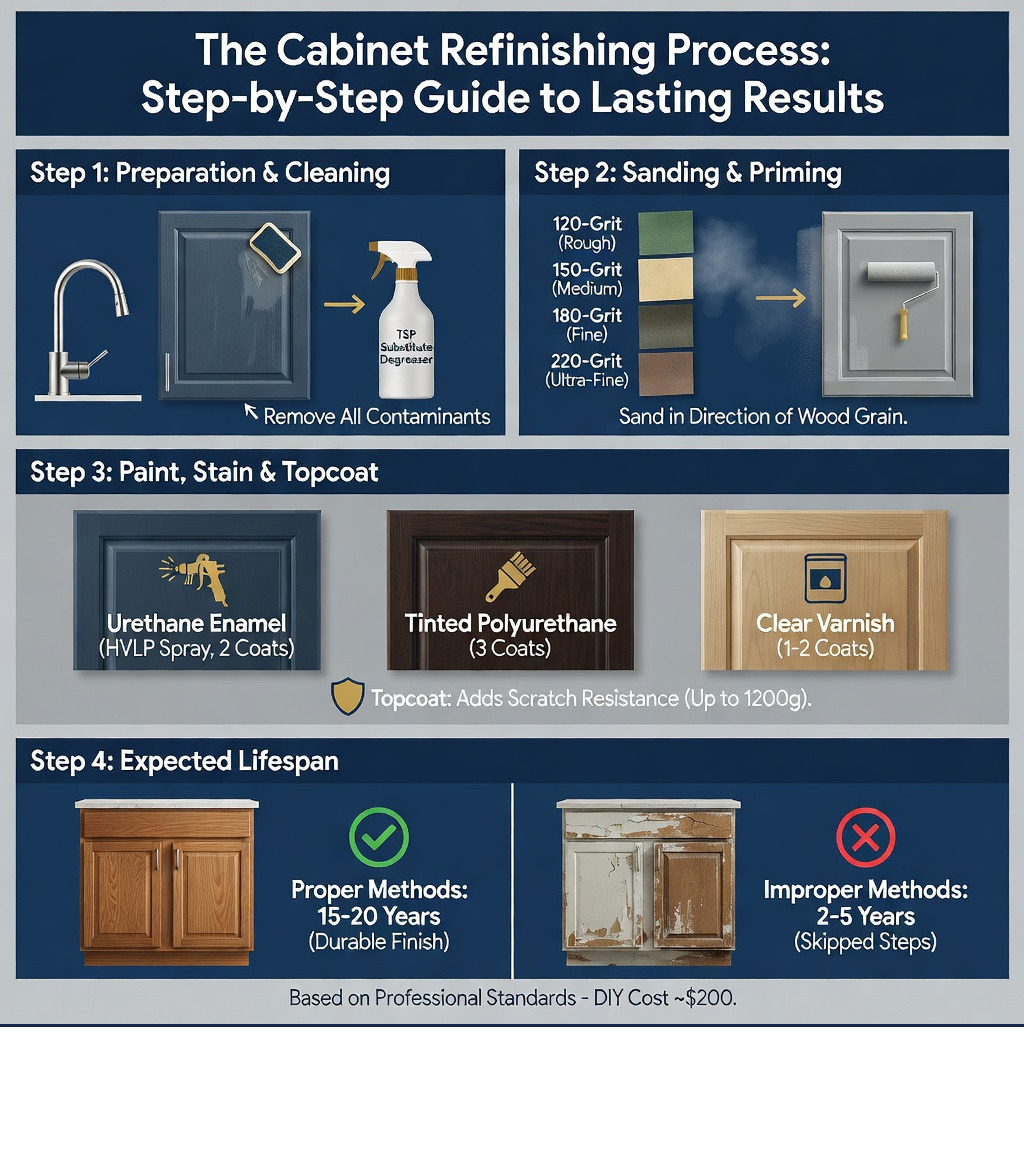
- For a painted finish: Clean thoroughly, scuff sand, apply KCMA-approved primer, then spray with urethane enamel using an HVLP sprayer
- For a darker stained finish: Clean, lightly sand, apply tinted polyurethane in multiple coats
- For a lighter stained finish: Strip old finish completely, fill imperfections, sand progressively, seal, then apply new stain and varnish
- Professional approach: Use spray-applied lacquers or Emerald Urethane Trim Enamel for superior durability (withstands up to 1200g in scratch tests)
Your kitchen cabinets take up more visual space than almost anything else in your home. When they look dated or worn, the entire room feels tired—no matter how nice your countertops or appliances are.
But here’s the good news: you don’t need to replace your cabinets. If your cabinet boxes are structurally sound, refinishing them can deliver dramatic results for a fraction of the investment required for custom replacement cabinets.
The challenge? Cabinet refinishing isn’t like painting walls. It requires specific techniques, the right products, and attention to detail that most house painters don’t have. The difference between a mediocre finish that chips within months and a durable, factory-like finish that lasts 15-20 years comes down to proper preparation and application methods.
I’m Douglas Smyth, and since founding Smyth Painting Company in 2005, I’ve specialized in cabinet refinishing throughout Newport County and greater Rhode Island, learning what separates lasting results from disappointing ones. Through years of refining our techniques and staying current with the best way to refinish cabinets, we’ve helped countless homeowners transform their kitchens without the disruption of full replacement.
The Best Way to Refinish Cabinets: Choosing Your Method
When we talk about the best way to refinish cabinets, we aren’t just talking about a fresh coat of paint. Refinishing is a comprehensive process that involves restoring or changing the top layer of your existing cabinets. This differs significantly from “refacing,” which involves keeping the boxes but replacing the doors and applying a new veneer. It is also worlds apart from “replacement,” which involves tearing everything out down to the drywall.

Surface Preparation and Material Selection
The foundation of a professional-grade finish is the preparation. Whether your cabinets are made of solid oak, maple, or a medium-density fiberboard (MDF), the surface must be meticulously cleaned and profiled. For most modern updates, we focus on achieving a “factory-like” finish—one that is smooth to the touch, free of brush marks, and incredibly durable.
Material selection is equally critical. While you might be tempted to grab a gallon of standard wall paint, 99% of paints on store shelves are not designed for the unique abuse kitchen cabinets endure. We look for products that meet Kitchen Cabinet Manufacturers Association (KCMA) standards, ensuring they can withstand heat, humidity, and the occasional spilled glass of wine.
Why Choose Cabinet Refinishing?
If you are happy with the current layout of your kitchen but hate the color or wear-and-tear of your wood, refinishing is the clear winner. Many older cabinets, especially those built before 1980, feature superior craftsmanship and solid wood construction that is actually higher quality than many “stock” cabinets found in big-box stores today.
Preserving Layout and Eco-Friendliness
Refinishing allows you to keep your existing countertops and backsplash intact. It is also the most eco-friendly choice; by opting for a Cabinet Refinishing project, you keep perfectly good wood out of the landfill.
Minimal Disruption
A full kitchen remodel can leave you without a functional kitchen for a month or more. With professional refinishing, the “messy” part of the work—sanding and spraying the doors—happens in a controlled shop environment. Your kitchen remains largely functional throughout the process, with only a few days of on-site work required for the cabinet frames.
Painting vs. Staining: Finding the Best Finish for Your Cabinets
One of the first questions we ask homeowners in Rhode Island and SE Mass is: “Do you want to see the wood grain?”
Solid Colors and Modern Trends
If you want a clean, modern look, painting is the best way to refinish cabinets. It offers the most flexibility for color matching. Popular choices like soft whites, charcoal grays, or even deep greens can completely modernize a space. We often recommend Emerald Urethane Trim Enamel or high-end waterborne lacquers. These products provide a hard, durable surface that resists scratches and chemicals better than standard latex paints.
Showcasing Wood Grain
For those who love the natural beauty of wood but want to update the tone, staining is the way to go.
- Restaining Lighter: This is a labor-intensive process. It requires stripping the old finish to bare wood using chemical strippers and progressive sanding.
- Restaining Darker: This can often be achieved with “toning” or using a tinted polyurethane. This method allows you to darken the wood (like turning honey oak into a rich espresso) without stripping it to the bare grain.
- Gel Stains: These sit on top of the wood rather than penetrating deeply, making them a popular DIY choice for a quick color shift, though they lack the depth of a traditional stain.
To explore the nuances of wood finishes, you can view our interior wood refinishing services.
DIY vs. Professional Cabinet Refinishing
Is it possible to refinish your cabinets yourself? Absolutely. A DIY project requires an investment in supplies. However, the “sweat equity” involved is immense.
The Professional Edge: Fine Finish Painters
There is a massive difference between a general house painter and a fine finish painter. A house painter is used to “production” work—getting paint on walls quickly. A fine finish painter, like our team at Smyth Painting Co., focuses on the minute details. We use specialized HVLP (High Volume Low Pressure) sprayers to apply thin, even coats that mimic a factory finish.
Skill Level and Time Commitment
A typical DIY kitchen takes two to three full weekends of back-breaking work. Common DIY pitfalls include:
- Visible Grain: Especially with oak, the deep pores will show through paint unless a grain filler is used.
- Peeling: If the grease isn’t 100% removed with a degreaser like TSP, the paint will eventually peel.
- Durability: Most DIY-grade paints don’t have the “snap” or hardness required for kitchen doors that are opened 20 times a day.
For a stress-free experience, many homeowners choose professional cabinet refinishing to ensure the job is done right the first time.
Step-by-Step Guide to a Professional Cabinet Finish
If you’re ready to tackle this project, following a proven system is the best way to refinish cabinets.
1. Preparation and Cleaning
You must remove all doors, drawer fronts, and hardware. Pro Tip: Number every door and its corresponding opening using Labeling Tape. Even if doors look the same size, they are often off by 1/4 inch, and they won’t hang correctly if you mix them up.
Clean everything with a strong degreaser (TSP or a specialized cabinet cleaner). In a kitchen, invisible grease is your biggest enemy. If you don’t remove it, your primer will not bond.
2. Scuff Sanding and Repairs
You don’t need to sand down to bare wood if you are painting, but you do need to “scuff” the surface to remove the sheen. Use 220-grit Sanding Blocks. If you have old hardware holes you don’t plan to use, fill them with a high-quality wood filler or QuikWood Putty Stick.
3. Priming
This is the most important step for durability. Use a high-adhesion primer like KILZ Bonding Primer. If you are painting your cabinets a dark color, have the primer tinted to a similar shade to reduce the number of topcoats needed.
4. Painting Techniques
While you can use a high-quality brush and a foam roller, the best way to refinish cabinets for a professional look is using an HVLP sprayer.
- Spray Technique: Hold the gun about 8 inches from the surface and use a steady, back-and-forth motion, overlapping each pass by 50%.
- The “Backside First” Rule: Always paint the back of the doors first. Let them dry completely before flipping. This ensures that if any minor drips occur, they are on the side no one sees.
- Painters Tripods: Use these to elevate the doors, allowing you to paint the edges easily without them sticking to your work surface.
For residents in the East Bay or Providence, you can see examples of this process in action on our page regarding cabinet refinishing services in Providence RI.
Modernizing Hardware and Maintaining Your New Look
Once your cabinets are dry (wait at least 24 hours before reassembling, and several days before “heavy” use), it’s time for the finishing touches.
Updating Hardware
Nothing dates a kitchen like old hinges and pulls. Replacing 1990s brass with modern matte black or polished nickel hardware is a high-impact move. Use a Cabinet Handle Jig to ensure every handle is perfectly aligned.
Long-Term Maintenance
To keep your refinished cabinets looking new for 15+ years:
- Felt Bumpers: Add Cabinet Door Bumpers to prevent the doors from slamming against the frames and chipping the finish.
- Cleaning: Use only mild soap and water. Avoid harsh chemicals or abrasive sponges.
- Touch-ups: Keep a small container of your topcoat and a Detail Paint Brush Set for accidental nicks.
Start Your Transformation with Smyth Painting Co.
Refinishing cabinets is a journey that transforms the heart of your home. Whether you are in Newport, Barrington, or anywhere across Rhode Island and SE Mass, our team is dedicated to providing a smooth, stress-free experience with results that last.
Ready to see the magic for yourself? Start your kitchen transformation with Smyth Painting Co. today.