

Why Choosing the Right Paint Color Matters
Paint color advice can transform your home from merely functional to truly exceptional. With thousands of colors available, it’s easy to second-guess your choice. The challenge isn’t just picking a pretty shade; it’s understanding how color works with your home’s unique features, lighting, and architectural style.
Quick Paint Color Selection Guide:
- Find Inspiration – Start with existing decor, artwork, or fabrics you love
- Analyze Your Space – Consider fixed elements like flooring, countertops, and room orientation
- Understand Light – Test how natural and artificial light affects your chosen colors
- Apply Color Theory – Use the 60-30-10 rule and understand undertones
- Test Before Committing – Paint large swatches and observe them throughout the day
This guide offers a methodical process to take the stress out of paint selection. You’ll learn how light transforms color, why different rooms need different tones, and how to avoid costly repainting mistakes.
I’m Douglas Smyth, founder of Smyth Painting Company, and I’ve been helping Rhode Island homeowners steer paint color advice and achieve beautiful, lasting results since 2005. Through hundreds of residential projects—from historic Newport homes to modern coastal properties—I’ve seen how the right color choices can completely transform a space.

Laying the Foundation: Inspiration and Analysis
Choosing the perfect paint color for your home in Middletown, Newport, or any of our beautiful Rhode Island communities starts long before you pick up a brush or even a paint chip. It begins with inspiration and a thorough analysis of your space. This foundational work helps us narrow down the endless possibilities and ensures we select colors that truly belong.
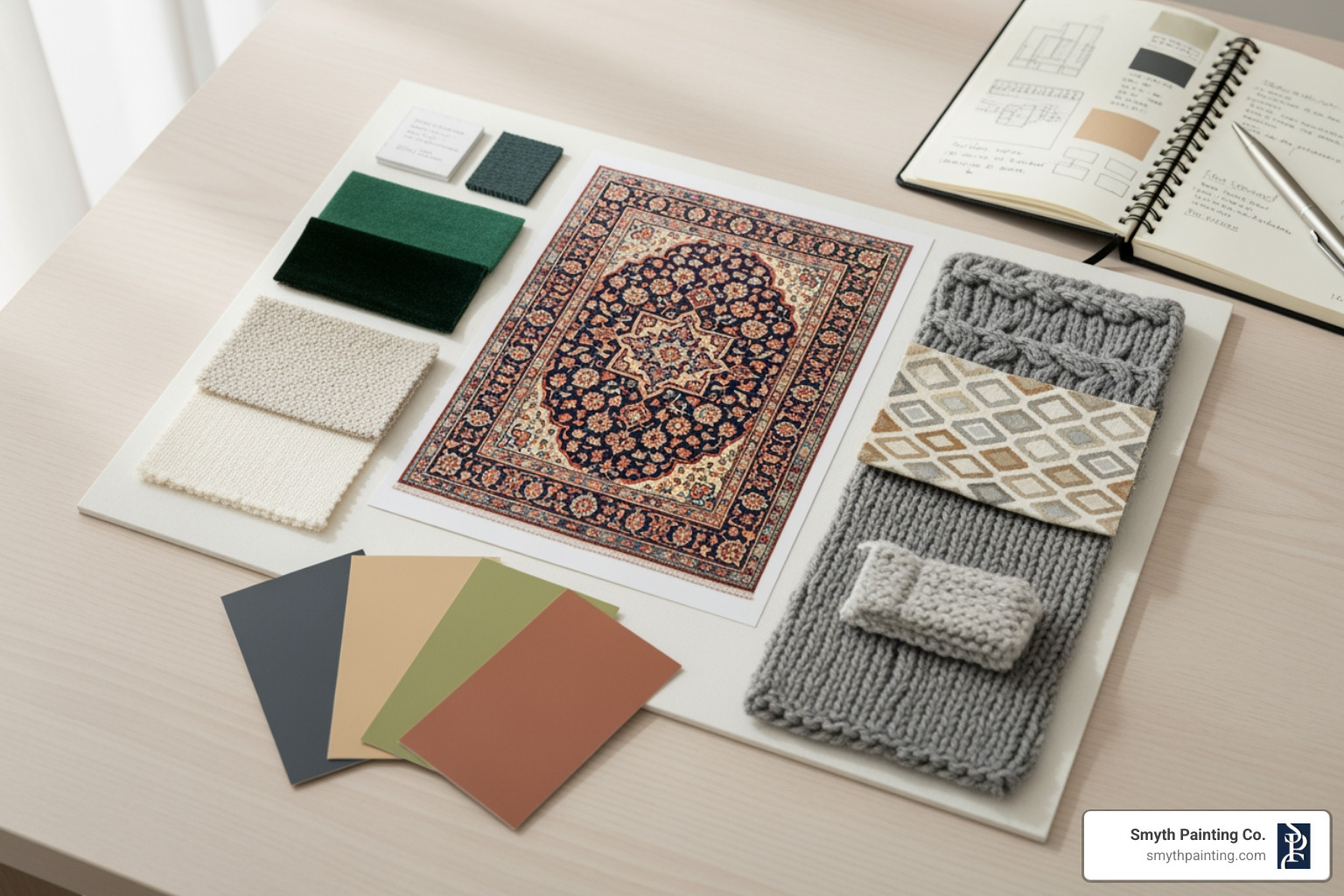
Finding Your Color Story
The best inspiration is often already in your home. Look for colors you love in your existing decor, like a favorite rug, a piece of artwork, or a fabric pattern. These items contain a palette that reflects your personal style and can be an excellent starting point for your walls.
Beyond your immediate surroundings, inspiration is everywhere. We often advise homeowners to browse design magazines, explore online platforms like Pinterest for visual ideas, or even draw from the natural beauty of the Rhode Island coastline or our charming towns. The soft grays of a foggy morning in Narragansett, the vibrant blues of Newport Harbor, or the earthy tones of a New England autumn can all spark brilliant color ideas. For insights into what’s currently captivating homeowners in our region, check out our article on Top Colors Trending in Rhode Island Homes and Businesses. For those with historic homes, understanding local heritage colors is key, and our guide to Top 3 Historic Exterior Paint Colors in Newport, RI can provide a fantastic starting point.
The goal isn’t to perfectly replicate these inspirations but to extract the essence of what you love and translate it into a cohesive color scheme for your home.
Working with Your Home’s Fixed Elements
Once inspired, the next crucial step in getting the right paint color advice is to analyze your home’s fixed elements. These are the permanent features that aren’t easily changed, and they act as silent partners in your color selection. Ignoring them can lead to a disjointed, unsatisfying result.
Consider your:
- Countertops: Their veining and base colors often have subtle undertones (warm or cool) that your wall paint should complement.
- Flooring: Hardwood floors, tiles, or existing carpets contribute significantly to the room’s overall warmth or coolness.
- Cabinetry: Kitchen and bathroom cabinets are dominant features, and their color or wood tone must harmonize with your chosen paint.
- Fireplace Stone or Brick: The natural variations in these materials can dictate a surprising range of suitable wall colors.
- Architectural Style: A historic colonial in Bristol will demand a different approach than a modern waterfront home in Jamestown. For homes with significant historical value, like many in Newport, preserving their charm often means respecting traditional palettes and techniques. Read more about Preserving Newport’s Historic Charm.
For open floor plans, this analysis is even more critical. Paint colors must complement fixed elements, define spaces, and maintain flow. We use color to create “zones,” perhaps with a subtle shift in shade or a consistent trim color. Selecting colors with similar undertones ensures a smooth transition, making your home feel intentional and cohesive.
The Science of Color: Light, Psychology, and Harmony
Understanding the science behind color is like having a secret weapon in your paint color advice arsenal. It allows us to predict how colors will behave in your home and how they will make you feel.
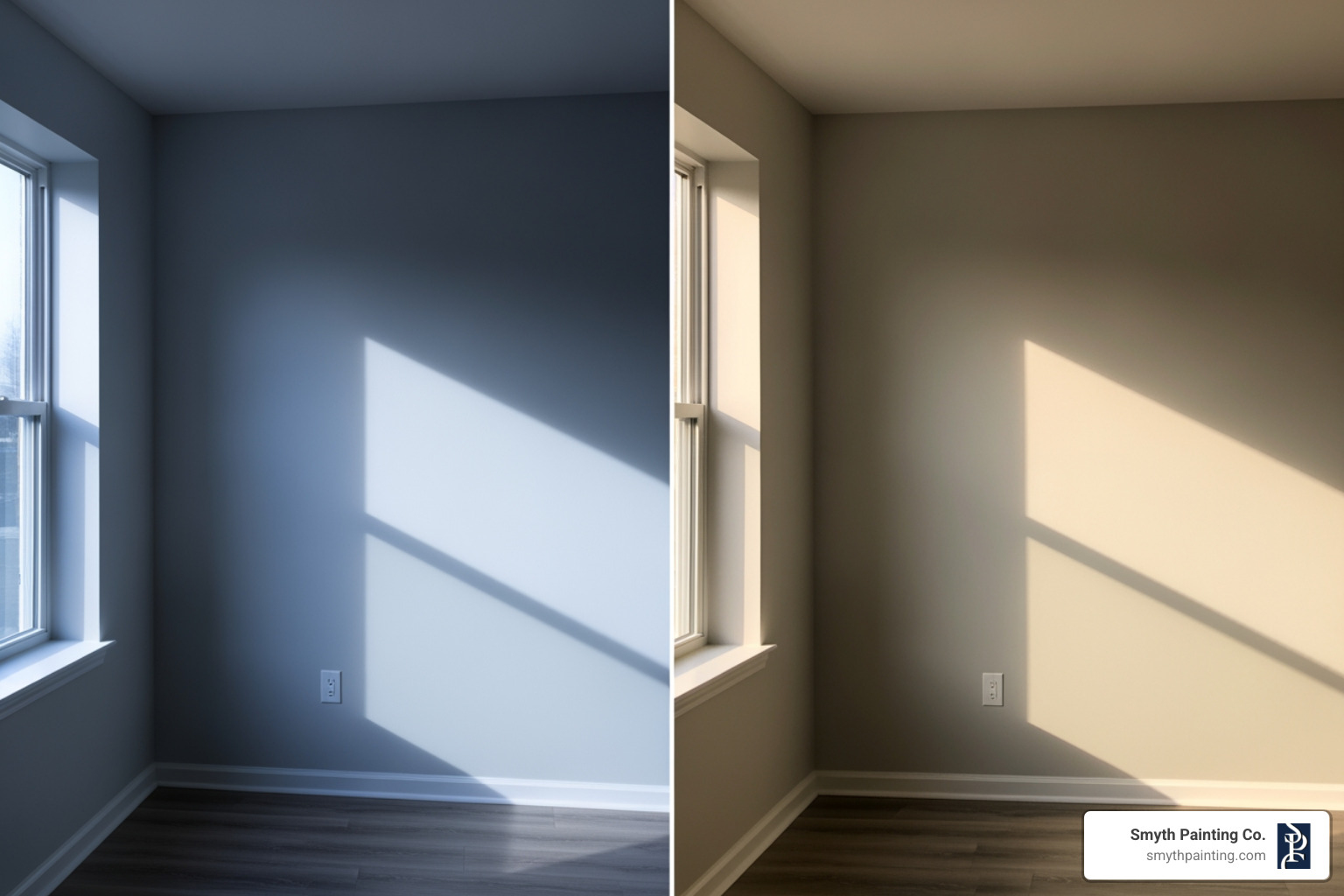
How Light Transforms Color
Light is arguably the single most influential factor in how a paint color appears. It’s a chameleon, changing its character throughout the day and with different light sources. What looks perfect on a small chip in the store can be drastically different on your wall.
-
Natural Light and Room Orientation: The direction your room faces significantly impacts the quality and temperature of natural light it receives.
- North-facing rooms: These rooms get cool, indirect light, which can make colors look muted. We recommend warmer neutrals to create a cozier feel or embracing the cool light with rich, dark colors for an intimate, sophisticated ambiance.
- South-facing rooms: With abundant, warm light all day, these rooms are the easiest to paint. Most colors will look good. Soft tones, cool blues, or warm neutrals can improve the natural brightness, making the room feel expansive.
- East-facing rooms: These rooms get warm morning light that shifts to cooler light in the afternoon. For morning use, bright shades are invigorating. For evening use, calming blues and greens or rich, deep shades create a cocooning effect.
- West-facing rooms: These rooms have cool morning light and intense, warm afternoon light. Colors can be tricky. Warm tones like soft pinks or peachy hues come alive in the afternoon sun. Neutrals that balance cool and warm undertones also work well, shifting with the light.
-
Artificial Light Sources: Don’t forget your lamps and fixtures! Artificial light sources have a significant impact on color appearance.
- Incandescent bulbs: These emit a yellowish light, making colors appear warmer and richer.
- Cool white bulbs: These cast a bluer light, which can make colors seem cooler.
- Neutral white (daylight) bulbs: For the truest representation of your chosen wall color, especially when testing, neutral white bulbs are your best bet as they most accurately replicate natural daylight.
We always advise our clients to observe paint samples at different times of day and under both natural and artificial light to truly understand how the color will behave.
The Psychology of Paint: Setting the Mood
Color profoundly impacts our emotions and behavior. This is where color psychology, a vital part of our paint color advice, comes in. Understanding how hues affect us helps us choose colors that evoke specific moods and improve room functionality, from a kitchen in Warren to a bedroom in North Kingstown.
-
Emotional Impact of Different Colors:
- Warm colors (red, orange, yellow): These tend to energize, stimulate, and create a sense of warmth and intimacy. They can be invigorating and encourage conversation.
- Cool colors (blue, green, purple): Often perceived as calming, restful, and expansive. They can promote relaxation and focus.
-
Room Function and Mood:
- Social Spaces (Living Rooms, Dining Rooms, Kitchens): For areas where family gathers and guests are entertained, warm colors are often an excellent choice. Think inviting yellows, warm creams, or even a sophisticated terracotta. These colors foster a welcoming and lively atmosphere.
- Private Spaces (Bedrooms, Bathrooms, Offices): In contrast, for rooms designed for relaxation, contemplation, or sleep, cooler colors typically work best. Soft blues, tranquil greens, or muted lavenders can create a serene and peaceful retreat. For more in-depth insights into choosing colors for specific rooms, This Old House offers a great perspective.
By aligning color psychology with room function, we ensure your paint choices not only look beautiful but also genuinely improve your daily living experience.
Creating a Harmonious Palette with Color Theory
To achieve a cohesive aesthetic, we turn to color theory. It’s about understanding the rules to apply them effectively—or even break them intentionally.
-
Color Wheel Basics: The color wheel is our map to harmonious palettes.
- Complementary Colors: Found directly opposite each other (e.g., blue and orange), these create high contrast and vibrancy. Use them for bold accents.
- Analogous Colors: Located next to each other (e.g., blue, blue-green, green), these offer a serene, cohesive, and harmonious feel due to their shared undertones.
- Monochromatic Colors: Different shades, tints, and tones of a single color. This creates a sophisticated, subtle, and unified look.
-
Understanding Undertones: Understanding undertones is our most critical paint color advice. Every color, especially neutrals, has a subtle hint of another color that influences its look. Matching undertones to your fixed elements (flooring, countertops) is paramount. A greige with a green undertone can clash with pinkish tile, for example. We help clients identify these undertones to ensure a seamless match.
-
The 60-30-10 Rule: This timeless design principle is a fantastic guide for distributing colors in any space:
- 60% Dominant Color: This is your main wall color, covering the majority of the room.
- 30% Secondary Color: This could be upholstery, accent furniture, or drapes, providing visual interest without overwhelming the dominant color.
- 10% Accent Color: This is your pop of personality—think throw pillows, artwork, or decorative objects. This rule creates balance and prevents any single color from dominating too much.
-
Creating Cohesive Flow: To ensure a smooth transition between rooms, especially in homes with open layouts or connecting hallways, we employ several strategies:
- Common Palette: Stick to colors from a similar family or with consistent undertones.
- Neutral as a Palette Cleanser: Use a consistent neutral color in transitional spaces like hallways in Wakefield or stairwells in South Kingstown. This acts as a visual break and connects disparate rooms.
- Consistent Trim: Painting all interior doors and trim in a single, unifying neutral color is a simple yet powerful way to create continuity throughout your entire home.
Practical Paint Color Advice for Every Space
Every room has its own personality and purpose, and our paint color advice adapts to these unique needs. From the coziest nooks to the grandest open spaces, the right color choices can improve functionality and beauty.
Not Just White: Choosing the Perfect Neutral
“White” is rarely just white. It’s a spectrum of nuanced shades, and choosing the right one is essential for creating the desired atmosphere in your home. This is where precise paint color advice becomes invaluable.
-
Types of White Paint:
- Pure Whites: These are clean, crisp whites with virtually no discernible undertone. They offer a bright, gallery-like feel and are excellent for creating stark contrasts.
- Cool Whites: These have subtle undertones of blue, green, or gray. They can make a space feel more expansive, modern, and refreshing. They work beautifully in rooms with plenty of natural light or in contemporary settings.
- Warm Whites: Featuring undertones of yellow, pink, red, or brown, warm whites create a cozy, inviting, and softer atmosphere. They are ideal for spaces that lack natural light or where you want to evoke a sense of comfort and intimacy.
-
When to Use Each:
- Ceilings: Painting ceilings a crisp white can reflect light downwards, making a room feel taller and more spacious. For a cozier feel in a large room, a slightly warmer or tinted white can soften the overhead expanse.
- Trim: A consistent white on all trim and moldings throughout your home in Exeter or North Kingstown creates a classic, clean look and helps unify different wall colors. Whether you choose a cool or warm white for trim often depends on the dominant wall colors and the overall palette of your home.
Expert Paint Color Advice for Architectural Features
Paint isn’t just for walls; it’s a powerful tool to highlight or downplay your home’s architectural features.
- Highlighting Features: If your home boasts beautiful moldings, detailed trim, or unique built-ins, we can use paint to draw attention to them. Painting them a contrasting color—either a darker shade than the wall or a crisp white against a colored wall—makes them pop. For example, painting intricate crown molding a shade lighter or darker than the primary wall color can add depth and elegance.
- Downplaying Features: Conversely, if there’s an architectural element you’d prefer to recede, painting it the same color as the surrounding wall can make it blend in seamlessly.
- Accent Walls: An accent wall is a fantastic way to introduce a bolder color or create a focal point without committing to an entire room. This works wonderfully in a bedroom behind the headboard, in a cozy reading nook, or to highlight a unique architectural recess.
- Making Small Spaces Feel Larger: Our paint color advice for smaller rooms in Jamestown or Wickford often involves using light colors—whites, pastels, and light neutrals. These shades reflect more light, making walls appear to recede and creating an illusion of greater space. Painting the ceiling a lighter shade than the walls further improves this effect, making the room feel taller.
- Creating Cozy Large Rooms: For vast rooms that might feel cavernous, strategically using darker, richer colors can create a sense of intimacy and coziness. Think deep blues, hunter greens, or rich burgundies. The trick is to balance these darker hues with lighter furnishings and ample lighting to prevent the space from feeling too heavy.
The finish of your paint also plays a role in how color is perceived and how it interacts with light. For a deeper dive into how different sheens affect your chosen color, check out our guide on Paint Finishes: A Simple Guide.
From Sample to Success: Testing and Final Prep
Even with the best paint color advice, the final decision should never be made in haste. This stage is where we prevent costly mistakes and ensure your chosen colors will bring you joy for years to come.
The Best Paint Color Advice for Testing Samples
Testing is non-negotiable. It’s the most critical step to confirm your choice before committing to a large purchase.
- Never Use Small Chips Alone: Those tiny paint chips are a starting point, not a finishing line. They simply don’t give an accurate representation of how a color will look in your space.
- Paint Large Swatches: We recommend painting a substantial swatch, at least 4×4 feet, directly on your wall. If you’re hesitant to paint on the wall, paint large pieces of poster board (at least 2×2 feet) with two coats of your sample color. This allows you to move them around the room.
- Consider Peel & Stick Samples: Products like SAMPLIZE Peel & Stick offer a convenient, mess-free way to test colors. They are pre-painted, true-to-color samples that can be easily repositioned.
- Observe in Different Light: Look at your samples throughout the day—morning, noon, and evening—and under both natural and artificial light. Notice how the color shifts. Does it look too cool in the morning? Too warm at night? This observation is key.
- Check Against Trim and Floors: Always place your samples next to your existing trim, flooring, and any other fixed elements. This helps you identify any clashing undertones. To prevent existing wall color from influencing your perception, surround your sample swatches with white paper, except for the side directly next to the trim or cabinet you’re matching.
- Purge the Demons: Once you know you don’t like a sample, remove it from the equation. Don’t let it clutter your decision-making process. As one expert humorously puts it, “light it on fire singing ‘I Hate Everything About You’ by Three Days Grace– PURGE THE DEMONS and move along.”
Common Mistakes to Avoid
Even with the best intentions, homeowners often stumble at the finish line. Here’s our top paint color advice on what not to do:
- Rushing the Decision: This is perhaps the biggest culprit. Choosing paint colors can be overwhelming, leading to overthinking, emotional attachment, or simply difficulty making a big decision. But rushing it often leads to regret. Take your time, test thoroughly, and don’t feel pressured.
- Seeking Too Many Opinions: While a second opinion can be helpful, too many cooks spoil the broth. Everyone has different tastes and preferences, and what a friend loves might not suit your home’s unique needs or your personal style. Trust your gut after you’ve done your due diligence.
- Ignoring Undertones: We’ve mentioned this before, but it’s worth repeating. Ignoring the subtle undertones in your existing finishes or your chosen paint color is a recipe for disaster. A gray with a green undertone can look lovely until it’s next to a floor with a pink undertone—then it’s a battleground.
- Forgetting Primer: This is a surprisingly common oversight. Primer’s role is absolutely crucial in achieving the desired paint color.
- Primer’s Role: Primer creates a uniform surface for your paint. It seals porous surfaces, blocks stains, and most importantly, prevents the previous wall color from interfering with your new shade. Without primer, especially when going from a dark color to a light one, your new paint might look uneven or require many more coats to achieve true color.
- Achieving True Color: A properly primed wall ensures that the color you picked and tested is the color that appears on your wall. It’s the canvas that allows your chosen hue to shine in its truest form.
For more insights into common missteps and how to sidestep them, we’ve put together a comprehensive guide on DIY Painting Pitfalls: Common Mistakes Homeowners Make and How to Avoid Them.
Frequently Asked Questions about Paint Color Selection
We understand that choosing paint colors can bring up many questions. Here are some of the most common ones we hear from homeowners in Rhode Island and SE Mass.
How do I create a cohesive color scheme throughout my whole house?
Creating a harmonious flow from room to room is a hallmark of a well-designed home. Our paint color advice for this involves a few key strategies:
- Develop a Whole-House Palette: Start by selecting a core palette of 3-5 colors that you love and that work with your home’s fixed elements. These colors should have consistent undertones (all warm or all cool, or balanced neutrals).
- Consistent Neutral in Hallways and Transition Spaces: Use a single, unifying neutral color in all your hallways, stairwells, and entryways. This acts as a “palette cleanser” and visually connects rooms with different, perhaps bolder, colors.
- Variations of One Color: For adjoining rooms, consider using different shades from the same color strip. For example, your living room might be a medium gray, and the adjacent dining room a slightly lighter or darker version of that same gray. This creates subtle distinction while maintaining strong continuity.
- Consistent Trim Color: As mentioned before, using the same white or off-white for all interior doors, trim, and moldings throughout your home in Barrington or Little Compton provides a seamless thread that ties every space together, regardless of the wall color.
What is the 60-30-10 rule?
The 60-30-10 rule is a classic design principle for achieving balanced color distribution in a room. It’s a guideline, not a strict law, but it provides an excellent framework for visual harmony:
- 60% Dominant Color: This is the primary color in the room, typically covering the largest surface area, usually your walls.
- 30% Secondary Color: This color makes up about half of the dominant color’s presence and is often found in larger pieces of furniture like a sofa, curtains, or an accent rug. It provides contrast and visual interest.
- 10% Accent Color: This is your “pop”—a small but impactful dose of color used in decorative accessories like throw pillows, artwork, vases, or small decor items. This is where you can introduce bolder, more vibrant hues.
Applying this rule helps prevent any single color from overwhelming the space and ensures a well-proportioned, appealing look.
How do I choose a paint color for a room with low natural light?
Rooms with limited natural light, common in older homes in Newport or basement spaces, can be challenging. Our paint color advice here focuses on two main approaches:
- Accept the Coziness with Dark Colors: Instead of fighting the lack of light, lean into it. Dark, rich colors like deep blues, charcoal grays, or even a warm forest green can create an incredibly intimate, sophisticated, and cozy atmosphere. This works especially well in rooms meant for evening use, like a den or a formal dining room. Balance these dark walls with plenty of artificial lighting and lighter furnishings to keep the space from feeling too heavy.
- Maximize Light with Warm, Light Colors: If your goal is to make the room feel brighter and more expansive, opt for warm, light colors. Think creamy whites, soft yellows, or light beiges. These colors reflect more light and can help bounce what little natural light there is around the room. We often recommend warmer whites in these spaces, as cool whites can make a low-light room feel even colder and drab.
- Avoid Cool Tones (Generally): While there are always exceptions, cool-toned colors (blues, grays with strong blue undertones) can often make a low-light room feel even more chilly and unwelcoming. If you love cool colors, opt for warmer versions or use them as accents.
Conclusion
Navigating paint colors can feel like a daunting task, but with the right paint color advice and a methodical approach, it becomes an exciting journey. We’ve explored how to draw inspiration from your surroundings, analyze your home’s fixed elements, understand the transformative power of light, harness color psychology to set the perfect mood, and apply color theory for harmonious results. We’ve also highlighted the critical importance of thorough testing and avoiding common pitfalls.
Our key takeaway is this: by approaching color selection thoughtfully and systematically, you gain the confidence to make choices that truly reflect your style and improve your living spaces. We believe that choosing paint colors should be an enjoyable process, not a stressful one.
At Smyth Painting Co., we pride ourselves on delivering not just a flawless finish but also expert guidance throughout your entire project. From our detailed preparation to our eco-friendly options and unparalleled customer communication, we ensure a smooth, stress-free experience for homeowners across Rhode Island and SE Mass. For a flawless finish and expert guidance, explore our interior painting services.


